How the French Invented Love, Marilyn Yalom

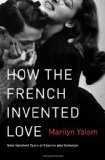
How the French Invented Love: Nine Hundred Years of Passion and RomanceMarilyn Yalom’s book [amazon asin=0062048317&text=How the French Invented Love] is an interesting look at the French attitude toward love from the Middle Ages to today. Yalom’s source material is the body of French literature produced over time.

As a fan of medieval literature, I particularly enjoyed Yalom’s examination of the letters of Abelard and Héloïse, whose story should fascinate anyone interested in true love. I thoroughly enjoyed the long chapter on courtly love and wished I were teaching the concept in a course again, as I have done in the past, because I think Yalom’s ideas would help me break down the idea in a way that would be easier for my students to understand. It has traditionally been a difficult concept for me to teach. I loved seeing the references to Guinevere and Lancelot. I always found it interesting that the French invented perhaps the most famous Arthurian knight—Sir Lancelot (I have always been more partial to Sir Gawain).

Another section I enjoyed was the chapter on George Sand and Alfred de Musset. I encountered George Sand’s journals about her relationship with de Musset in college, and I developed an interest in Sand that endures to this day as a result. Like Yalom, I adore the English Romantics (one of my best ever dreams was about having tea with Byron, Shelley, and Keats), and Yalom begins that chapter with a comparison between English and French Romantics before focusing more narrowly on George Sand. As Yalom notes, Sand gave her entire “heart and soul” to whatever “enterprise” with which she was concerned, whether it was writing or an affair. Her journals about the end of her relationship with de Musset are so heart-wrenching, that I wondered how she ever recovered from the loss. Yet, she went on to have other affairs, notably with Frederic Chopin. That she could recover and love again speaks to resiliency of the human heart.

I would recommend this book to anyone interested in the subject, but particularly to literature scholars. I enjoyed the narrow focus of the history of love in French literature. One quibble I had with the writing style was Yalom’s propensity to insert herself in the thread of the book. It made the book feel more anecdotal and perhaps less formal, which may have been Yalom’s goal, but it’s not typical of other nonfiction of this type (or at least not that I’ve noticed), and I found it drew my focus away from what she was saying—each time I encountered it, I was rewriting the sentence in my head to remove the personal reference. I can’t explain why it bothered me, particularly, but it did.

At any rate, this was an interesting read, and anyone who enjoys literature, especially Francophiles, will enjoy it very much. I would definitely read more of her writing.

Rating: ★★★★☆

About Marilyn Yalom

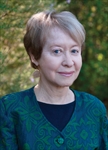
Marilyn Yalom is a former professor of French and presently a senior scholar at the Clayman Institute for Gender Research at Stanford University. She is the author of widely acclaimed books such as A History of the BreastA History of the Wife, and Birth of the Chess Queen, as well as The American Resting Place: Four Hundred Years of History Through our Cemeteries and Burial Grounds, which includes a portfolio of photographs by her son Reid S. Yalom. She lives in Palo Alto, California, with her husband, the psychiatrist and author Irvin D. Yalom.

Website

Marilyn’s Tour Stops

Tuesday, October 23rd: The Year in Books

Thursday, October 25th: Unabridged Chick

Tuesday, October 30th: Doing Dewey

Wednesday, October 31st: Take Me Away

Monday, November 5th: Sophisticated Dorkiness

Tuesday, November 6th: Dreaming in Books

Wednesday, November 7th: Bibliophiliac

Thursday, November 8th: Book Hooked Blog

Friday, November 9th: BooksAreTheNewBlack

Monday, November 12th: missris

Wednesday, November 14th: Oh! Paper Pages

Wednesday, November 28th: Much Madness is Divinest Sense

TBD: The Written World
Related posts:

Top Ten Tuesday adapted from http://www.flickr.com/photos/ceasedesist/4812981497/

Top Ten Tuesday: Authors I’m Thankful For

Top Ten Tuesday adapted from http://www.flickr.com/photos/ceasedesist/4812981497/

This week’s appropriate Top Ten Tuesday concerns authors I’m thankful for.

  1. William Shakespeare: My best moments in the classroom I owe to this writer, who is not only the greatest writer in the English language, but also the most fun to teach. I can return to his plays again and again, and I always get something new out of them. In addition, his sonnets are some of the most glorious poetry in the English language. Don’t believe me? Watch this video: http://www.youtube.com/watch?v=3ORccj9HosA
  2. Jane Austen: She is my homegirl. Really. I love her. I return to her books all the time. I love her characters, her sparkling wit, and her tangled love stories.
  3. J. K. Rowling: Some of my best reading experiences have been with the Harry Potter series. If I could read just one series over and over, and no other books, for the rest of my life, I’d choose the Harry Potter series. I find the Wizarding World to be a rich, imaginative place I never tire of visiting.
  4. Emily Brontë: She gave me my favorite book, even though it was the only book she wrote. I love returning to this book. I always notice something new. I love to hate her characters. I marvel each time I read it at the novel’s beautiful structure. Though I find the characters horrendous, I admit one place I’d love to visit is Wuthering Heights.
  5. J. R. R. Tolkien: My first major foray into fantasy set the bar really high. I am currently listening to The Hobbit in preparation for the movie. I love reading this series, and I love Middle Earth.
  6. Judy Blume: I read her books over and over again as a child. I grew up on her stories, and she has been a huge influence over my reading and writing life.
  7. Jasper Fforde: I have spent many a happy hour giggling through one of his books. He is crack for book and word nerds, and he is utterly charming.
  8. Joseph Campbell: His enduring ideas and understandings about the hero’s journey enabled me to enjoy literature and film in a new way, and I was able to construct a course around his work.
  9. Diana Gabaldon: I love her time travel romance/fantasy/historical fiction/genre-bending stories about Claire and Jamie Fraser. She is so much fun, and such a nice lady, too.
  10. Ernest Hemingway: I love, love, love F. Scott Fitzgerald, but Hemingway has a much larger canon, and I am not done with it yet. I love the way he writes, and I love to read his ideas about writing. I have rarely cried so hard over a book as I did over the end of A Farewell to Arms.

What authors are you thankful for?

Oh, and Happy Thanksgiving! I am so thrilled to be celebrating it this year in the state where the first Thanksgiving took place.

R.I.P. Challenge VII

R.I.P. Recap

I did not complete the R.I.P. Challenge this year. It’s absolutely my favorite challenge of the year, but I only managed to read one book that could be considered part of the challenge, and it wasn’t even one of the books I planned to count. By the way, I did make a soap inspired by Attica Locke’s The Cutting Season. I call it Vanilla Sugar Cane. Its ingredients are olive oil, water, coconut oil, palm oil, sodium hydroxide, sweet almond oil, cocoa butter, and castor oil, along with a vanilla sugar fragrance that is an exact duplicate of Bath & Body Works’ Warm Vanilla Sugar fragrance—one of my favorites. I can’t wait until this soap is ready.

I did not manage to finish Ray Bradbury’s Something Wicked This Way Comes, and I can’t believe I’m about to say this, but I’m giving up on it because it just didn’t do anything for me. I don’t know what’s wrong with me because it has all the elements I usually like in books: a creepy carnival visiting a small town in the fall; lots of imagery; a story that can be read on multiple levels. I think ultimately, I don’t care much for the characters. I have seen the movie (many years ago), and I liked it, so I can’t explain why the book is just not appealing to me. I find it is not difficult to put down, and I keep looking at it, thinking I should pick it up. At this point, I’ve maxed out my library renewals, and I just don’t have a desire to try to finish it. I feel like I’m giving the book the old, “It’s not you, it’s me,” speech. But I really feel like it is me. People love this book. I did make a soap inspired by Mr. Crosetti’s cotton candy. It was pink and cotton-candy scented. However, as the soap cured, it turned a deeper shade closer to purple. My feeling is it now looks like appropriately dark and twisted cotton candy, and Mr. Dark would approve. I will probably just gift it to the kids in my family for Christmas.

I enjoyed the challenge I set for myself of thinking of an appropriate soap inspired by the books I read for this challenge. I am not sure I’d want to do it for every challenge or every book, but it was fun, and just like the books, I was really pleased with how the Vanilla Sugar Cane Soap came out from the very start, and as it cures, it is shaping up into a very nice soap, just like the book. On the other hand, I was initially pleased with the Cotton Candy Soap, and over time, I found my enthusiasm cooled as the soap changed a funny color, which mirrors my feelings for the book on which I based it.

This year is shaping up to be a bad reading year for me all the way around. I am already feeling a pull to re-read [amazon asin=0143105434&text=Wuthering Heights]. I recognize the signs: I start Googling things related to the book and looking for film versions on Netflix. And I don’t have time. I have other books I’ve committed to read. That book is a damned siren.

So how did you do with the challenge this year? How’s your reading year shaping up as we slide into the final two months?

Related posts: