The Lace Reader

Brunonia Barry’s novel The Lace Reader is an intricate and fascinating read.  Barry’s description evokes a setting that is easy for the reader to picture and her characters are memorable.  Towner Whitney narrates most of the novel, and readers would do well to pay particular to the first two sentences in which she introduces herself.  I make a habit of checking a book to see how many chapters, parts, and pages it has, and I inadvertently saw something on a page near the end that gave away the ending, but I enjoyed seeing it unravel nonetheless.  Do yourself a favor if you read it, and don’t peek.  The surprise is better.

Towner returns to Salem after 15 years when she discovers Eva, whom Towner refers to as her aunt, is missing.  As the novel progresses, the reader learns that Towner has stayed away to escape some horrible memories from her past, when her twin Lyndley committed suicide at the age of 17 and Towner herself confessed to a murder that had not taken place.  She meets and becomes close to Rafferty, the detective assigned to look into Eva’s death and also into subsequent events.

My favorite character was Ann Chase, whom Barry describes as the second most famous witch in Salem after Laurie Cabot.  She was no-nonsense, funny, and strong.  I also liked Eva, who has died by the time the narrative begins, but whose personality is revealed through other characters’ memories of her.

The title comes from a fictional means of divination called lace reading, which is practiced by Eva, May, and occasionally Towner, though Towner blames her sister’s death on lace reading and refuses to practice it afterward.

More than anything else, this novel is about abuse and its toll on the human psyche.  I found the book to be really interesting, and it wouldn’t surprise me if lace reading becomes a popular means of fortune telling as a result of the novel.  Barry says that she wrote the novel as a “heroine’s journey,” influenced by the ideas of Joseph Campbell.  She wondered how the woman’s journey as a hero would be different from that of the man.  I’m not sure, after reading it, that I see Joseph Campbell’s monomyth in the novel.  However, I do see a sort of journey in it, and I’m glad I went on that trip.
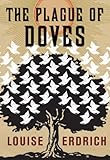
The Plague of Doves

The Plague of DovesLouise Erdrich’s latest novel A Plague of Doves might be the best book I’ve read this year.  I kept turning the pages as the drama that affected an entire town unravels showing the degree to which the traumatic murder of a family and subsequent lynching of innocent parties binds the townspeople together in a fascinating web of history.

A Plague of Doves is often compared to Faulkner.  Erdrich’s use of multiple narrators as well as the imagery, symbolism, and characters of her novel certainly evoke Faulkner, but readers daunted by Faulkner’s style need not be afraid.  A Plague of Doves contains no page-length sentences or stream-of-consciousness meanderings that make it difficult to follow.  This story is told from the viewpoint of four different narrators who are all connected to the town’s tragic past in various ways.  One of the narrators, Evelina Harp, attempts to parse the connections upon first hearing about the story of the lynching:

The story Mooshum told us had its repercussions — the first being that I could not look at anyone in quite the same way anymore.  I became obsessed with lineage.  As I came to the end of my small leopard-print diary (its key useless as my brother had broken the clasp), I wrote down as much of Mooshum’s story as I could remember, and then the relatives of everyone I knew — parents, grandparents, way on back in time.  I traced the blood history of the murders through my classmates and friends until I could draw out elaborate spider webs of lines and intersecting circles.  I drew in pencil.  There were a few people, one of them being Corwin Peace, whose chart was so complicated that I erased parts of it until I wore right through the paper. (86)

I drew my own family tree chart in the back of my book and added to it as I read and discovered new connections.  After finishing the book, I wish I had thought to make index note cards, as one reviewer did, because the web of relations is so complicated.  For all its complexity the story is that much richer and more real.

Several sections of Erdrich’s novel could stand alone as short stories, and indeed, parts of it have been published as short fiction, as I learned on reading Erdrich’s acknowledgments at the end of the book.  If parts of the novel feel somewhat digressive as a result, I think Erdrich can be forgiven, for when the reader reaches the last few pages, all the digressions are shown to be pieces of a complex puzzle — the reader doesn’t know what the picture is until the last piece is put in place.

In addition to being a fairly good murder mystery, the novel is rich in imagery, symbolism, and well-drawn characters, and by the end of the novel, I felt like a resident of Pluto, North Dakota and felt sure that I had truly known all of these people and uncovered their bloody history myself.   And that, after all, is what a good book should do for us.  Go right out and get this book now!  It’s amazing!  I don’t often post Amazon reviews, but I loved this book so much I want everyone to read it, so this review will be cross-posted at Amazon.

My next book is Brunonia Barry’s The Lace Reader.

Update, 9/12/09: I managed to make my tree look sort of readable using Inspiration. Download it by clicking this link. I hope it’s useful. It probably goes without saying that unless you’ve read the book, you shouldn’t look at it because it reveals the ending.

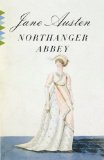
Northanger Abbey

Northanger AbbeyJane Austen’s Northanger Abbey is the story of the naive Catherine Morland. Catherine accompanies Mr. and Mrs. Allen, family friends, to Bath and meets and befriends Isabella Thorpe, the daughter of one of Mrs. Allen’s school friends. Catherine also meets Henry Tilney and is instantly smitten. Catherine also befriends Tilney’s sister Eleanor and secures an invitation to visit the Tilneys’ home Northanger Abbey from General Tilney, Henry and Eleanor’s father.

Every synopsis of Northanger Abbey that I’ve read has been misleading. Even the title is misleading. I was misled into believing the entirety, or at least a large portion of the book would take place at the imposing Northanger Abbey, ancestral home of the Tilneys. I judge about half the book is actually set at Northanger Abbey. Also, most synopses of the book that I’ve read reference Catherine Morland’s romantic imagination convincing her that a strange gothic history has taken place at Northanger Abbey, but that episode occupies only a small part of the plot of the novel — a few chapters at best.

I don’t think this novel is so much a parody or satire of gothic novels as it is the story of how a young girl loses her naiveté. It was a quick, enjoyable read, and I liked it better than Emma, though I don’t think it quite tops Pride and Prejudice or Sense and Sensibility. Catherine was a likable character, and I enjoyed the dialogue in the novel (as always in Austen’s writing).

I read Northanger Abbey as part of the Historical Fiction Challenge. At this point, my progress in the challenge stands thusly:

I don’t think I’ll pick up Jonathan Strange and Mr. Norrell again next, but I’m not sure what I will read, as I expecting a bunch of books in the mail and would like to choose from among them; which one I choose depends on which arrives first. I’ll update once I have the books in hand and have made a decision.

Emma

This morning, DailyLit sent me my final 191st installment of Jane Austen’s Emma, which I read just a few moments ago. Upon finishing the book, I have to say that while I love DailyLit and the idea behind it, daily subscriptions were perhaps not the best way to read this particular novel (and perhaps Jane Austen in general — I am not sure). Austen has a subtlety and requires, I think, a great deal of concentration from her reader. Reading this novel over the course of about six months made it hard for me to remember some of the events. Of course, I could have had installments sent more quickly by requesting them (by default, the subscriptions will not be sent any more frequently than once a day). A second problem I had in receiving the book this way is that it was very poorly transcribed. On several occasions, my transcription cut off in the middle of someone’s speech or would even end as someone was about to say something (even cutting off at a comma instead of a period). I found this maddening and most of the time either requested the next installment or had to go back and re-read the end of the previous one. Another fault in the transcription were grammar errors — the possessive “hers” was rendered “her’s” on several occasions in the text.

As for the story, I have previously read Pride and Prejudice, Sense and Sensibility, and am currently reading Northanger Abbey (I have also attempted Persuasion twice). Of the novels with which I am familiar, I have to say Emma contains my least favorite storyline and characters. I never really managed to quite like Emma. She seemed to me to be quite shallow and snobby. I did like Mr. Knightley, but I fail to see what he saw in Emma. Mrs. Elton was hilarious, as Austen’s most annoying characters typically are. Still, even though I didn’t enjoy the novel as much as I typically enjoy Austen, it was an entertaining read. I had seen Clueless, and it was interesting to see how closely Amy Heckerling followed her source material.

Not one soul commented to tell me which Dickens novel I should read of the three: Great Expectations, David Copperfield, or A Tale of Two Cities. Therefore, I used the only means of divination I could think of and asked my seven-year-old daughter Maggie, who has no investment in my choice except that perhaps the title of the third sounds like a Garfield movie. And of course that’s the one she chose for me.

Meanwhile, I have discovered yet another use for my Goodreads account in addition to keeping a record of all the books I have read and am currently reading. Up until the last couple of days, my “to-read” bookshelf has held only the couple of books that were on my immediate list of books I wanted to read. I have begun cataloging the books I find interesting so I won’t forget about them later, and I am finding that to be really helpful for me. My mother has for years kept a notebook with a list of books she find interesting and checks them off as she acquires them, so consider my Goodreads account my notebook.

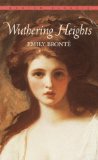
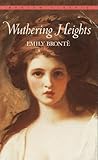
Wuthering Heights

I finished reading Emily Brontë’s Wuthering Heights. I was originally supposed to read it in high school, but I quickly fell behind our class’s reading schedule, and before I knew it, the unit was over and assessment was done. I donated my copy to my teacher, who gave us extra credit for book donations because she was trying to grow her classroom library. Alas, I didn’t return to the book until this year. I loved it!

I think my favorite part of the book was the setting. I could so clearly see Wuthering Heights and Thrushcross Grange and all the moors surrounding them. In a way, the setting was almost a character, too. I found the characters, for the most part, easy to dislike, yet strangely sympathetic. Just when I had truly written Heathcliff off as totally evil, Nelly jumps in and reminds the reader of his boyhood, and her concern for him near the end of his life awakened my own. I disliked Linton intensely, and I found myself annoyed with Cathy for her sympathy for him. Then, I would feel guilty because he was, after all, slowly dying, and who knows how that altered his character (not to mention contempt from his father and the loss of his mother). And speaking of Cathy, her treatment of poor lovesick Hareton I found horrid. What a forgiving sort he turned out to be. In short, one thing I think Brontë did quite well is paint characters who while flawed and perhaps even reprehensible, still manage to evoke the reader’s sympathy.

I think my favorite character was the storyteller Nelly Dean. She spoke her mind when she felt the need, and I sensed a deep respect for her from the other characters. I did wonder a couple of times why she would dish the family dirt to a complete stranger (Mr. Lockwood). At first, she struck me as gossipy. Later, when I decided that wasn’t exactly the case, I was at a loss as to determine why she would tell the story. I came to the conclusion that she was lonely for the first part of the story. After Heathcliff died and Mr. Lockwood returned, I decided she wanted the story preserved in some manner.

Mr. Lockwood is an interesting character. Through Nelly, he knows more about the true events of the whole story than some of the principal characters, and he is, I think, deeply affected by the story (witness his visit to the graves of Catherine, Heathcliff, and Edgar Linton).

I’m not sure if this will make sense, but this book struck me as so quintessentially English — I couldn’t imagine it in another setting. I imagine that many other British novels and plays could (and indeed, in the case of Shakespeare especially) have been re-imagined in different locations. Wuthering Heights, however, belongs to the moors of Yorkshire.

I will have to think carefully about how to teach this book so that my own students won’t fall into the trap I did. This reader’s guide Web site is excellent, and if you are interested in Wuthering Heights, you might wish to check it out.

I have to take a break from the Historical Fiction Challenge to read some summer reading so I can create assessments for my students. For the record, I planned to read the following books (titles stricken through I have completed):

Jonathan Strange and Mr. Norrell is long, but Northanger Abbey is fairly short. I think I can manage to finish the challenge by October, and perhaps the idea that I need to finish the challenge will compel me to finish the former — I put it aside because it was taking me forever, and I wanted to read some other things.

My next book is Simon Winchester’s The Professor and the Madman, a story of the creation of the Oxford English Dictionary.

Goodreads

GoodreadsMy daughter invited me to join Goodreads several months ago, but I haven’t been very active on the site. I already review what I read here at this blog, so I didn’t see much point in reviewing books at Goodreads, too. Goodreads is, however, growing as a social network of readers, complete with Facebook and MySpace apps.

If you are a regular reader of this blog and would like be my friend on Goodreads, you can find my profile here. I have now posted all the books I have read and included links to my reviews here.

Confessions of a Pagan Nun

Kate Horsley’s Confessions of a Pagan Nun has been on my to-read list for at least a couple of years, and I finally decided to take it off the shelf and read it. Serendipitously, I discovered the Historical Fiction Challenge and was able to use this book as part of the challenge.

For those of you who may have read The Virgin Blue by Tracy Chevalier (review here) or The Mists of Avalon by Marion Zimmer Bradley, the premise of this novel is not new. Confessions of a Pagan Nun is told from the viewpoint of a woman a the crossroads in history: she is born into a pagan culture and watches, reporting her observations, as Christianity gradually subsumes paganism and druidism. Gwynneve, the narrator, longed to learn to read and become a druid as a child. She tells her story from the monastery of St. Brigit, where a confluence of strange events leads to wild accusations against her.

This book is different from The Virgin Blue and The Mists of Avalon because Gwynneve sees wisdom and beauty in both Christianity and paganism; she also sees violence and ignorance in both, and boldly reports what she sees. I was reminded that while history is written by the victors, the truth usually reveals itself, and words have the power to transmit the truth when we have nothing else. It was refreshing to read a book about the conflict between paganism and Christianity that casts neither as evil in and of themselves, but lay bare that men have used both to their own ends for the worse.

Confessions of a Pagan Nun is a quick, enjoyable read. In terms of historical fiction, I saw no inaccuracies that I could tell, having studied this time period — 6th century British Isles — quite a bit. I certainly think that should one be interested in learning about life in 6th century Ireland, this book would not disappoint.

One of these days, I need to re-read The Mists of Avalon. It’s one of my all-time favorite books. My next book for the Historical Fiction Challenge is Nothing Like the Sun by Anthony Burgess (yes, author of A Clockwork Orange). This book is about Shakespeare’s love life, a topic which never fails to inspire much speculation and not a few pretty good stories.

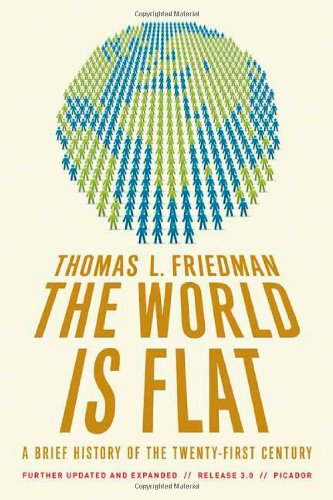
The World is Flat

The World is FlatI found Thomas Friedman’s The World is Flat to be an intriguing book. Friedman’s thesis is that a series of “flatteners,” or world-changing events, converged at just the right time to make the world’s playing field level and allow countries such as India and China opportunities to compete with America and Europe. Largely, I saw very little in Friedman’s book to disagree with. He acknowledges that the same tools we use for good in this new and increasingly global economy can be used for evil. He references terrorists and has interesting insights into their motivation for destruction and the reasons for their hate. I do think Friedman’s view of what will happen as the world becomes increasingly flat, to use his term, is optimistic, but frankly, I think a lot of it would be good for us. I think Friedman somewhat dismisses the plight of American workers who lose their jobs to outsourcing, but he has a good solution — we need to learn to adapt and to make ourselves special so we are more attractive job candidates. I think that solution is more realistic than the one that seems to be favored by many others — punish companies who outsource and try to force companies into doing business the way they did in the past. Life goes on, and things change. We have to change with them, or we will be left behind.

I think one of the biggest favors we can do ourselves is invest in green technology. We are way too dependent on foreign oil. Oil is a stick that countries we otherwise would have hardly any trade relations with use against us. Their economies are dependent on oil, and when it runs out, they’re going to be in serious trouble.

I am really excited about the potential for collaboration that exists. I love it that we can work together across miles. Through this blog I have made friends from all over America and a few in other countries. We’d never have “met” if not for flat world technologies like blogs. I have learned so much from technology and have developed so much passion for Web 2.0 ideas — which are nothing more than flattening agents online — that I am pursuing my masters degree — online — in Instructional Technology beginning this fall.

I also like the idea that businesses have to be transparent. Your reputation is important, and you can no longer manage it completely. If someone isn’t happy with your goods or services, they can complain in a blog or forum, and you might lose customers. I recently complained about the spurious business practices of Urban Posters, and I had lots of feedback from other customers who were treated the same way, in addition to a hollow apology that blamed the credit card processing company from an Urban Posters representative. People were angry about their money being taken, and they said so in a public forum. Now when someone searches for information about this company, this negative feedback will perhaps prevent someone else from being taken in. I think that’s a fantastic thing to come out of the flat world.

This book is an investment. It’s long, and I think it requires a lot of reflection and thinking on the part of the reader. If you are interested in a beach book or a quick read, this book is not what you’re looking for; however, if you are interested in the times in which we live and emerging ideas and technology, this book will fascinate you.