Do you think it makes you NOT (or less) “well-read” if there are certain genres that you won’t read because you KNOW you won’t enjoy them? Why?
This is an interesting question, and I don’t have a clear answer to it. I’ll try to illustrate through some examples instead. I haven’t been a fan of the Russian classic literature I’ve read so far. I have really tried. Despite liking the movie [amazon_link id=”B002WC88A8″ target=”_blank” ]Doctor Zhivago[/amazon_link], I found I couldn’t get into the [amazon_link id=”0679774386″ target=”_blank” ]book[/amazon_link]. I had to slog through both [amazon_link id=”0451228146″ target=”_blank” ]One Day in the Life of Ivan Denisovich[/amazon_link] and [amazon_link id=”0199536368″ target=”_blank” ]Crime and Punishment[/amazon_link]. Folks rave over these books. They do! And they must have a reason. I feel less well-read because I can’t bring myself to try more Dostoyevsky and I’m afraid to even begin with Tolstoy.
On the other hand, I also think it’s much more important to read books you like. I have said many times that life’s too short to read bad books. I came to the conclusion some time ago that I had to read for me, not to satisfy some arbitrary definition of “well-read.” After all, what does that really mean? Some folks would define it as reading a certain number of “classics,” while others would define it as reading a certain number of books. Still others would say it’s reading broadly, including a variety of genres, as well as reading a large number of books.
I think I have reached a place where I am happy with the amount I read and with what I read. I would consider myself well-read by my own definition, which includes having read a fair number of books in the classic canon as well as a fairly large number of books in general. But that’s just my own definition. I may not be well-read by yours, especially since I have so much trouble with the Russians. Either way, I am satisfied with what I’ve read and how much I’ve read. I think it’s much more important to seek out books I know I will enjoy rather than worry that other folks don’t think I’m reading widely enough. After all, it’s not my job to critique books, and even if it were, I have a hunch that most reviewers tend to specialize in genres anyway—at least somewhat. Reading is my favorite hobby, and it has given me a great deal of joy and pleasure. Why make it another chore by worry about whether I’m “well-read” enough, whatever that even means?





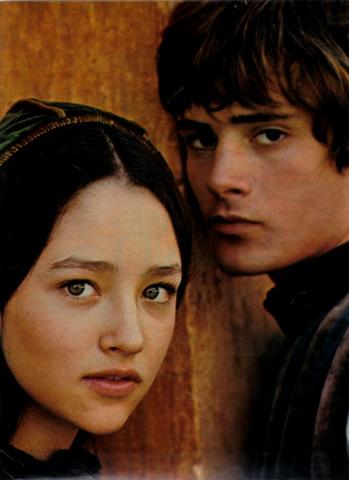 Juliet: She defies her family’s ancient feud with the Montagues by falling in love and marrying Montague’s son Romeo. Juliet even chooses her new husband over her own family after Romeo kills Tybalt. Rather than marry a man her family chooses for her, Juliet feigns her death. If only that messenger hadn’t been waylaid by the quarantine for the plague and Romeo had received Friar Lawrence’s message! When she awakes and discovers Romeo, believing she was truly dead, has committed suicide, she kills herself by stabbing a dagger into her own heart rather than continuing to live without her Romeo.