GEICO Cavemen

Share

Steve and I are fans of the cavemen on the GEICO commercials. If you haven’t seen one, here’s a pretty good one (my favorite):

[kml_flashembed movie="http://www.youtube.com/v/H02iwWCrXew" width="425" height="350" wmode="transparent" /]

You can see others at YouTube.

I actually spent much too long at this website yesterday; however, as much as I like the cavemen and think the premise has the potential for funny, I believe this venture is doomed to failure. Unfortunately, this is probably the death knell of a funny series of commercials.

[tags]Geico, caveman, cavemen[/tags]

Related posts:


Share

Books America Can’t Live Without

Share

Perhaps this is a crazy idea, given the size of my readership here, but why not?

Nominate your favorite books for a list of Books America Can’t Live Without. Results will be posted.

You can leave your submissions in the comments.

Note: This post will remain at the top for increased visibility. Scroll down for new posts.

[tags]literature, books, World Book Day, Read Across America, reading, America[/tags]

Related posts:


Share

Books I Can’t Live Without, Part One

Share

My friend Roger recently wrote about World Book Day in the UK. In America, we celebrate “Read Across America,” which seems to be much like World Book Day in that it is aimed toward children. It is celebrated on March 2, which was beloved children’s author Dr. Seuss’s birthday. My daughter Maggie was encouraged to bring a Dr. Seuss book to school and to wear a Cat in the Hat hat if she had one. It turns out she didn’t need one, as the students made one in school. A few of the students at my own school dressed up as Dr. Seuss characters for our Purim festivities yesterday.

Maybe I missed it, but I didn’t see a list of Books Americans Can’t Live Without, and perhaps I shudder to think what sort of dreck might be on such a list, so I am co-opting the list produced by the British public. It is my intention to discuss each of the top 100 books on the list — if I have read them — in a series of posts. At any rate, it should give me something to write about for a time. I will begin with the bottom 10, 91-100, and work my way to the top ten.

100. Les Misérables by Victor Hugo.

I have never read this book. I might read it some time, but I confess it isn’t high on my pile of books I feel like I should get to. Perhaps I will try it through DailyLit.com.

99. Charlie and the Chocolate Factory by Roald Dahl.

I read this book as a child, and I remember really enjoying it. I must have, as it was the first of Roald Dahl’s books that I read and I subsequently read Charlie and the Great Glass Elevator and James and the Giant Peach. I distinctly remember feeling the book had been shortchanged in the creepy 1971 movie based upon it.

98. Hamlet by William Shakespeare.

You know this is a British list, that’s for sure. I’m not sure Americans would think to put such works of literature on their lists. I love this play. Of course, it is one of Shakespeare’s most famous and includes perhaps the most famous soliloquy in all of literature (“To be or not to be…”). This one should be higher on the list.

97. The Three Musketeers by Alexandre Dumas.

I have read The Count of Monte Cristo, but I haven’t read this one yet. It’s on my list. Dumas had a gift for a great adventure story.

96. A Town Like Alice by Nevil Shute.

I have heard of it, but never read it.

95. A Confederacy of Dunces by John Kennedy Toole.

I first heard of this book when I was in college. It came up for discussion many times in my Dialectology class — a class I took to meet a language class requirement for my major. It was an interesting class. I took three years off from college between my junior and senior years. I got married, had my oldest daughter Sarah, and was a stay-at-home-mom. I got a library card and checked out A Confederacy of Dunces largely based upon how much everyone in the Dialectology class talked about it. I loved it. It was a hilarious book, but sad, too. Toole committed suicide some eleven years before the book was published, and his mother worked tirelessly to bring it into print. It won the Pulitzer Prize in 1981.

94. Watership Down by Richard Adams.

This is another one I’ve never read, though I have a copy on my bookshelf at school. I have heard a lot of people say they loved it, but for some reason the premise behind it never appealed to me.

93. The Wasp Factory by Iain Banks.

I confess I’ve never heard of this one.

92. The Little Prince by Antoine De Saint-Exupéry.

I have never read this one all the way through, but I tried to read it in French in high school. Alas, my three years of high school French didn’t prepare me for reading a whole children’s book in French, so I abandoned the cause and never took it up again. One of my colleagues cherishes this book a great deal, and I have thought several times over the last year or so that I ought to pick up the English version and just read it.

91. Heart of Darkness by Joseph Conrad.

I wrote about this book last year when I read it for the second time, this time with a more open, mature, prepared mind. I didn’t care for it at all when I read it in college, but I really enjoyed it last year.

[tags]World Book Day, literature, reading[/tags]

Related posts:


Share

The World’s Oldest Blogger

Share

If the Super Adventures of Ben and Noah and Maggie’s Blog don’t prove the Internet is ageless, then surely Olive Riley’s The Life of Riley will. At 107 years old, Olive is the world’s oldest blogger:

Good Morning everyone. My name is Olive Riley. I live in Australia near Sydney. I was born in Broken Hill on Oct. 20th 1899.Broken Hill is a mining town, far away in the centre of Australia. My Friend, Mike, has arranged this blog for me. He is doing the typing and I am telling the stories. He thinks it’s a good idea to tell what’s going on. He already made a film about me a few years back and people liked that, so they might like this blog too, he says. We’ll see.

[tags]Olive Riley, blogging[/tags]

Related posts:


Share

Thinking Blogger Award

Share

Thinking Blogger AwardRoger nominated me for a Thinking Blogger Award. I was kind of surprised, as I don’t think of this blog as particularly thought-provoking, but who am I to turn down an award? According to the rules, I now nominate five bloggers who make me think for this award.

  1. Western Dragon: Nepotism doesn’t hurt, I suppose, but until I encouraged her to write, I had no idea my daughter could write so well. In fact, she writes much better than I did when I was her age. She seems to intuit characterization. She really makes me think. Don’t miss her creative writing.
  2. The Genealogue: Chris Dunham bills his site as “Genealogy News You Can’t Possibly Use,” but I have spent quite a lot of time enjoying his posts and learning how to do things. Plus, he’s a nice person and shared his thoughts about the Salem Witch Trials with my class, which I really appreciated.
  3. Baghdad Girl: This blog is written by a girl who until recently lived in war-torn Baghdad. Her frequent posts of cat pictures are sometimes punctuated by reflections about life in a war zone, and I find that when I hear about Iraq now, I often think of her, and children like her.
  4. Sarah*n*Dipitous: Sarah Hodsdon writes this blog, a reflection of her artwork and thoughts. She homeschools her children, Ben and Noah, and does a great job, judging from their own blog posts.
  5. Things in Your Head: This blog is written by Wendy. She reflects on life, her family, her past, her present, you name it! I find her writing to be enjoyable, whether she’s being funny or serious.

I would like you all to know that there are plenty of bloggers who make me think, aside from these five, but I was unfortunately limited to five.

[tags]meme, thinking blogger, blogging[/tags]

Related posts:


Share

This is for Lara

Share

My sister Lara and I were talking about American Idol on the phone the other day, and I mentioned how cool these guys were:

[kml_flashembed movie="http://www.youtube.com/v/ilg_lLZebLU" width="425" height="350" wmode="transparent" /]

What did you think, Lara?

I like Chris Sligh and Blake Lewis.

[tags]American Idol, Chris Sligh, Blake Lewis, Rudy Cardenas, Thomas Lowe[/tags]

Related posts:


Share

A Thousand Acres

Share

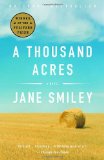
A Thousand AcresIf you read Jane Smiley’s Pulitzer Prize-winning novel A Thousand Acres, I recommend that you read Shakespeare’s King Lear first. Several versions of the play are available, including a subscription in forty parts from DailyLit.com, but I recommend the Folger Shakespeare Library’s edition for portability and explanatory notes. You will enjoy Smiley’s novel all the more if you realize what a loving, painstaking homage it is to one of Shakespeare’s greatest plays. You will enjoy it in its own right, but it’s power is diminished, I think, without the side-by-side comparison to King Lear.

Smiley’s version centers around Larry Cook (Lear), a farmer in Zebulon County, Iowa, and his three daughters Ginny (Goneril), Rose (Regan), and Caroline (Cordelia). Larry decides to divide his thousand-acre farm among his three daughters, insisting he is saving them an inheritance tax. The daughters do not want him to do this, but Larry possesses a single-mindedness that will not be crossed. When Caroline objects more firmly, she is cut out of the deal. The family gradually implodes under Larry’s seeming madness, a suit to get back his land, and Ginny and Rose’s competition for the affections of neighbor’s son Jess Clark (Edmund).

Smiley’s story deviates from Shakespeare’s in providing Ginny and Rose with reasons — physical and sexual abuse — to hate their father. I have to admit that they seemed almost saintly in their accommodation of him after what he had done to them. Shakespeare’s Goneril and Regan were simply, as Lear put it, “unnatural hags.” Thus, I felt that Ginny and Rose had depth of character and complicated layers that Goneril and Regan lacked.

As this is told from the viewpoint of Ginny, Larry’s portrayal is never sympathetic, and though he cuts an imposing figure from Ginny’s point of view, he never quite reaches Lear’s stature with the reader. I was impressed, however, by how Smiley was able to take plot elements from the play and seamlessly incorporate them into A Thousand Acres without making the story seem stilted or forced. In the back of my mind, until Part Four or Part Five of the novel, I was sure she wouldn’t find a way to incorporate some part or other of the King Lear story, but she managed to do it every time. The story differs in the end, but not substantially so, and I suppose one could argue the difference is moot — the family is no less destroyed in Smiley’s One Thousand Acres than in Shakespeare’s King Lear, but in either case, you’ll enjoy two well-written works and explore timeless themes of “truth, justice, love, and pride,” ultimately making a universal story “profoundly American.”


Share