The Ruby in the Smoke, Philip Pullman

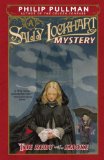
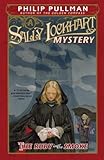
The Ruby in the Smoke: A Sally Lockhart MysteryIt figures the first day of my winter break I would develop a cold. I have been lying in bed, willing myself to recover by Christmas (and thanking myself for finishing the shopping relatively early for a change). Of course, it gave me plenty of time to read today, so I decided to finish Philip Pullman’s The Ruby in the Smoke.

This novel is the first of the Sally Lockhart trilogy. Sally Lockhart’s father has died under mysterious circumstances, and all she has to go on is the warning “Beware the Seven Blessings.” The first person she asks about the phrase dies of fright. Sally comes face-to-face with the seamy underbelly of Victorian London—opium dens, ruffians, and sooty, Dickensian waifs. She meets a photographer who agrees to help her, but he, like Sally, doesn’t know exactly what he’s gotten himself into.

I think Pullman evokes the setting of Victorian London well. The story is fast-paced and action-packed. Sally and the other characters, especially Jim, are likable enough. For some reason I can’t put my finger on, however, this book just didn’t grab me. I had no trouble putting it down on occasion, and I had to force myself through it a bit. I can’t figure out why because it has all the elements I like in a story, from setting to characters and plot, but it just didn’t interest me. I probably won’t read the other two novels in the series. You know, I tried to pick up The Golden Compass and felt the same way—it has all the elements I like in a story, too, and I never could get into it.

Rating: ★★★☆☆

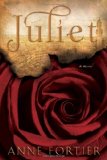
Juliet, Anne Fortier

JulietAfter the death of her Aunt Rose, Julie Jacobs is given an intriguing bequest—a key to a safety deposit box in a bank in Siena, Italy. As keys do, this key unlocks the door to a future Julie could never have imagined as she discovers her connection to the star-crossed lovers who inspired William Shakespeare’s Romeo and Juliet.

Juliet is a fast-paced thriller that fans of William Shakespeare’s play will enjoy. Fortier weaves in references to Romeo and Juliet both obvious and subtle. The ending probably won’t surprise readers much, but the ride is a great deal of fun. Fortier’s research is meticulous. She brings Siena alive, both in the medieval past and present. She introduces the Tolomeis and Salimbenis, two prominent Siena families who really did have a feud. Reading this book made me want to teach Romeo and Juliet again this year, and here I thought I was a little tired of it.

I was puzzled by Fortier’s choice of Siena, when it is in fair Verona that Shakespeare lays his scene, but after doing some digging, I found the earliest references to a story involving Romeo and Juliet set the story in Siena, and Siena makes a great deal of sense with its history of feuding families and its ancient traditions, including the Palio, a horse race that originated in the Middle Ages. A sense of the connection we all have to history pervades this book. My interest in family history and in medieval history made this an enjoyable read. You’ll read reviews that compare this novel to The Da Vinci Code, which I suppose is inevitable because of the unraveling of clues bound to reveal surprising information that will upend long-held beliefs against the backdrop of a European city, but don’t let the comparisons fool you. This novel is much smarter than The Da Vinci Code, and the characters are much more fully realized. I did feel Julie’s sister Janice could be a bit of a caricature, and Eva Maria was a little over the top, but I enjoyed the other characters, especially the characters in the medieval portions of the story—Giulietta Tolomei, Romeo Marescotti, Friar Lorenzo, and the feuding Tolomeis and Salimbenis.

Anyone who enjoys Shakespeare-related fiction should enjoy this novel, but even folks who aren’t Shakespeare fans can enjoy this read.

Rating: ★★★★½

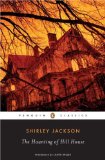
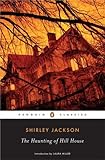
The Haunting of Hill House, Shirley Jackson

The Haunting of Hill House (Penguin Classics)Shirley Jackson’s novel The Haunting of Hill House, widely regarded as one of the finest scary stories ever written, is the story of Dr. John Montague, who brings together guests Theodora and Eleanor along with the home’s future owner Luke in the hopes that they can help him in his quest to find scientific evidence of the supernatural. Theodora and Eleanor are invited because they have experienced the paranormal before; of the many guests Dr. Montague invites, they alone accept. The guests quickly begin experiencing terrifying events, and Eleanor seems to be an especial target of the house. But is she becoming possessed by the house, or is she the cause of all the supernatural events herself?

I found this book a little difficult to get through because I didn’t really care for the characters. I think because Eleanor clearly has some psychological problems, and the third-person limited narration seemed to focus on her point of view, it could be difficult to tell what was really going on, and what Eleanor imagined. For instance, she has quite a few arguments with Theodora, and I’m still unsure all of them weren’t in her mind. She isn’t a very likable character—a sort of child. On the other hand, the writing is superb in some places, and Jackson has an excellent aptitude for evoking mood and describing setting. She is wonderful at characterization. Mrs. Montague and Arthur were hilarious. Even Eleanor is well-drawn in her way, but I’m wondering about Jackson’s attraction for grown women with child-like minds—We Have Always Lived in the Castle, which I never finished, has one, too. In the end of the book, it’s unclear exactly what happened, and the reader is left to interpret events. I will give this book a higher mark than I ordinarily give a book I kind of had to slog through simply because the writing was brilliant. I just really need a reason to care about the characters if I am going to enjoy a book, and I didn’t find one in this book.

Rating: ★★★☆☆

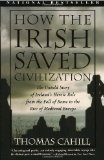
How the Irish Saved Civilization, Thomas Cahill

How the Irish Saved Civilization Thomas Cahill inaugurated his Hinges of History series with How the Irish Saved Civilization. When Rome fell, Cahill says, the Irish clerics not only spread Christianity, but also saved the great Latin works from being lost to the ravages of history. He also argues the Irish kept the flame of Western culture burning as the rest of the world descended into the Dark Ages.

Parts of this book were quite interesting. Cahill’s love for Irish mythology shines through in his description of the Táin Bó Cúailnge, which made me want to return to the Táin again. His descriptions of St. Augustine, St. Patrick, and St. Columba were interesting and definitely had me searching the Web to learn more about them, but in the end, Cahill never really proves his thesis. The first half of the book is good, but somewhere during the chapter “What was Found,” Cahill loses the thread of his argument and ultimately admits most of what we retained could have survived without the Irish, then attributes the survival of Latin literature to the Irish without really explaining how. He also makes the leap that because the Irish had the oldest vernacular literature in Europe, they were somehow responsible for or influential over the vernacular literature that followed. Readers can learn a great deal about the lives of Patrick and Columba and a bit about early Irish literature, but they won’t learn how the Irish saved civilization.

Rating: ★★★☆☆

I read this book for the Bibliophilic Books Challenge. This is my sixth book for this challenge, which brings me to the level of Litlover. I will not be able to read six more books before the challenge ends in December, so I’m going to call this challenge complete. I originally committed to just three books, so I surpassed my expectations.

No Vampires

Wuthering Bites, Well, Bites

No VampiresI gave Wuthering Bites a fair try. I actually read up to page 52. There will be no more vampires in my Wuthering Heights. Well, maybe psychological vampires, but not real ones. I honestly don’t think that mashing up Wuthering Heights with a vampire story is a bad idea, but the execution of the mash-up is what I object to. It’s sloppy. Every once in a while there is a random reference to the huge vampire problem Yorkshire seems to have developed. Some of it was funny, but funny bad, not funny ha-ha. I just can’t force myself through it anymore. What makes me sad is that my department chair bought me this book for my birthday. Oh, the perils of giving books as gifts! You just never know if the other person is going to enjoy it. I tried to! I really did want to like this book, and I think I gave it longer than I ordinarily would have.

I don’t think it’s my sense of humor. I can laugh at parodies of just about anything I love, but good parodies, you know? An example, so that you can see what I mean:

Mr. Heathcliff formed a contrast to his abode. Despite his dark-haired, dark-eyed gypsy looks, in dress and manners he seems a gentleman country squire. By his appearance, some might suspect a degree of underbred pride; gypsies are known for such arrogance, and I wonder if he could be one of them. Since the infestation of the vampires, the gypsy vampire slayers have become bold in their haughtiness. With some right, as it is their skill and courage to keep the beasties from devouring all of us and taking over our fair country. But I am running too fast, bestowing attributes on Mr. Heathcliff that might be unfounded. (4)

If you care, this is the passage’s “inspiration” in the original Wuthering Heights:

But Mr. Heathcliff forms a singular contrast to his abode and style of living. He is a dark-skinned gipsy in aspect, in dress and manners a gentleman: that is, as much a gentleman as many a country squire: rather slovenly, perhaps, yet not looking amiss with his negligence, because he has an erect and handsome figure; and rather morose. Possibly, some people might suspect him of a degree of under-bred pride; I have a sympathetic chord within that tells me it is nothing of the sort: I know, by instinct, his reserve springs from an aversion to showy displays of feeling—to manifestations of mutual kindliness. He’ll love and hate equally under cover, and esteem it a species of impertinence to be loved or hated again. No, I’m running on too fast: I bestow my own attributes over-liberally on him. (5-6)

So, yeah. There’s that. The biggest problem is that the vampires are just sort of plopped in there, and only serve to garble the plot. I decided to read the last page. If you plan to read this book, and I don’t recommend it, then close your eyes.

In this book, Lockwood marries Nelly Dean.

Yep. Here it goes:

In truth, it was more than the promised adventure that drew me; it was the seductive [!!!—sorry, had to interrupt; you may carry on] and fascinating Mrs. Dean. A gentleman I am, and a man of breeding and quality I do claim to be, but in fact, my own father was born into a family of shipwrights, and I learned honest labor before I was ever tucked off to Cambridge and the life of my betters. My parents and siblings and every last stitch and knob of kin have vanished, and if I wished to take a clever and loving woman to wife, what care I if she began her days below stairs? (361-362)

Wait, what? Stitch and knob? What the @#$%& is that supposed to mean? I Googled it, and I get three references to cars and one to a sewing machine.

Oh, and Hareton and young Cathy burn Wuthering Heights and Thrushcross Grange to the ground. Gah. I wish I’d closed my own eyes.

OK, you can open your eyes now.

I don’t often make it a practice to review books I don’t finish, but I’m not likely to finish this one, and frankly, I don’t want anyone else to waste their time. Unless spontaneously bleeding from your eyes is, you know, your “thing.”

God, I hope this mash-up craze dies soon.

No Vampires Beyond this Point

Rating: ½☆☆☆☆

Update, 10/24/10: The BrontëBlog has reviewed this book (they agree with me, so you can assume I’m not crazy. In case you were.)

Dracula, My Love, Syrie James

Dracula, My Love: The Secret Journals of Mina HarkerIt’s Sunday night, a school night. It’s 11:29 P.M. as I begin this blog post. I should go to bed, but I have some bizarre compulsion to type out this review first.

Syrie James’s latest novel Dracula, My Love is a fresh take on the Dracula story. The story is told exclusively from the point of view of Mina Harker and re-imagines Dracula as a suave, seductive, charming man rather than Bram Stoker’s description of Dracula as a hideous monster. Dracula is drawn to Mina based on the picture Jonathan Harker carries with him and seeks her out in Whitby. Though Mina is engaged to Jonathan, she quickly falls under Dracula’s spell. Readers will wonder by the end of the book how much we can truly trust Mina’s version of events as compared with the version told by the narrators in Stoker’s version, for she is enthralled by and in love with Dracula. Is he truly the monster he’s always been depicted as, or is he misunderstood?

Based on the interview included at the end of the book, James had some of the same questions about Dracula that I did—what would happen if the book were told from one viewpoint rather than multiple narrators? Also, when so much of our common lore depicts vampires as beautiful and seductive beings, why is Stoker’s Dracula so unappealing? And why is he so drawn to Mina? (The movie starring Gary Oldman came up with an explanation similar to James for Dracula’s attraction to Mina—she looked like his dead wife.) What is the connection between Dracula and the infamous Vlad Tepes, often said to be the man with whom the myth originated? And finally, why does Dracula lurk in the background, appearing so seldom in the action of the book bearing his name?

Readers are treated to James’s answers to these puzzlers in a novel that nevertheless adheres closely to Dracula. In fact, it’s possible to read both as true depictions of the story, from a certain point of view anyway. Dracula, My Love was longer, I believe, than James’s other novels, possibly because of her attention to Dracula in her narrative. Fans of Anne Rice and Stephenie Meyer will find much to rejoice about in this novel, which corresponds much more closely to those authors’ depictions of vampires than Stoker’s original. However, in my opinion, James is a better writer than either. I actually think I enjoyed this book more than I did Dracula, though the English teacher in me recoils to admit it. It’s a perfect read for the month of October and the R.I.P. Challenge. If you like vampire stories, you’ll love Dracula, My Love, and even if you don’t like vampires, you’ll probably like it.

Rating: ★★★★★

R.I.P. Challenge V

This novel was my fourth selection for the R.I.P. Challenge, which means I have actually completed Peril the First! For the first time in three years! I have never been able to complete this challenge, so I initially only committed to reading two books—Peril the Second. If my exclamation points didn’t tip my hand, I’ll say outright that I am really excited. I’m going to keep going with the creepy books, though. October is too perfect for reading spooky stories.

Wintergirls

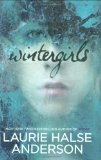
WintergirlsLaurie Halse Anderson’s novel Wintergirls is the story of Lia Overbrook, whose former best friend Cassie has just been found dead, alone, in a motel room. Lia is anorexic, and her friend Cassie was bulimic. Cassie begins to “haunt” Lia after her death, beckoning her to the other side to join her. Lia begins to succumb to her disorder and descends into depression and psychosis. Lia is crying out for attention from her parents, but they don’t see her as she really is, and Lia has no one to turn to who believes her, who understands.

I didn’t read this book with a mind toward counting as part of the R.I.P. Challenge, but I am, because it is without a doubt one of the most frightening books I have read for some time. If you are the parent of a teenage girl, or will ever be the parent of a teenage girl, you should read this book. I never had an eating disorder, but I was really thin as a teenager, and I know people probably thought I was anorexic. I developed a very real complex about my body. I thought I was fairly hideous. I used to wear sweat pants under my jeans so that I would look just a little healthier and heavier. I wish I had been able to hear that I was normal and OK and fine the way I was. I never tried to harm myself, and age and metabolism eventually took care of my body image problems, but I think most girls have body image issues of some type, even if they don’t go to the extremes Lia does, and we do not do enough in our society to tell our girls that they are beautiful and strong and fine the way they are.

Laurie Halse Anderson’s novel is haunting and realistic. Her writing style is often poetic, pitch-perfect stream of consciousness that works well for depicting Lia’s descent into the maelstrom. I found myself pulling hard for her the whole time, being angry with her, being frustrated with her, and being angry with the adults in her life for not seeing her. Laurie Halse Anderson is one of the best YA writers working right now, and her messages are so important for our kids to hear, to read. It sickens me that her books have been the subject of challenges even as recently as last week. I read this book for Banned Books Week this week in honor of Laurie Halse Anderson and the important writing she does for our kids—for all of us. Those who would seek to silence writers like Laurie Halse Anderson because they seek to be honest in the way they portray us to ourselves are only hiding from the truth and hiding the truth from their children. One way or another, the truth has a way of coming out. I hope book banners’ children don’t have to become Wintergirls in order for their parents to see, and I can’t imagine how anyone who has lost a child to an eating disorder would try to keep this book out of the hands of any child. In fact, I’m pretty sure they would give anything if their daughters could have read it.

Rating: ★★★★★

R.I.P. Challenge V

This is my third book for the R.I.P. Challenge. One more book will complete the challenge. I’m also currently reading Dracula, My Love, which will count towards my challenge goal of four books. However, I also have two other R.I.P. worthy books in the hopper.

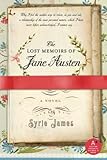
The Lost Memoirs of Jane Austen

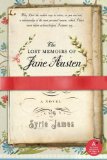
The Lost Memoirs of Jane AustenSyrie James’s first novel The Lost Memoirs of Jane Austen is the story of Jane Austen’s passion for Frederick Ashford and its subsequent influence over her novels. At the novel’s outset, Jane’s father has died, leaving Jane, Cassandra, and their mother in desperate circumstances. Shuffled from brother to brother and feeling rootless, Jane feels the lack of Virginia Woolf’s recommended room of one’s own. Jane’s brother Henry suggests a trip to Lyme, where she nearly falls from the steps on the Cobb, just like Louisa Musgrove, and is caught by her Frederick. The two fall in love as quickly as Elinor Dashwood and Edward Ferrars, or perhaps Marianne Dashwood and John Willoughby. Of course, any cursory student of Jane’s life knows how the story must end—Jane Austen may be one of the most famous “spinsters” in history—I hate to use that word, but in Austen’s time, remaining unmarried was difficult for women, and Jane herself suffered for it. However, knowing the end won’t keep readers from being easily drawn into their story.

Jane Austen fans will probably be of two minds about this book: 1) they will enjoy the references to Austen’s novels and feel the excitement that goes with catching each reference; 2) they won’t like Syrie James’s invention regarding Jane’s life. Put me firmly in the first camp. I don’t care how accurate the novel is, I enjoyed it from start to finish. I loved the allusions to Jane Austen’s books, and I was swept away into the story. James has done her research and has recreated what we do know of Jane Austen’s life in loving detail. One thing Syrie James will make you wonder about is the contents of those letters Cassandra edited and destroyed.

I pictured Frederick Ashford as Greg Wise, and if they ever make a movie, I do hope he plays Ashford. He is every bit as charming as any one of Jane Austen’s heroes—Austen fans will recognize just about all of them in Frederick Ashford. Jane Austen comes across exactly as one would imagine based on her writing and what we know of her. And she remains a historical personage with whom I would love to have a cup of tea.

I enjoyed Syrie James’s second novel, The Secret Diaries of Charlotte Brontë, but I think I like this novel even better. Something about the character of Jane Austen and her circle is captured more crisply. They feel more real than the Brontë sisters. And as much as I loved The Secret Diaries of Charlotte Brontë, it is high praise to say I enjoyed this novel even more.

Rating: ★★★★★

I read The Lost Memoirs of Jane Austen for the Everything Austen Challenge II. Four down, two more to go! May I truly finish Mansfield Park this time. However, first I will be finishing Dracula, My Love, also by Syrie James, for the R.I.P. Challenge, and Wintergirls by Laurie Halse Anderson in honor of Banned Books Week.

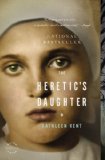
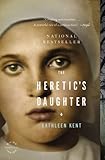
The Heretic’s Daughter

The Heretic’s Daughter: A NovelKathleen Kent has a personal stake in telling the story of Martha Carrier, who was executed for witchcraft during the Salem witch trials: she is a tenth generation descendant of Martha Carrier. The Heretic’s Daughter is a story of the witch trials told through the point of view of eleven-year-old Sarah Carrier, Martha’s daughter, who herself was one of the youngest among the accused. In fact, the real Sarah Carrier was younger than Kent’s Sarah by about five years!

Sarah describes contention against her family and the climate of Andover, Billerica, and surrounding environs prior to the witch trials. She doesn’t understand her mother’s ways, and they seem to be at odds with each other all the time. Then whispers of witchcraft start finding their way to Sarah’s ears, and before long the entire Carrier family is embroiled in the trials.

Martha Carrier
I took this picture of Martha Carrier's memorial on our trip to Salem. Click for larger version.

The Heretic’s Daughter is beautifully written and poignant. However, it’s also slow to start. The first half of the book moved slowly for me, but after the witch trials begin, the book finds its stride and moves quickly. I read the second half in one sitting. I did enjoy Kent’s portrayal of the Carrier family’s contentiousness, which does much to explain why their neighbors turn on them—and in fact, it was often contentious men and women who were accused. It’s also refreshing to read a book that seeks to portray the accused realistically instead of glorifying them as saints. It is mostly well-researched and rings true with the exception one glaring mistake—Giles Corey, one of the most famous figures in the trials because of his resistance and his major role in Arthur Miller’s The Crucible, is called Miles Corey in this book. Not only is that a strange mistake given the attention to detail Kent otherwise displays, but it’s astonishing that an an editor didn’t catch the error. However, setting that issue aside, the book itself is more accurate than Miller’s play, and I found it much more enjoyable to read, too.

I’m glad I persevered with this book through the slow beginning—which did have some beautiful passages, good description, and it laid essential groundwork—the second half of the book was worth the investment. Readers might also be interested in Maud Newton’s interview with Kent.

Rating: ★★★★☆

R.I.P. Challenge V

This book is my second book for the R.I.P. Challenge, which means I have officially finished at the level to which I committed; however, I am going to read Dracula, My Love and Wuthering Bites in the hope that I can read four books and move up a level in the challenge.

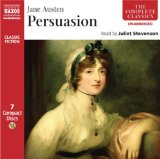
Persuasion Audio Book

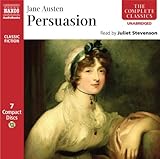
Persuasion (Complete Classics)After a great deal of consideration, I have decided Persuasion is my favorite Jane Austen novel. I had to read Pride and Prejudice, Sense and Sensibility, and Persuasion twice before I came to that conclusion. I haven’t been able to finish Mansfield Park yet—it’s on my list for the Everything Austen Challenge—but I didn’t really like Emma as much as the others. I think what clinched it for me was Juliet Stevenson’s reading of the novel in the Naxos audio book. She’s simply perfect; there’s no other way to put it.

For those unfamiliar with the story of Persuasion, it is the story of Anne Eliot, daughter of the baronet Sir Walter Eliot of Kellynch, who had the misfortune to have three daughters and must pass his estate to a cousin who has little to do with the family. Anne is the under-appreciated, sensible daughter in the family. She is now 27, and her prospects of marriage look dim now that she has “lost her bloom.” Her older sister is snooty and vain, like their father, and her younger sister is a silly hypochondriac. Their mother has been dead for some time, but a friend of hers, Lady Russell, has taken on that sort of role, and Anne looks to her for guidance and support—certainly not more so that eight years earlier when Lady Russell persuaded her to break off her engagement to Frederick Wentworth, who seemed at that time unlikely to produce a fortune adequate to deserve the daughter of a baronet. But Anne has pined for Wentworth ever since, and their paths cross once again. Anne has no reason to hope they will have a second chance, especially after Captain Wentworth seems to have an eye for Anne’s sister Mary’s sister-in-law Louisa Musgrove. Can he be persuaded that Anne made a mistake before and to give her a second chance?

Juliet Stevenson’s characterization of the silly Mary Musgrove and the pompous Sir Walter Eliot were hilarious. I loved the line from Admiral Croft, after noting he removed several mirrors from his dressing room at Kellynch, about Anne’s father being a “dressy sort of man” to have had so many mirrors. Where Juliet Stevenson really shone, however, was in evoking feeling in parts of the novel that previously haven’t really struck me in the same way. She read with a tremble, as though fighting back tears, Captain Harville’s line to Anne, “Poor Fanny! she would not have forgotten him so soon!” I don’t think I’ve been moved to tears by Captain Harville before. And forget about Captain Wentworth’s letter. I was driving on I-285, sitting on the edge my seat, my hand over my mouth, and it was impossible not to feel the same way as Anne Eliot as she read those words. And then, “Such a letter was not soon to be recovered from.” Well, I pretty much laughed out loud. Of course it wasn’t.

Rating: ★★★★★

I listened to this book for the Everything Austen Challenge.

Everything Austen Challenge

Full disclosure: I won this book in a contest at Austenprose.