Between, Georgia, by Joshilyn Jackson

Between, GeorgiaJoshilyn Jackson’s novel Between, Georgia is the story of Nonny Frett, born to teenage Hazel Crabtree, who turned up on Bernese Frett Baxter’s doorstep in labor in the middle of the night. Bernese, a nurse, also happens to be the sworn enemy of Hazel’s mother, Ona Crabtree. Hazel gives her baby to the Fretts, and Nonny is adopted by deaf and blind Stacia Frett. Once Ona gets wind of the deception, her cold war with Bernese heats up and eventually breaks out into all-out war in an incident involving a dog attack. Biologically a Crabtree, but raised a Frett, Nonny always seems to be in between: caught between her no-account husband Jonno, whom she can’t seem to get rid of, and her friend, Henry Crabtree (either a distant relation or no relation).

First of all, it bears repeating (because every review I’ve read by a Georgian includes this fact), Between, Georgia, is a real place. I have driven through it. And that’s all most people say about places like Between. It is Between Athens and Atlanta, yes, but also exactly between Loganville and Monroe, which is think is the original origin of its name (if I’m not mistaken). One review I read of this book criticized it for having eccentric characters. It is true that Southern literature has its fair share of crazies. Maybe this video can illuminate things for you Yankees.

http://www.youtube.com/watch?v=W3KQgulBzh0

I know the reviewer said she’s lived in a small Southern town and folks were actually normal, and she’s probably telling the truth. Mainly (as Huck would say). But these are real people. I sure know them. So yes, this book has crazy people in it, but I think some of them were my family members—in fact, I’m pretty sure a lot of the Crabtrees were based on family members.

Joshilyn Jackson spoke at a Georgia Council of Teachers of English conference I went to a couple of years ago. She is hysterical in person, and has a wonderful voice, which is why folks seem to like her audio books. I remember her saying at the conference that she got interested in Between as she drove through town because she noticed the population sign: it had evidently lost a resident, and the sign had been changed. Jackson imagined that a person who would be so meticulous about the population sign must be someone like Bernese.

This was a fun, light read, and it was genuinely funny in some parts. It’s always a bit interesting to read about places you know or have visited or lived in.

Rating: ★★★★☆

This book qualifies for the Loved One’s Choice book in the Take a Chance Challenge because my mother passed it on to me and said I would like it. She was right. I did.

Great Expectations, Charles Dickens

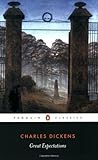
Great ExpectationsWhat can I say about Charles Dickens’s Great Expectations? I am not sure if a summary is necessary or not, but it’s the story of an orphan named Pip who is raised by his cruel sister and kind brother-in-law (seriously, Joe Gargery is one of the sweetest men in classic literature, isn’t he?). One day he encounters a convict who threatens him if he doesn’t bring food and a file to remove the convict’s chains. Pip steals food from his sister’s cupboard, but feels guilty and is dreadfully worried he will be caught. Some time later, his uncle brings him to the home of Miss Havisham so he can be a playmate to Miss Havisham’s adopted daughter Estella. Estella is a cold-hearted witch, and she learned well the lessons about hating men taught by her adopted mother, abandoned at the altar and forever after frozen in that moment of time (from the wedding dress to the moldy cake and clocks stopped at the time of the catastrophe). Seriously Miss Havisham is one piece of awesome characterization. Pip wants more than anything to be a gentleman so he has some chance of earning Estella’s love, for predictably (though who knows why, because she doesn’t deserve it), Pip falls in love with her. Pip suddenly has a mysterious benefactor who pays for him to become a gentleman. He goes to London, embarrassed by his humble beginnings and ashamed of his family (thus avoiding them). He racks up debts. He discovers who his benefactor is, and it is NOT who I thought it would be or who Pip thought it would be, either. In case you haven’t read it, I will not spoil it for you. Eventually Pip loses his money, but he gains his old sense of self back with Joe Gargery’s help.

I read this novel via DailyLit, and despite it being originally published as a serial novel, I have to say I think I might have done better to read it on my Kindle. I had a little trouble following everything, or I felt like I did. After reading some summaries online, I discovered I actually followed the novel fairly well, but I had forgotten a major character and therefore did not make a very important connection late in the book. Charles Dickens is a master of writing character, and his characters Miss Havisham, Joe Gargery, and Abel Magwitch jump off the page. I also loved Wemmick’s father, who everyone calls “The Aged.” The characters were a bit difficult for me to keep up with because of how I chose to read the book. Pip I found frustrating. Why does he fall for Estella when she clearly does nothing to earn his affection? (I guess he’s a masochist.) Why does he turn his back on good old Joe? He turns out all right in the end, but he makes a lot of annoying mistakes that make you want to kick him.

I don’t know why I never read much Dickens. This is only my third Dickens book (after A Christmas Carol and A Tale of Two Cities). It was an enjoyable read, and I will of course read more Dickens, but more than anything else, it’s satisfying to cross off a book I feel like I should have read a long time ago.

Rating: ★★★★☆

I read this book as part of my own Books I Should Have Read in School, but Didn’t Challenge. It’s my first read for that challenge, and I need to read five more to complete it. I’m not going to count it as historical fiction because it seems to me to be set in Dickens’s own present, which doesn’t fit my definition of historical fiction per sé. Miss Havisham brings the gothic, however, so I will count it toward the Gothic Reading Challenge (16 more books to go on this challenge). My next DailyLit book will be The Man in the Iron Mask. Oooh, I love Dumas’s adventures! And French! Bonus!

Books I Should Have Read in School, but Didn't

A Discovery of Witches, Deborah Harkness

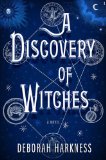
A Discovery of Witches: A NovelDeborah Harkness’s debut novel A Discovery of Witches combines several elements I like—a great gothic house (and a castle), supernatural creatures (especially witches; I love witches), and academia. Diana Bishop, a rather reluctant witch and descendant of Bridget Bishop—the first “witch” executed in the Salem Witch Trials, is a professor researching the history of alchemy in Oxford’s Bodleian Library when she is able to call forth a manuscript called Ashmole 782, believed lost for over 150 years. Diana suddenly attracts the attention of several other creatures—witches, daemons, and a vampire named Matthew Clairmont. Soon the two make even more startling discoveries—hidden inside Diana’s DNA are predispositions for just about every magical power witches possess. Together they must discover what Ashmole 782’s secrets are; why her parents were murdered when she was a child; and why daemons, witches, and vampires want to prevent them from discovering anything (and from being together).

A review on Amazon describes this as a combination of The Da Vinci Code, Harry Potter, and a romance, which is just about right, except I’d throw Twilight into the mix. It’s certainly better written than The Da Vinci Code and perhaps Twilight, but not Harry Potter. It must be hard to write about vampires right about now. For one thing, we want the strange Byronic dangerousness of the vampire, but we don’t like the whole murdering people to eat deal. We have, if you’ll pardon the pun, taken the fangs out of our vampires. Edward Cullen is a great example of this phenomenon, and Matthew Clairmont is not terribly different. Despite the author’s attempts to tell us otherwise, he never comes across the page as very dangerous. Nor do any of his “family.” The vampires that do seem frightening are all bad guys. Despite lacking some teeth, they are fairly charming. I particularly liked Marcus. For astute readers, there’s a reference to another famous vampire in chapter 13 (I think—it’s hard to keep track when you’re listening) that vampire fans will enjoy. Harkness also dispenses with some of the vampire myths—her vampires can go out in the sun without incinerating (or sparkling).

I actually liked the witches much better, especially Diana’s aunts Sarah and Em. Sarah has a sort of hardened no-nonsense way of speaking, and Em is just sweet. I absolutely love their house. I won’t spoil it for those of you who want to read it. The daemons confuse me. I can’t tell what they are that makes them different from humans except for exceptional creativity and intelligence. They don’t seem to have any supernatural powers like vampires or witches. Harkness’s witches, I understand, but I would have liked to have understood her vampires better.

I think I enjoyed this book on audio perhaps more than I might have in print because Jennifer Ikeda was such a great reader. She can do a variety of accents easily—French, Australian, and Scottish. She made each character sound different and instantly recognizable. I did find myself wishing I were reading the hardcover in some parts so I could easily flip around and check things.

However, I admit I don’t care a lot for the main characters, Diana and Matthew. Are they just grown up versions of Bella and Edward? Well, kind of. Diana is Bella with a little bit more self-esteem and attitude, maybe. The descriptions of the places, the food, and the other characters made me keep listening, and I enjoyed it enough to read the sequel, which I might enjoy more because of where it will be set (a bit spoilery, so I won’t give it away). Diana and Matthew are a strange couple. They seem a little forced together as though they were set up by a good friend and are trying to make a go of it without really feeling any sparks.

It’s a worthy debut, and I think it will likely be fairly popular. Despite my feelings about the main characters, I did enjoy the book and look forward to the next one.

Rating: ★★★★☆

Diana’s aunts Sarah and Em and Matthew’s best friend Hamish qualify this book for the GLBT Challenge. The supernatural elements and ancient houses make for a great Gothic Reading Challenge read. I need to read 17 more books for the Gothic Reading Challenge.

Water for Elephants, Sara Gruen

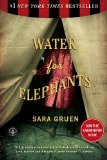
Water for Elephants: A NovelTonight is a school night, and I should probably wait to write this review. After all, I am probably one of the last human beings in America to read Water for Elephants, so it isn’t as if my review couldn’t wait. Except I read this book in a day. A day. I just sat and read and read and couldn’t put it down. I think the last book I did that with was Ernest J. Gaines’s A Lesson Before Dying. It was an awesome way to spend my Sunday. Jacob Jankowski is my BFF.

For those unfamiliar with the plot, Jacob Jankowski is 90. Or 93. He is living in an “assisted living” home. One day, the residents notice a circus going up near the home, and it brings back a flood of memories for Jacob. He unfolds for the reader the story of his time with the Benzini Brothers Circus in 1931; of how he met Marlena, Walter, Camel, and a cast of other characters, especially Rosie, who is one amazing elephant (I fell in love with her, too). It was an incredible ride, and I’m not sure how to summarize it better than that.

Gruen’s descriptions are so apt one can smell the animals, the popcorn, the sawdust, and the sweat. It’s an incredible achievement. The entire spectacle is so vivid that you’ll swear all the people contained in its pages are real and breathe, or did once. It’s the kind of book that makes you forget you’re reading a book and transports you to another time and place, and it’s definitely earned a place on my favorites shelf. How on earth did I wait so long to read it? I think on the face of it, I didn’t think it would interest me because I didn’t consider myself interested in circuses. Then a colleague at work who has great taste in books (with the exception of saying The Great Gatsby is overrated) said it was a wonderful book, which was high praise indeed coming from him, so on my TBR pile it went. And it sat there for too long. I am glad I read the book before I saw the movie so I can have my own picture of the characters and my own enjoyment of the story untainted by a film version. I’m sure the film will be fine, but you know how it is with books and movies. I’ve only ever seen one movie that was better than the book it was based on, and that had as much to do with the charismatic actors as it did with the smart changes and cuts made (it was The Princess Bride, for the record).

If you, like me, have waited to read this one, do yourself a favor and read it now. I’m already pushing it into my husband’s hands (and hoping he doesn’t laugh at my annotations). I would give it infinity stars like I’d like to give Revolution if I could.

Rating: ★★★★★

This book was read as part of the Historical Fiction Reading Challenge and the Take a Chance Challenge: LibraryThing Pick. I have nine more historical fiction books to read to complete the first challenge, and nine more Take a Chance books to read to complete the second.

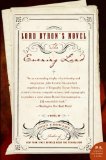
Lord Byron’s Novel: The Evening Land, John Crowley

Lord Byron’s Novel: The Evening Land (P.S.)John Crowley’s novel Lord Byron’s Novel: The Evening Land has its origin in a famous storytelling contest. In the Year Without a Summer (1816), Byron rented the Villa Diodati on the shores of Lake Geneva, Switzerland and met up with friends Percy Bysshe and Mary Shelley. Mary Shelley’s stepsister Claire Clairmont was traveling with the Shelleys, who had eloped together from England, and John Polidori, Byron’s doctor, was traveling with Byron, who was fleeing infamy. Unable to pursue outdoor recreations, the company grew bored and restless. Conversation turned to dark subjects such as ghosts and Erasmus Darwin’s experiments with galvanism. Byron suggested a supernatural story-writing contest. Mary Shelley began writing Frankenstein, while Dr. Polidori wrote The Vampyre, which would later inspire Bram Stoker’s own vampiric tale, Dracula, and through Dracula, just about every other vampire story written. Polidori is believed to have based his vampire, Count Ruthven, on Byron himself. (Have you met a literary vampire who is not Byronic? I haven’t.) The two major poets, Byron and Shelley, are not believed to have produced anything of note. Crowley’s premise is that Byron did indeed produce a completed novel, The Evening Land, that was suppressed by his estranged wife Lady Byron. Crowley imagined that the novel was preserved by Byron’s daughter, Ada Byron King, Countess Lovelace, who is widely acknowledged to be the first computer programmer (P.S. March 24 is Ada Lovelace Day). Crowley’s Lovelace is forced to burn the manuscript of The Evening Land by her mother, but she enciphers it first. Enter Alexandra “Smith” Novak, a web programmer for the website strongwomanstory.org. She and one of the website’s benefactors are given a mysterious bequest by a mysterious man. It turns out to be the enciphered novel. Smith engages her own estranged (and notorious) father, a former Byron scholar turned filmmaker exiled from the United States because of a past nearly as sordid as Byron’s, and her partner, Dr. Thea Spann, a mathematician, to help her decode the cipher. In the process, Crowley discusses the complex relationships between both fathers—Byron and Lee Novak—and their daughters—Ada and Smith.

This book is an amazing achievement. I’ve read enough Romantic-era novels and Byronic poetry to hear Byron’s authentic voice in the novel uncovered in the frame narrative of its discovery. Even Harold Bloom, that illustrious champion of Romantic poetry (and dead white males) enjoyed the novel and gave it a positive blurb:

Lord Byron’s Novel: The Evening Land is an extraordinary confluence of High Romanticism and our Information Era: every note in it rings with authenticity. ‘The Evening Land’ is a novel Byron indeed might have written, and his daughter, Ada, as created by Crowley, is vividly memorable, worthy of her exuberant father.

If I can be allowed one quick digression, that last line smacks of all kinds of sexism to me, but that’s Harold Bloom for you. The fact is, Crowley’s Ada is “vividly memorable,” as is her “exuberant father.” The novel is a thinly veiled retelling of Byron’s own life in many respects, and through her preservation of the novel, Ada comes to make peace with her father. Crowley’s story certainly explains one of the great mysteries of Byron’s legacy—Why would his daughter, taught to hate her father by a mother poisoned by her own ill will for Byron, wish to be buried beside the father she had never met?

The emails between Lee and Smith, as well as between Smith and Thea, among other letters, form an epistolary frame in which Byron’s novel and Ada’s commentary are enclosed and share a similar story. Smith, like Ada, rediscovers her estranged father through his work, but the difference is that her father is still alive, and she has, if she chooses, the opportunity to end the estrangement.

I struggled with how to rate this novel because as an authentic Romantic novel, the parts containing Byron’s “writing” were dense, overblown, and worthy of Sir Walter Scott. Sometimes I had to plow through those sections even while admiring how much like Byron Crowley managed to write. The emails and letters were, on the other hand, quick reads. I like the format of the novel, the frame narrative and epistolary interchange. In the end, Byron’s novel was as good as any other Romantic novel I’ve read, and that’s saying something of Crowley’s achievement. I can’t think of too many writers who could pull off a feat like this, and whether I was able to put the book down at times or not, I have to tip my hat to his talent.

Rating: ★★★★★

I read this novel as part of the Historical Fiction Reading Challenge, the Gothic Reading Challenge, and the GLBT Challenge (Byron was bisexual, and this part of his character was expressed in the novel, and the characters Smith and Thea are lesbians). I have ten more books to go to complete the Historical Fiction Reading Challenge, and eighteen more for the Gothic Reading Challenge (I really bit off more than I can chew with that one). The GLBT Challenge has no set number of books, so if I were so inclined, I could call the challenge met, but I’m not so inclined.

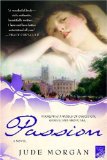
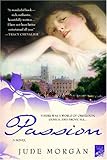
Passion, by Jude Morgan

Passion: A Novel of the Romantic PoetsAfter having finished Jude Morgan’s novel Passion, I feel emotionally spent. What a rollercoaster ride this aptly named novel has taken me on.

The novel begins as Mary Wollstonecraft, mother of Mary Shelley, attempts to commit suicide by drowning herself. It’s a story that’s been well known to me since college when I first encountered Wollstonecraft and her Vindication of the Rights of Woman. I was entranced by the story because I latched on to a curious detail: Wollstonecraft, mistreated by man in a world that didn’t appreciate her intellect, was bouyed by her skirts—the symbol of her femininity saved her, and later, it would take her away as she died following her daughter Mary’s childbirth. The rest of the novel unfolds as the lives of the Romantic poets Byron, Shelley, and Keats are told through the voices of the women who loved them: Lady Caroline Lamb, Augusta Byron Leigh, Mary Shelley, and Fanny Brawne. At times the stories entwine as the women move in the same circles, and ultimately, each is left behind as the man she loved dies before her. How each woman resolves the issue of forging an identity separate from her lover is alluded to in the epilogue, but largely left unwritten.

If ever a book were written just for me, this book would be it. I have been devoted to the Romantic poets since high school. Jude Morgan not only manages to bring the poets and their lovers alive, but he also manages to do so with painstaking research and attention to historical detail. I was transported to another time where I knew and loved all of these people. Much of Morgan’s research has come from primary sources—letters, memoirs, diaries, and the like, for much of it reads exactly like the accounts from which they were drawn, but somehow sketched out in sharper relief. My favorite characters were probably Byron, Caroline Lamb, and Fanny Brawne, but truthfully, I enjoyed meeting everyone (although I kind of hated Claire Clairmont, which may have been Morgan’s intention). I felt wrung out with sadness as each of the poets died—the inevitable conclusion I knew would happen, but that I was still inexplicably unprepared for.

If I have one criticism of the book, it’s that it felt a little too unwieldy at times. Morgan never manages to lose control of the story, however, and even switching narrators and voices is no trouble. The reader can follow Morgan down each path. Keats’s story suffers the most in this large tale, while Byron and Shelley loom large on the page. Perhaps that is also a deeper message one can glean from the story—it was also thus, no? Towards the end of the book, Fanny Brawne reflects on Keats’s pronouncement that she is like a fire:

Oh, I would much rather be the fire. Think of the other elements: earth is rather too plain and sluggish, and I hope I have too much sense to be forever floating about in the air, and water has something too cool about it for my temper, which is, I know, a little too much on the lively side. (459)

It seemed as if all the women were described in that paragraph. I saw Augusta Leigh as like the earth, not “plain and sluggish,” necessarily, but the bedrock, the only solid thing in Byron’s life. Earthy would be a great adjective to describe her. And if Brawne sees someone “floating about in the air” as having little sense, then air is Caro Lamb, who threw her dignity, happiness, and family away for a mad obsession for Byron. Mary Shelley, then, is water, cool, collected, sometimes too passionless for Shelley, who often compared her to the moon in his poetry—not to mention that life-claiming water seemed to be a recurring theme of Mary Shelley’s life.

What a wonderful book. I would give it infinity stars if I could. I never mark my books (no trouble highlighting a Kindle and taking notes, but somehow I feel I’m defacing my books if I write in them), but I found I had to mark passages and talk back to this story, at least a little. I certainly can’t think of too many other books I’ve read that have had me doing as much research and reading about its subjects as this one. A new favorite. The title is perfect in all senses of the word, but don’t let the cover scare you off—it’s pretty, but makes the book seem too frivolous and light. Mary Shelley seems to capture the essence of this book in one sentence: “How can you love someone so much, and not understand them at all?” (383).

Rating: ★★★★★

I read this book for the Historical Fiction Reading Challenge. I’ve read four now. Eleven more to go.

https://www.danahuff.net/wp-content/uploads/2010/12/GRC.jpg

The story of the writing of Frankenstein and some of the literal Byronic hero qualify this book as my first read for the Gothic Reading Challenge. Nineteen to go on that challenge. I must have been crazy.

I’m going to have to puzzle over where to put this on the Where Are You Reading Challenge because these guys went all over Europe. I guess England.

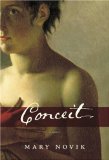
Conceit, Mary Novik

ConceitMary Novik’s novel Conceit is the story of John Donne’s daughter Pegge and her quest to discover what love is. She is entranced by her parents’ relationship—in an unusual move for their time, they married for love, but by the end of his life, Novik’s Donne seems to regret this decision in some ways as he searches for husbands for his own daughters and tries to suppress his past and his feelings for Ann, who died years before the novel’s events. He is concerned about the legacy he leaves behind and works hard to construct an expurgated life story for himself, focused on his work as Dean of St. Paul’s. The novel begins as Pegge braves the Great Fire of London in 1666 to save the effigy of her father in St. Paul’s and travels back through Pegge’s memories of her father’s death, the memories of her own parents, and forward again to Pegge’s life as a wife, mother, and grandmother.

Novik brings seventeenth century England to life in this novel. In many cases, I think writers of historical fiction create characters who act too much like modern people. This novel reminded me of Anthony Burgess’s Nothing Like the Sun (review here) in its attention to period detail. Novik has managed to capture a place that seems much more real than most historical fiction novels do. Even though Pegge is somewhat eccentric for her time, I found her completely plausible as a character because of Novik’s skill as a writer. What else would the daughter of John Donne be? I found myself shaking my head at her and sympathizing with her husband William a great deal, but she was oddly endearing. I really enjoyed reading about all of her experiments (from fish recipes to horticulture). A favorite quote by Novik’s Donne from the novel:

“That is my last poem, Pegge. See that it gets to Marriot for printing with the others.  I am glad it was you who came into the room just now. Of all my children, you have the most poetry in you, thought God knows how you will use it.”(214)

Conceit is a rare historical novel that allows the reader to feel immersed in a time period, learn some history, and enjoy the story all at once.

Rating: ★★★★★

I read this book for the Historical Fiction Reading Challenge. I’ve read three now. Twelve more to go!

Revolution, Jennifer Donnelly

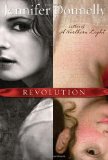
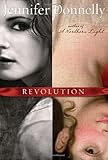
RevolutionAndi Alpers, one of the protagonists of Jennifer Donnelly’s Revolution, is a guitar prodigy attending a tony private school in Brooklyn, but she’s haunted by the loss of her brother Truman, her mother’s subsequent breakdown, and her father’s absence. When she has decided not to write her senior thesis, which will prevent her from graduating, her father, a Nobel Prize-winning scientist, takes her with him to Paris, where he is helping his historian friend G with a project—they are testing the DNA of a heart G discovered to determine if it belonged to the lost king Louis XVII, the Dauphin of France, who died in the last days of the French Revolution, imprisoned, mad, alone, and orphaned. Andi’s father hopes that access to primary sources and his strict guidance can help Andi make some progress on her thesis, which concerns the musical influence of eighteenth century composer Amadé Malherbeau on modern music. G gives her a guitar discovered in the catacombs, and Andi finds a diary hidden in a secret compartment. The diary belongs to Alexandrine Paradis, a performer hired by the French royal family to entertain the young Dauphin. As Andi reads the diary, she becomes entranced by Alex’s story. While in Paris, she also meets Virgil, a Tunisian musician, and forges a strong connection with him. One night when he takes her to the catacombs, the world of Alex’s diary suddenly becomes real when Andi discovers herself transported to the last days of the French Revolution.

I cannot describe how much I loved this book. I said in my last post that a gauge of how much I like a book is whether or not I can put it down. I didn’t want this book to end. I put it down only to prolong the pleasure of reading it. I could easily have finished it off in a couple of days if I hadn’t done so. The strongest gauge of how much I love a book is when I wish I had written it myself. I don’t know why I feel that way—I suspect I want the book to belong to me even more than it does if I’ve read it. Jennifer Donnelly is an excellent writer. She brings the life of a 21st Brooklyn teenager to life in ways I’ve seen few young adult authors do with as much honesty and realism. She also brings Revolutionary-era France to life in sharp-relief. The invented parts of her book fit so seamlessly with the historical aspects, that you will find yourself Googling references, unable to tell what is real and what is invented. Andi and Alex are likable, real protagonists, and I found myself falling in love with the characters. Donnelly managed also to kindle an interest in an era of history I have previously not been as interested in—the French Revolution. I know you’re thinking “How could I not have been interested it that?” I don’t know! I sure can’t figure it out after reading this book, but I know I want to read more now. This novel isn’t just one of the best historical fiction YA books I’ve read, or one of the best YA books I’ve read. It’s one of the best historical fiction books I’ve read of any stripe. Whether you think of yourself as interested in France, the French Revolution, or even music or not, you will enjoy this book. What’s not to love in a book that mentions both Jeff Buckley and “Ten Years Gone,” my favorite Led Zeppelin song, in nearly the same breath as Bach and Beethoven? My recommendation: READ IT!

Here’s the book trailer, if you’re interested in learning a bit more about the book:

Rating: ★★★★★ (I wish I could give it six stars. Out of five.)

I read this book for the Historical Fiction Challenge and for the YA Historical Fictional Challenge. I now have 13 books left for the Historical Fiction Challenge and 14 left for the YA Historical Fiction Challenge.

The Lady and the Poet, Maeve Haran

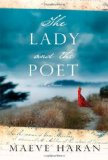
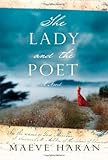
The Lady and the PoetMaeve Haran’s novel The Lady and the Poet chronicles the romance and ultimate marriage of British poet John Donne and Ann More, whose father is a third generation knight in the employ of Queen Elizabeth. He has in mind a much more prestigious match for his daughter than a poet who is the son of an ironmonger, but Ann has romantic sensibilities and strong opinions, and John Donne is who she wants. Haran’s novel is told from the point of view of Ann More, giving voice to a lady who is historically silent. The novel is ultimately a historical romance that describes how the poet and his lady fell in love and managed to marry, despite her father’s wishes.

One of my gauges of whether I loved a novel or not is my ability to put it down. I never had much trouble putting this one down. I wasn’t on the edge of my seat for John Donne or Lady Ann. Of course, I knew how it would end, but that doesn’t always prevent me from flipping madly to see how it ended up that way. On the other hand, it was a well-researched, historically accurate description of life late in Queen Elizabeth’s reign. I enjoyed some of those historical details. I enjoyed learning more about the Donnes, and historical evidence does support the notion that their marriage was a love match. I did mark a couple of passages that I enjoyed. In one, George More, Ann’s father, is admonishing Ann to stay away from Donne by describing his verse:

“[T]here is one whose company I would fain you shun, since it befits not an innocent maiden. Master John Donne. Your uncle thinks highly of him yet I came across some verse of his being handed round the Inns of Court and laughed over by its inmates like naughty schoolboys. It seemed to be both lewd, and, even worse, satirical. (104)

You have to watch out for that satire. Here’s another in which I read a modern criticism of Twitter (and yes, I acknowledge it’s just me):

Yet Prudence’s sadness at having to leave London the moment when she had just arrived, and her twittering response to each sight we passed on the road, no matter how trivial, from the marvel of paving stones, to the fascination of every shop, tavern or bear pit, and the exclamation every two minutes at how polite the Lord Keeper’s servants had been when I am sure these august gentlemen took her for a humble rustic, made me wish she had stayed behind. (108)

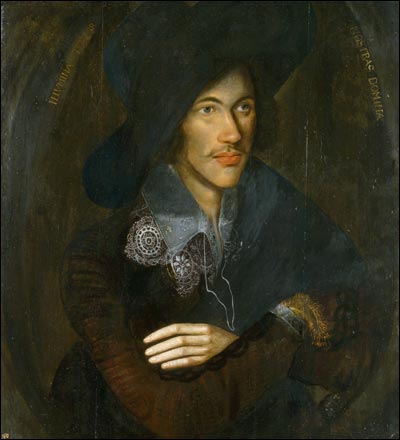
John Donne
John Donne as he looked when Ann More would have met him.

I’m not sorry I read it because of the insight it gave me into the life of John Donne, whose poetry I teach my British Literature students. However, it never really grabbed and convinced me I needed to keep turning pages.

Unfortunately, I ruined my copy by getting it wet. I set it carefully down next to the bath in a place I thought was dry, but was actually a puddle (thanks to my son). It took days to dry. I’ve never seen a book so wet.

Rating: ★★★½☆

This is my first book for the Historical Fiction Reading Challenge. Fourteen more to go!

Mansfield Park, Jane Austen

Mansfield Park (Penguin Classics)I finished Mansfield Park just under the wire with less than 24 hours remaining in the year, which means that I have also completed the Everything Austen Challenge.

Mansfield Park is the story of Fanny Price, daughter of the poor sister of Lady Bertram of Mansfield Park. The Bertrams offer to take Fanny in as a favor to their sister, who has had the misfortune to marry poorly and have yet another child practically every year. Fanny is at first treated disdainfully by the Bertrams and her aunt Mrs. Norris, the other sister of Lady Bertram, but she proves her worth to the family through her constancy of character, her forbearance, and her usefulness. Her cousin Edmund, the second eldest son, is the only member of the Bertram family to love Fanny from the first. She develops a love for Edmund beyond the sort of brotherly love he feels for her and is appalled when Henry Crawford, a man with what Fanny deems to be a dubious character, begins trying to win Fanny’s heart. Even worse, Edmund falls in love with Henry’s sister, Mary Crawford. Will Fanny ever catch a break?

This book is very different from the other Jane Austen books I’ve read. I always enjoy a trip into her world. However, it is in this book that Austen truly shows us a peek into the lives of people outside the gentle class with her portrayal of the Prices. Mary Crawford is a nasty little piece of work, and I never liked her. Very selfish and vain. I never liked the Bertram daughters, Maria and Julia, either. They were spoiled and reminded me of the ugly stepsisters in Cinderella. In fact, their aunt Mrs. Norris compares well with the wicked stepmother in that story as well, and of course, Fanny is the too-good-to-be-true, long-suffering Cinderella. She always puts others before herself. I feel at some points in the book, she plants herself on a bit of a moral high horse. But worse, she doesn’t seem to have a single fault. It’s no wonder that some readers don’t like her. She’s a bit too perfect. On the other hand, she is spunky in defying the Bertrams in refusing to marry Henry Crawford. She alone seems to have the true measure of his character.

Here in this novel we have an elopement even more scandalous than that of Lydia and Mr. Wickham. I was extremely puzzled by that plot turn, even though I knew it was coming, because I didn’t feel the groundwork was properly laid for it. I didn’t buy that either Maria or Henry Crawford were interested enough in each other to run off together they way that they did. On the other hand, I did feel Jane Austen explored some issues in this novel that she didn’t explore in her others, and the ending is not nice and neat. Maria has irreparably damaged her reputation and relationship with her family. Tom is sick, and it looks like consumption. Julia didn’t fare much better than Maria. Definitely not a happy ending for all.

Ultimately, I liked the novel better than I expected to, but not as much as Persuasion, Pride and Prejudice, or Sense and Sensibility. However, now I can say I’ve read all of Austen’s complete novels.

Rating: ★★★½☆