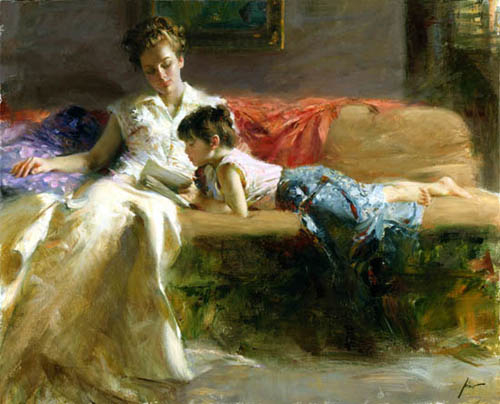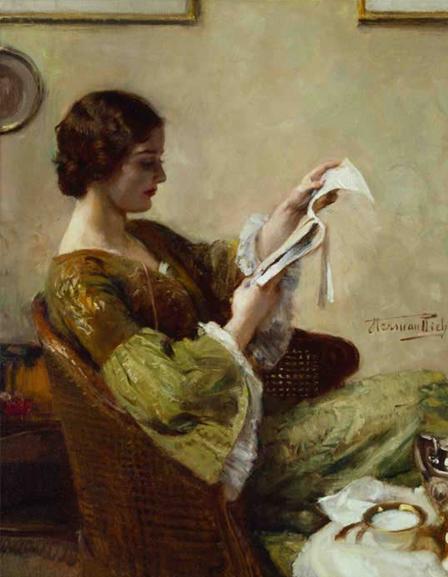
Young Woman Reading by Hermann Jean Joseph Richir

Saturday Reads: January 21, 2012

Share

Young Woman Reading by Hermann Jean Joseph RichirSaturday Reads is a weekly feature sharing bookish links from news, blogs, and Twitter that made up my Saturday reading.

I spent a lot of time at my two favorite newspapers’ book sections on my iPhone this morning. The Guardian has a great article by Margaret Atwood reflecting on [amazon_link id=”038549081X” target=”_blank” ]The Handmaid’s Tale[/amazon_link] some 26 years after it was published. A commenter quoted Rick Santorum, underscoring just why Atwood’s book is as important as ever. Here’s my review of The Handmaid’s Tale from my archives, if you’re interested.

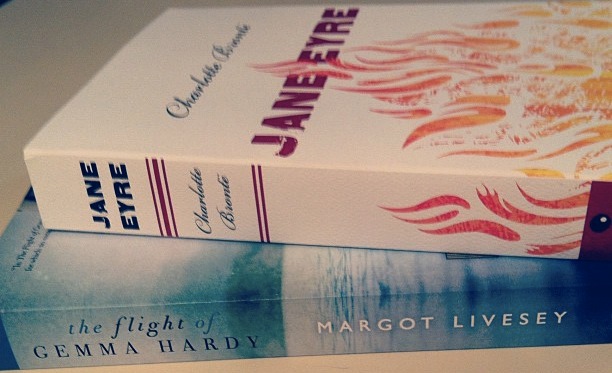
The New York Times has a great review of [amazon_link id=”0062064223″ target=”_blank” ]The Flight of Gemma Hardy[/amazon_link], which I will soon be reading for TLC Book Tours (very excited!).
New Books

The publishers also sent me a pretty copy of [amazon_link id=”B004CFA9Y6″ target=”_blank” ]Jane Eyre[/amazon_link], which Margot Livesy’s book is based on. I can’t wait to reread that one. It’s got deckle-edged pages and the paper cover is textured. I am very much in favor of this new trend in making classics look cool with bold, creative covers. As much as I love old paintings, I think they’re becoming a little played as book covers (she said, knowing she used one on the cover of her own book—in my defense, I don’t have the budget to pay a graphic artist to design one). I think winter is a good time to read gothic classics.

The New York Times also has good reviews of new nonfiction, including Ian Donaldson’s new biography [amazon_link id=”0198129769″ target=”_blank” ]Ben Jonson: A Life[/amazon_link], John Matteson’s new biography [amazon_link id=”0393068056″ target=”_blank” ]The Lives of Margaret Fuller[/amazon_link], and Richard W. Bailey‘s new book [amazon_link id=”019517934X” target=”_blank” ]Speaking American[/amazon_link].

I also really liked this feature on Edith Wharton as New York will celebrate her 150th birthday on Tuesday. Nice link to [amazon_link id=”B005Q1W10A” target=”_blank” ]Downton Abbey[/amazon_link] and discussion of Wharton’s own novel [amazon_link id=”0140232028″ target=”_blank” ]The Buccaneers[/amazon_link].

Of course, Charles Dickens also celebrates a big (200th) birthday this year, and The New York Times has a fun feature on Dickens. Favorite quote? “The fact is that Charles Dickens was as Dickensian as the most outrageous of his characters, and he was happy to think so, too.”

I’m think anyone interested in New York might find the new book [amazon_link id=”067964332X” target=”_blank” ]New York Diaries: 1609-2000[/amazon_link] intriguing. It sounds like the book has a variety of entries, from the “famous, the infamous, and the unknown in New York.” The Times reviewed this one, too, of course.

Flavorwire had some interesting posts, too. I particularly enjoyed “The Fascinating Inspirations Behind Beloved Children’s Books” and “10 Cult Literary Traditions for Truly Die-Hard Fans.”

Finally, I enjoyed this reflection on A Wrinkle in Time at Forever Young Adult. [amazon_link id=”0312367546″ target=”_blank” ]A Wrinkle in Time[/amazon_link] will be 50 this year. Can you believe it?
Related posts:


Share
Teaser Tuesdays

Teaser Tuesdays: A Northern Light

Share

Teaser TuesdaysTeaser Tuesdays is a weekly bookish meme, hosted by MizB of Should Be Reading. Anyone can play along! Just do the following:

  • Grab your current read
  • Open to a random page
  • Share two (2) “teaser” sentences from somewhere on that page
  • BE CAREFUL NOT TO INCLUDE SPOILERS! (make sure that what you share doesn’t give too much away! You don’t want to ruin the book for others!)
  • Share the title & author, too, so that other TT participants can add the book to their TBR Lists if they like your teasers!

My teaser:

[amazon_image id=”0152053107″ link=”true” target=”_blank” size=”medium” class=”alignleft”]A Northern Light[/amazon_image]“Writers are damned liars. Every single one of them.”

—[amazon_link id=”0152053107″ target=”_blank” ]A Northern Light[/amazon_link], Jennifer Donnelly, p. 93


Related posts:


Share
Top Ten Tuesday

Readers Who Don’t Read Historical Fiction

Share

Top Ten Tuesday

I’m a huge fan of historical fiction. I enjoy learning when I’m reading, and I have always been fascinated by history. My historical fiction reading habits may have formed when I was in middle school and started reading the Sunfire historical romances. But I recognize that not everyone really likes historical fiction. If I could recommend ten books I think might change your mind if you count yourself among those who don’t like it, I think it would be the following books:

  1. [amazon_link id=”0441020674″ target=”_blank” ]Those Across the River[/amazon_link], Christopher Buehlman: If you think you prefer horror or even just creepy stories, this historical fiction novel about werewolves in a small Georgia town might just prompt you to give historical fiction a chance. Just because it’s set in the past doesn’t mean it’s all petticoats. Review.
  2. [amazon_link id=”0440423201″ target=”_blank” ]Outlander[/amazon_link], Diana Gabaldon: This first book in the Outlander series has a bit of romance and sci-fi as well as some war drama as it begins as World War II ends and moves back in time to just before the second Jacobite Rebellion. Notoriously hard to classify, Diana Gabaldon’s books take you squarely back to another time and keep you turning the pages, too. Review.
  3. [amazon_link id=”0765356155″ target=”_blank” ]Jonathan Strange & Mr. Norrell[/amazon_link], Susanna Clarke: This alternative history fantasy novel set during the Napoleonic Wars pits two great magicians against one another. It’s a little bit Jane Austen, a little bit Neil Gaiman, and a little bit J.K. Rowling. Review.
  4. [amazon_link id=”034549038X” target=”_blank” ]The Dante Club[/amazon_link], Matthew Pearl: This one is part murder mystery set against the backdrop of post-Civil War Boston, where Henry Wadsworth Longfellow is translating the first American edition of Dante’s Inferno. He and his fellow poets Oliver Wendell Holmes, James Russell Lowell, John Greenleaf Whittier, and their publisher J. T. Fields, gather to look over Longfellow’s latest cantos and offer him feedback. Meanwhile, a series of murders mimicking the punishments in Dante’s hell strike fear into the heart of the city, and only the poets know Inferno well enough to commit such crimes… Review.
  5. [amazon_link id=”0345419642″ target=”_blank” ]The Vampire Lestat[/amazon_link], Anne Rice: Anne Rice will make you interested in eighteenth and nineteenth century Paris and New Orleans. I have always thought Rice wrote better when she was writing about the past.
  6. [amazon_link id=”0345521307″ target=”_blank” ]The Paris Wife[/amazon_link], Paula McLain: This book will interest folks who normally only go for literary fiction. First, it’s about Hemingway’s time in Paris and is told from the point of view of Hadley Richardson, his first wife. Second, it’s quite literary and beautifully written itself. Review.
  7. [amazon_link id=”1565125606″ target=”_blank” ]Water for Elephants[/amazon_link], Sara Gruen: Set in a Depression-era circus, this book has a little of everything: action, forbidden romance, and running away to the circus! Review.
  8. [amazon_link id=”0684801469″ target=”_blank” ]A Farewell to Arms[/amazon_link], Ernest Hemingway: Given that this book was written in the 1920’s about WWI, I guess it qualifies as historical fiction, although it does feel like cheating to include it because I wouldn’t include a book set in the 1990’s on this list. Ah well. At any rate, it’s a great novel, well written, with some of the most beautiful passages in American literature. And it’s Hemingway writing on war. Review.
  9. [amazon_link id=”B000FC10KC” target=”_blank” ]Ahab’s Wife[/amazon_link], Sena Jeter Naslund: Not only does this one give you the perspective of Captain Ahab’s wife Una, but you also learn quite a bit about nineteenth century New England. The book is gorgeous. One of my favorites of all time. Review.
  10. [amazon_link id=”0061577073″ target=”_blank” ]The Poisonwood Bible[/amazon_link], Barbara Kingsolver: This book is for those who love literary fiction, symbolism, and allegory and think it can’t be found in historical fiction. This is a beautiful book, another one of my favorites, and so important in terms thinking about Africa and America’s own role in colonial history. Review.

Related posts:


Share

Delirium, Lauren Oliver

Share

[amazon_image id=”0061726834″ link=”true” target=”_blank” size=”medium” class=”alignleft”]Delirium[/amazon_image]Lauren Oliver’s dystopian YA novel [amazon_link id=”0061726834″ target=”_blank” ]Delirium[/amazon_link] takes place in an alternate present in which love has been found to be the root of all humanity’s problems and has subsequently been treated as a disease. When citizens turn eighteen, they undergo a procedure that removes their capacity for love, and, in the view of most members of the society, renders everyone happier. Lena is weeks away from her procedure when she meets Alex. She falls in love with Alex, or as her society would call it, contracts amor deliria nervosa. Alex leads her to question everything she has ever believed about her society.

One of Oliver’s nice touches is an epigraph at the beginning of each chapter. The epigraph comes from literature or handbooks published by the government, and it is a quick way for Oliver to give her reader a glimpse of the world in which the novel is set. The reader doesn’t learn too much about what is going on outside of the U.S., and that is by design, because Lena doesn’t know, and the oppressive government is not forthcoming. Perhaps because Lena either does not know or is not interested (or because Oliver is saving it for later in the trilogy), the reader doesn’t learn how society arrived at the conclusion that love is a disease that should be eradicated. I did get the sense that the U.S. had decided love was dangerous quite a long time ago. I had a little bit of trouble believing the U.S. had come to the conclusion that love was so dangerous when it was mentioned that not every country in the world agreed, and I had to wonder what happened in the U.S. We are a group of people who enjoys their freedom, and for us to agree to such a totalitarian regime, something big must have happened. I didn’t get my answer, but perhaps it will be revealed in the future books of the trilogy.

While I can appreciate the way in which Oliver designed this alternate present, and parts of the book were gripping, the book as a whole didn’t grab me by the jugular the way it seems to have done for many other readers. I think I couldn’t get past the idea that a society would ever decide love was a problem that needed to be eradicated. I think I might try to read the sequels because I am interested enough to know what happened. I struggled with how to rate this book, and I ultimately decided on four stars because I did think it was probably better than just OK, but I also had no trouble putting it down, and sometimes I wasn’t over eager to pick it back up again.

The sequel to Delirium, [amazon_link id=”006197806X” target=”_blank” ]Pandemonium[/amazon_link], will be released on February 28.

Rating: ★★★★☆

Other reviews for Delirium:


Share
Late Night Reading by Pino Dangelico

Sunday Salon Check In

Share

Late Night Reading by Pino Dangelico

I’m not too far from finishing Lauren Oliver’s [amazon_link id=”B00526ZKYS” target=”_blank” ]Delirium[/amazon_link], and I can’t tell how I feel about it. It didn’t grab me like [amazon_link id=”0062024027″ target=”_blank” ]Divergent[/amazon_link] did. I like parts of it, but I also don’t have too much trouble putting it down and I don’t feel much desire to pick it back up again. Danger signs!

Now that we’re a couple of weeks into 2012, it seems like a good time to check in on some of my goals.

  1. The faculty book club has been revived. I went ahead and chose a book. Date and place of meeting TBD.
  2. I have been doing a little better with commenting more on reading blogs. Not much, but a little.
  3. I haven’t even looked at my blogroll to see if I need to clean any dormant blogs out.
  4. The first two books I read this year were not set in either the U.K. or the eastern seaboard, so I think I’m doing better changing up locales.

In terms of my other goals:

  1. The exercise regimen is going great. I do an hour on the Wii Fit every day—a mix of yoga, strength training, aerobic activities, and balance games. I am getting better at the activities, and what’s more, I can tell I’m toning up. I haven’t actually lost that much weight, and it seems to yo-yo up and down a bit with a general trend toward weight loss. I think I have maybe lost about five pounds. That thing yells at you if you gain weight or skip a day of exercise.
  2. The only progress I’ve made on learning to knit is joining Ravelry and talking to my sister about it. She sent me a link to the site she used to teach herself to knit.
  3. I’m probably cooking about the same. I did make some fabulous pub-style chicken and French fries last night. Fantastic dinner. I didn’t cook tonight though.

The Sunday Salon

Related posts:


Share
Young Woman Reading by Hermann Jean Joseph Richir

Saturday Reads: A New Weekly Feature

Share

Young Woman Reading by Hermann Jean Joseph RichirAs usual, Robin Bates’s exploration of literature as a mirror enlightens. In this case, Robin considers the notion of books as friends.

I’m enjoying Carl Pyrdum’s Thesis Thursday posts (but have to save them for the weekend). This one explores Geoffrey of Monmouth’s History of the Kings of Britain, and prompted me to remove my copy from the shelf. I should read it this year. All the way through. I’ve only read parts of it, and I’ve had it since about 1992. Also, a side note: Why did Shakespeare never write about King Arthur? I would have loved to have seen what Shakespeare could have done with the Matter of Britain.

Mandy has convinced me I need to read Bleak House. Downloaded it on my Kindle.

Fans of Downton Abbey might want to check out this New York Times article for suggested reads. After reading about these books in post after post on Downton Abbey, I’ve added the following Downton-related books to my list:

[amazon_image id=”0770435629″ link=”true” target=”_blank” size=”medium” ]Lady Almina and the Real Downton Abbey: The Lost Legacy of Highclere Castle[/amazon_image] [amazon_image id=”0140232028″ link=”true” target=”_blank” size=”medium” ]The Buccaneers (Penguin Great Books of the 20th Century)[/amazon_image] [amazon_image id=”0312658656″ link=”true” target=”_blank” size=”medium” ]The American Heiress: A Novel[/amazon_image]

[amazon_image id=”0199549893″ link=”true” target=”_blank” size=”medium” ]The Forsyte Saga (Oxford World’s Classics)[/amazon_image] [amazon_image id=”0143120867″ link=”true” target=”_blank” size=”medium” ]Rose: My Life in Service to Lady Astor[/amazon_image] [amazon_image id=”014118213X” link=”true” target=”_blank” size=”medium” ]Howards End (Penguin Twentieth-Century Classics)[/amazon_image]

[amazon_link id=”0770435629″ target=”_blank” ]Lady Almina and the Real Downton Abbey: The Lost Legacy of Highclere Castle[/amazon_link] by the Countess of Carnarvon (I do hope some mention will be made of the Earl of Carnarvon’s connection to the Tutankhamun find). Lady Almina is the inspriation for Cora, Countess Grantham, and Highclere is where Downton Abbey is filmed.

[amazon_link id=”0140232028″ target=”_blank” ]The Buccaneers[/amazon_link] by Edith Wharton. Wharton didn’t finish this book about wealthy American women who travel to England in search of titled husbands. Looking forward to it.

[amazon_link id=”0312658656″ target=”_blank” ]The American Heiress[/amazon_link] by Daisy Goodwin, which has the much better title of My Last Duchess in the UK.

[amazon_link id=”0199549893″ target=”_blank” ]The Forsyte Saga[/amazon_link] by John Galsworthy. I read a story somewhere (perhaps apocryphal) about an elderly woman who hung on in her last sickness until the last book in The Forsyte Saga was published.

[amazon_link id=”0143120867″ target=”_blank” ]Rose: My Life in Service to Lady Astor[/amazon_link] by Rosina Harrison. Lady Astor seems to have been a rather fascinating person.

[amazon_link id=”014118213X” target=”_blank” ]Howards End[/amazon_link] by E.M. Forster. I’ve actually had this on my list for a while.


Share

Booking Through Thursday: Interview Me!

Share

:: When you re-read a classic you do not see in the book more than you did before. You see more in you than there was before ::

  1. What’s your favorite time of day to read? I can’t say that I have one. I read when I have the opportunity.
  2. Do you read during breakfast? (Assuming you eat breakfast.) I don’t really eat breakfast, but I do read on the bus in the morning on the way to work. If I am eating alone in a restaurant, I will read.
  3. What’s your favorite breakfast food? (Noting that breakfast foods can be eaten any time of day.) I guess it would be bacon. Love good bacon.
  4. How many hours a day would you say you read? If I am really into a book, I might read it all day, but on average, I’d say one to two hours.
  5. Do you read more or less now than you did, say, 10 years ago? Much more. I know there’s no way I read anything close to 50 books in 2001, for instance.
  6. Do you consider yourself a speed reader? Not really. I have learned to read faster than I used to, but I wouldn’t describe myself as a speed reader at all.
  7. If you could have any superpower, what would it be? I would like to fly. I think flying would be so cool. First, it cuts down on travel time because you aren’t bound by roads. Second, you’re flying.
  8. Do you carry a book with you everywhere you go? Only if I suspect I will have time to read. I bring one back and forth to work so I can read on the bus. I always bring one if I think I’m going to wait, but I don’t bring one to, say, the grocery store.
  9. What KIND of book? Whatever I’m reading at the time. Lately it’s been my Kindle.
  10. How old were you when you got your first library card? I honestly don’t know. I think maybe second or third grade, but I couldn’t say for sure.
  11. What’s the oldest book you have in your collection? (Oldest physical copy? Longest in the collection? Oldest copyright?) Another one I have no idea about. I do have a dinosaur book that I have owned since I was in second or third grade. That’s probably the longest in the collection. I am not really a book collector.
  12. Do you read in bed? Pretty much every night.
  13. Do you write in your books? Sometimes. Depends on the book. I highlight notes in my Kindle a lot. I only rarely write in paper novels, but I almost always write in professional (education) books I read.
  14. If you had one piece of advice to a new reader, what would it be? Read what you like. Don’t worry that other people don’t like it or think it’s not “good” literature. It’s more important to find enjoyment in reading than to allow someone’s opinion of what you read turn you off all the good books you could be enjoying. At the same time, be open to reading books you might not think you’re necessarily interested in. You might find you like them.
  15. What question have I NOT asked at BTT that you’d love me to ask? (Actually, leave the answer to this one in the comments on this post, huh? So I can find them when I need inspiration!) I have had a blog post in the hopper for some time about literary crushes, but I haven’t ever finished it. Maybe I would if it were an official BTT prompt.

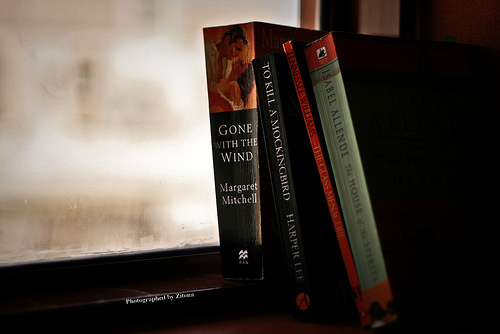
photo credit: » Zitona «

Related posts:


Share
Downton Abbey

Downton Abbey Season 2

Share

Downton Abbey

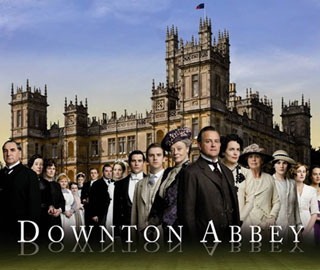
Who is watching Downton Abbey tonight?

If you’re not familiar with the series, you could do worse than this season one primer from Forever Young Adult.

Stuff I’m looking forward to seeing:

  • More Maggie Smith as Dowager Countess Grantham.
  • The will they or won’t they between Matthew and Lady Mary (if he was smart, he’d go for one of her sisters instead. I think Mary is awful).
  • Matthew is going to have to fight in WWI. What will happen?
  • Are Thomas and O’Brien going to get a real comeuppance for all their scheming?
  • How involved is Lady Sybil going to get in the suffragette movement?
  • What will happen between Bates and Anna?

I hear that a season three is also a done deal, though when it will air in the States, I don’t know.

All of this has made me want to read [amazon_link id=”0199549893″ target=”_blank” ]The Forsyte Saga[/amazon_link]. I tried out [amazon_link id=”B004H0ZHD4″ target=”_blank” ]Upstairs, Downstairs[/amazon_link] (the 1970’s series rather than the new one), and I admit I didn’t like it much. Also on my list: [amazon_link id=”0140232028″ target=”_blank” ]The Buccaneers[/amazon_link] and [amazon_link id=”0312658656″ target=”_blank” ]The American Heiress[/amazon_link] (which I found out in Britain has the much better and allusive title of My Last Duchess; I hate it that things are so often “dumbed down” for Americans).

The Sunday Salon

Related posts:


Share

Divergent, Veronica Roth

Share

[amazon_image id=”0062024027″ link=”true” target=”_blank” size=”medium” class=”alignleft”]Divergent[/amazon_image]Veronica Roth’s novel [amazon_link id=”0062024027″ target=”_blank” ]Divergent[/amazon_link] is the story of Beatrice Prior, who lives in a future dystopic Chicago. After a cataclysmic war that Beatrice, the first-person narrator of the story, doesn’t know much about, Chicago divided into five factions: Abnegation, who believe that the cause of war is selfishness and seek to be as selfless as possible; Dauntless, who believe the cause of war is cowardice and seek to be as brave as possible; Erudite, who believe the cause of war is ignorance and seek knowledge; Candor, who believe the cause of war is deception and seek to be as honest as possible; and Amity, who believe the cause of war is unkindness and seek to be as kind as possible. At the age of sixteen, each member of this society takes an aptitude test that partly determines which faction they will join. Some people are best suited for the faction into which they are born, but those who are not leave their families behind because in this society, faction comes before family. Beatrice has always felt out of place in Abnegation. She doesn’t feel selfless enough. When she takes her aptitude test, the results are inconclusive, and her test administrator explains that she is something called “Divergent,” which is a very dangerous thing to be, though Beatrice doesn’t know why. All she knows is that she must keep her test results quiet. The day after the aptitude test, Beatrice must choose which faction she will join, and she shocks everyone by choosing Dauntless.

After joining Dauntless, Tris, as she is known, undergoes a tough initiation that hardens her mentally and physically and prepares her for her role in the faction that protects the society. Even in this competitive environment, she manages to make friends and develops an attraction to Four, her instructor. As she becomes more deeply involved in her initiation, she discovers something is not right about her society, which is perhaps not as invested in peace as she has grown up believing.

Fans of Suzanne Collins’s [amazon_link id=”0545265355″ target=”_blank” ]Hunger Games[/amazon_link] series will find much to like in Divergent, the first book of a planned trilogy. Tris is a tough-as-nails heroine not too different from Katniss, though with perhaps a little less confidence. Four is an interesting counterpart and love interest, too (more interesting than Peeta or Gale, in my opinion). The craziness of the Dauntless initiation will remind some of the Hunger Games, and certainly the dystopic future set in a world where people divided based on some arbitrary factor will look familiar, but the factions are more interesting than the districts of Panem. Your station in life in Panem depends so much on which district you are born into, and it seems fairly difficult to change your stars in Collins’s series, but choices determine everything about who you are in Roth’s dystopic Chicago, which I liked because it puts more responsibility into the hands of everyone. Rather than a ruthless Capitol victimizing everyone, Roth writes about a society in which everyone is responsible, to some degree, for the way things are, and are also ignorant of some facets of the society. I haven’t seen a lot of people compare this novel to [amazon_link id=”0547424779″ target=”_blank” ]The Giver[/amazon_link], but I thought of that book often as I read. In Lois Lowry’s novel, the society seems perfect, but Jonas discovers that they systematically execute those who are weak or ill or old. Feelings are suppressed. No one can see color. The weight of discovering what his society is drives him to escape, an event which might destroy his society, given that he has been chosen to the the society’s Receiver. I suspect something similar will happen with Tris. I can’t help but feel she’ll upend the whole society. Unlike Katniss, who knows her society is corrupt and unfair, both Jonas and Tris discover the darkness in their society when they both come of age and choose their role or have it chosen for them.

Divergent is a gripping, edge-of-your-seat read. I read it on the bus, which was a mistake because it nearly caused me to miss my stop several times and actually did cause me to miss my stop once. I can’t wait to read the next book in the series, [amazon_link id=”0062024043″ target=”_blank” ]Insurgent[/amazon_link], which is due out in May. The book leaves open several questions that I hope I learn the answers to before the end of the trilogy:

  • How did the society get like this? Lake Michigan is nothing more than a marsh. I want to know how that happened.
  • What is going on outside of Chicago? Are they the only people in the world, or just cut off from everywhere else?
  • If there are other people, do they have factions too, or is that just Chicago? If it’s just Chicago, what the heck is going on there?

I have other questions, but they’re a little spoilery.

I love dystopian novels. So much fun to read, and with the success of The Hunger Games, it looks like we’ve been seeing a lot of them lately.

I was glad I recently visited Chicago as it helped me visualize the scene much better than if I hadn’t, but I suspect Google Images and a good map would be nearly as helpful.

Oh, and I’m totally jealous of Veronica Roth, who wrote this debut novel when she was only 22 and studying creative writing at Northwestern.

Rating: ★★★★★

Other reviews of Divergent:

This one’s been on my TBR pile for a little while and qualifies as the children’s/YA choice for the Mixing it Up Challenge. Actually, it qualifies for sci-fi/fantasy, but I can’t double-dip.


Related posts:


Share
Teaser Tuesdays

Teaser Tuesday: Divergent

Share

Teaser TuesdaysTeaser Tuesdays is a weekly bookish meme, hosted by MizB of Should Be Reading. Anyone can play along! Just do the following:

  • Grab your current read
  • Open to a random page
  • Share two (2) “teaser” sentences from somewhere on that page
  • BE CAREFUL NOT TO INCLUDE SPOILERS! (make sure that what you share doesn’t give too much away! You don’t want to ruin the book for others!)
  • Share the title & author, too, so that other TT participants can add the book to their TBR Lists if they like your teasers!

My teaser:

[amazon_image id=”0062024027″ link=”true” target=”_blank” size=”medium” class=”alignleft”]Divergent[/amazon_image]“At the Abnegation table, we sit quietly and wait. Faction customs dictate even idle behavior and supersede individual preference. I doubt all the Erudite want to study all the time, or that every Candor enjoys lively debate, but they can’t defy the norms of their factions any more than I can.”

—location 193 on Kindle

Sorry that was three sentences, but it kind of needed to be. Curious?


Related posts:


Share