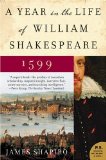
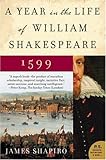
A Year in the Life of William Shakespeare: 1599

A Year in the Life of William Shakespeare: 1599 (P.S.)James Shapiro’s A Year in the Life of William Shakespeare: 1599 describes the events surrounding one of Shakespeare’s most prolific years, beginning with his finishing Henry V, through the composition of Julius Caesar and As You Like It, ending with the composition (and revision) of Hamlet. I had not read much before wishing we had a book like this for each of the years of Shakespeare’s career. Shapiro deftly connects historical events such as the threat of Spanish invasion, a botched campaign in Ireland led by the Earl of Essex, and fears regarding Elizabeth’s succession to characters and events in these four plays. Starting with winter 1598-1599, Shapiro sets each play’s composition in a different season and describes the historical events during that time period. One of my students once noted that I always say “No one writes in a vacuum.” I didn’t know I said it that much, but it’s true, and Shapiro’s book is a testament to the influences upon Shakespeare’s writing.

I found it intriguing to discover the types of historical evidence for Shakespeare, especially in light of the fact that so many people claim he didn’t exist or didn’t write his plays. I am looking forward to reading Contested Will, in which Shapiro examines the anti-Stratfordian theories for authorship.

This book abounds with descriptions and side notes that lend an extra layer of understanding. It was this year that the Lord Chamberlain’s Men fired their clown, Will Kemp, and hired a couple of excellent boy actors capable of playing strong female roles. It was this year that the Globe was constructed when the lease on the land housing the Theatre could not be renewed. In addition, Shapiro shares the in-jokes most modern readers would likely miss:

The cross-pollination of the plays reaches another level when Polonius unexpectedly tells Hamlet, “I did enact Julius Caesar. I was killed i’ th’ Capitol; Brutus killed me” (3.2.99). John Heminges, who played older men, probably spoke these lines and also played Caesar. The in-joke, which audiences at the Globe would have shared, is that Richard Burbage, who was playing Hamlet and had played Brutus, was about to stab Heminges again. (328).

Of course, this example is only one among many. This book will have a treasured place on my shelf and will be at hand when I teach Shakespeare again. If you enjoy Shakespeare, Tudor history, the Renaissance, or just a good book about books, read A Year in the Life of Shakespeare: 1599.

Rating: ★★★★★

This book is my third selection for the Bibliophilic Book Challenge. I committed to the Bookworm level of the challenge, which means completion of three books, so the great news is that I have completed this challenge. I may continue to read more books suited to the challenge.
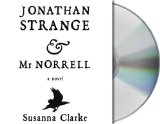
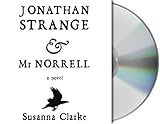
Jonathan Strange & Mr. Norrell

Jonathan Strange & Mr. NorrellSusanna Clarke’s novel Jonathan Strange & Mr. Norrell breaks all the rules. It’s over 800 pages long. One of the title characters isn’t properly introduced until over 200 pages into the novel. Clarke develops the history of her world largely through incorporation of 185 footnotes. Generally any one of these things would cause me to gripe about a book, never mind all three. However, I’m not the first reviewer to say the novel, even at over 800 pages, seems too short—I wanted more. The late introduction of the charismatic Jonathan Strange serves only to further develop the mystery surrounding him and to establish the character of his counterpart—his teacher and rival—Mr. Norrell. And finally, the footnotes establish Clarke’s alternate history England as a world rich in magic and still every bit as real as our own world.

“Two magicians shall appear in England…”

The Learned Society of York Magicians, theoretical magicians, mind, not practical magicians, is confronted by Gilbert Norrell and forced to disband. Norrell, who has led a reclusive life of study in his library at Hurtfew Abbey in York, is suddenly thrust into London society. Eager to be of assistance to the government in the war against France, he makes an unwise alliance. Eventually, he gains a pupil in Jonathan Strange, but the two magicians part ways. Jonathan Strange delves into darker and more dangerous magic, while Norrell is unable to to see the dangers right under his own nose.

The book ties each strand of its storylines together in the ending, which will not satisfy all readers, but which I liked—the door is open for a sequel, or not, as Clarke wishes. Clarke evokes the characterization of Dickens, the storytelling of Austen, and the Romantic sensibilities of Byron (who appears as a character himself), all of which combine to create a book that seems wholly new and fresh—certainly unlike anything I’ve ever read before. This novel is obviously a commitment, but it pays off well in the end.

I listened to this book on audio, and Simon Prebble’s narration is wonderful. I love the distinct voices he gives to the characters. If I have any complaint, it is only that he changes the voice of Christopher Drawlight near the end and mispronounces the word sidhe. Minor quibbles in an excellent audio adaptation.

I read this novel for the Once Upon a Time Challenge, but it also makes the fifth book for the Typically British Reading Challenge.

Crime and Punishment

Crime and PunishmentThough I wasn’t due to finish Fyodor Dostoyevsky’s Crime and Punishment via DailyLit until next week, I decided to go ahead and finish today. I really wanted to like this book. It’s one of those books you hear a lot about. It’s one of those books people like to say they’ve read. I should preface this review by saying that I’ve read very few Russian classics. I tried to read Dr. Zhivago; my sister Lara is named after Yuri Zhivago’s love interest. I couldn’t get into it, even though I loved the movie. I read One Day in the Life of Ivan Denisovich by Aleksandr Solzhenitsyn (review), and I really didn’t like it all that much, although I found the concept intriguing.

The central character of Crime and Punishment is Raskolnikov, a student in St. Petersburg who murders a pawn broker and her sister with an axe. Most of the book centers around his mental state both before and after the crime. I had a great deal of difficulty with the names. Some of the characters have nicknames, which made it nearly impossible for me to keep up with the characters. I’m sure this is purely a cultural-based confusion because if a character in a book were named William but variously called Will, Willie, or Bill by other characters, I doubt I’d have trouble. However, in a book with names that are already challenging for me to keep straight, I found myself quickly confused, and I think that confusion hampered my enjoyment of the novel. I might have done better to read a version with more notes. Unfortunately, I’m afraid that the end result is that I’ve been put off Dostoyevsky. I’m not sure I’d want to try another book of his after not enjoying this one, especially when I think about the large number of books in the world I could read instead that I might truly enjoy. I found parts of the book compelling—the murder scene, Svidrigailov’s death, a fight among some of the women (whose characters I confess I had the most difficulty keeping straight) in the middle of the book, and the end—but these moments were few. Most of the book I found hard to get through both because of my confusion and because the story was not grabbing my interest. I had already reached what I call “the point of no return” before I decided I didn’t like the book. The “point of no return” is the point at which you’ve read so far into the book that you feel you should just go ahead and finish. I really, really wanted to like this book, which is why I pushed myself up to that point. When I realized I didn’t like it, I felt sad. I have so rarely been disappointed by classics.

My next novel from DailyLit will be Gulliver’s Travels, a much shorter novel, and one I have neglected. I was supposed to have read it in high school, but I found it difficult to understand at that age. I think I will enjoy it better twenty years on from the last time I tried to pick it up. It’s a British book, which will enable me to continue to the next level in the Typically British Challenge.

Pride and Prejudice

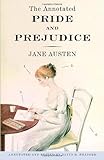
Pride and PrejudiceI first read Pride and Prejudice during my first year teaching (which was 1997-1998, and I know it was 1998 when I read the novel). I fell in love with Jane Austen that year. Despite my affection for Ms. Austen, I had not re-read any of her novels, though I have watched adaptations in film. I decided I was overdue for a re-read of Pride and Prejudice, and this annotated version of the novel appealed to the scholar in me. I had hoped to learn some new interesting things or gain new insights from the David Shapard’s annotations, and I was not disappointed.

In some cases, the annotations were repetitive (for example, for each reference to “town,” Shapard reminds the reader that “town” refers to London). However, learning the differences between the different types of carriages, gaining insight into the conventions of the day, and so much more that I can’t possibly list it all here really enhanced my enjoyment of the book. I am currently listening to Jonathan Strange & Mr. Norrell, and I find that the annotations in Pride and Prejudice have enhanced my enjoyment of that novel, too—after all, it owes a great deal to Jane Austen. A sojourn in Jane Austen’s novels is always rewarding, and I wonder if it’s possible to feel homesick for a place you’ve never even been except in books.

If you haven’t seen the new blog Following Jane, you might want to check it out. It’s interesting to read the perspectives of man dedicating himself to reading all of Jane Austen’s novels and blogging about his experiences. In a recent post written before he started Northanger Abbey, his first selection, he mentioned he was anxious to finish the book he had been reading at the time so that he could start reading Austen. I know that feeling. As I reach the end of the book, my thoughts are turning toward my next read, which will be A Year in the Life of William Shakespeare: 1599 by James Shapiro. All the talk about Shapiro’s new book, Contested Will: Who Wrote Shakespeare?, has inspired quite a lot of quick reviews of A Year in the Life, which I have on my shelf and haven’t read. Austen and Shakespeare, my two favorite authors. How I’d love to sit down and have tea with them both.

Typically British Challenge

Pride and Prejudice is my fourth selection for the Typically British Challenge, and concludes the “Gordon Bennett” level of four novels that I committed to read. I may read other British authors over the course of the year (the challenge expires on December 31), but I can claim for the first time ever that I actually finished a reading challenge.

The Help

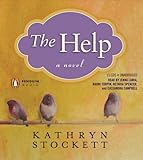
The HelpI have been listening to Kathryn Stockett’s novel The Help during my commutes and car trips, and I finished it this morning just moments after I pulled into my parking space at school. Stockett’s first novel is about the relationships between white Southern women and their black domestic help during the Civil Rights Movement era in Mississippi. I have picked up the hardcover novel several times, but until my principal recommended it, I wasn’t sure I’d like it. I think sometimes the book is done a disservice by its description. Case in point: look how I described it in my second sentence. For some reason, that description didn’t grab me either. The book is about these relationships, but it’s more.

I have talked to three people at work (note: I live in Atlanta) who grew up in circumstances similar to those described in the book. All three of them described the love they felt for the black women who took care of them—they were family. Stockett herself describes being raised by Demetrie, a woman who worked for her grandmother and her mother, and Stockett acknowledges that while she cannot know what it was like to be a black maid in the South, she felt that she wanted to try to describe it as a way to honor Demetrie. I suspect this relationship Stockett had with Demetrie, whom she describes as surrogate mother, informed her description of Aibileen’s relationship with Mae Mobley Leefolt. I teared up several times during the course of listening to this book, but most often, it was because of a moment between Aibileen and Mae Mobley.

If you have lived in the South for any period of time, you will recognize all of the characters: Junior League President Hilly Holbrook runs the town of Jackson with an iron fist, or thinks she does. She plays bridge with her old friends and former classmates at Ole Miss, Elizabeth Leefolt and Skeeter Phelan. Elizabeth is Aibileen’s employer and Mae Mobley’s mother. She follows Hilly Holbrook’s instructions to the letter. Skeeter is an aspiring writer. She is shy and insecure after living under the exacting scrutiny of her formidable mother, but she is uncomfortable with the way things are and desperately misses her family’s maid Constantine. It is during a regular meeting of the bridge game (Hilly’s mother makes up their fourth in this first game) that the novel’s events begin to unfold: Skeeter asks Aibileen if she ever wishes things could be “different” during a private moment in the kitchen, and Aibileen, suspicious and cautious, answers “no.”

The Help is an amazing book. It has joined the ranks of my favorites. I think my experience with the book was much enriched by the voices of the actresses in the audiobook; it’s simply one of the best narrations I’ve ever heard. I felt like I had made friends with Aibileen, Minny, Skeeter, and Celia by the end of the book, and I am dying to know what happened to them all. I try not to give away the endings of books in my reviews, but I will say that no neat little bow exists at the end of the book. In my mind, I have some satisfactory endings written for all of the characters, including Hilly Holbrook (that witch!) and Mae Mobley, and I really hope their stories ended the way I imagined they would. Perhaps Stockett has given the reader a true gift in leaving the characters in the way she did: we can write the ending ourselves. Of course, it goes without saying that with so many loose ends, Stockett could easily write four or five sequels!

My favorite character was easily Minny, and I really loved the plotline involving Minny’s relationship with her new employer, Celia Foote. Poor Celia! I absolutely adore patient, loving Aibileen. Skeeter rings true as an intelligent aspiring writer. You’ll wonder how on earth she could ever have been friends with Hilly Holbrook by the novel’s end. If you have the chance to listen to the novel, I feel that Jenna Lamia, Bahni Turpin, Octavia Spencer, and Cassandra Campbell did a masterful job bringing these characters to life. One of the criticisms I have seen of this novel is that the white characters’ speech is not rendered in dialect, while the black characters’ speech is. I couldn’t have told you that listening to the novel. The actresses all read in dialect that rang true to me, and I don’t know how she does it, but Bahni Turpin, who reads the part of Aibileen, sounds just like a small child as Mae Mobley and can switch among several pitch perfect white Southern women’s dialects as well.

Another criticism I’ve read of the book is that it should not have been written by a white woman. In her review of The Help, Elinor Teele raises these questions:

Is Minny with her outlandish catchphrases just another version of Mammy, updated for more sensitive times? Even if stories haven’t been told, is it fair for an outsider to tell them? What would Hattie McDaniel, who worked as that $7 maid before making it to Hollywood, think of this book?

Valid questions, but Octavia Spencer, who reads the part of Minny replied to these questions:

Finally, I think you posed the question, ‘what gives her the right to tell these stories, in the voice that she chose.’ My response to that is simple, she’s human. My interpretation of the story is that we are all human. What better way to demonstrate that than taking America back in time to an ugly part of her history, and showing through the experiences of these provocative characters that beautiful, human side. A writer needn’t be black or white to tell these stories, just truthful.

Something about Ms. Spencer’s response to Teele’s review rings so true to me. This story is everyone’s story. In the words of Skeeter Phelan, “Wasn’t that the point of the book? For women to realize, we are just two people. Not that much separates us. Not nearly as much as I’d thought.”

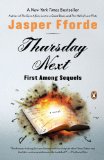
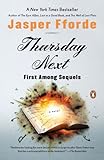
Thursday Next: First Among Sequels

Thursday Next: First Among SequelsThe fifth book in Jasper Fforde’s Thursday Next series, Thursday Next: First Among Sequels, begins more than a decade after its predecessor, Something Rotten. Thursday’s son Friday is now a teenager whose thoughts seem to revolve more around his favorite group Strontium Goat than on joining the ChronoGuard—something he must do, and soon, or the world might end. And that’s the least of Thursday’s problems. She also has to deal with the two book versions of Thursday Next, a reappearance of old nemeses Aornis Hades and Felix8, and Goliath Corporation’s machinations. Worst of all, the stupidity surplus is at an all-time high, and in order to get rid of it, the government has decided to turn Pride and Prejudice into a reality show called The Bennets. It’s up to Thursday to put all things to rights.

I think this book is one of the stronger in the series. As full of literature jokes as the others, it’s also folded upon itself as Thursday has by this time had books written about her, which have spawned BookWorld Thursdays that don’t resemble herself at all—or do they? My favorite parts were some speculation that Harry Potter himself might turn up for a meeting (I won’t give it away), and a passage in which Fforde shares his own feelings about literature (I know this because he shared them at his book signing, too):

I’d been trying to explain to them just what form the BookWorld takes, which was a bit odd, as it was really only my interpretation of it, and I had a feeling that if they actually accepted my way, it would become the way, so I was careful not to describe anything that might be problematical later.

I found that passage to be a beautiful metaphor for the interpretation of literature, and it made me wonder what I might see if I traveled to the BookWorld. I am thinking a lot of squashy places to curl up and read, rain-spattered windows, and books, books, books.

I highly recommend this entire series to book lovers. The jacket blurbs recommend it to fans of Harry Potter, and it has a bit of that charm, but really it’s not like that series. It’s silly, bookish, and full of in-jokes for the well-read. You won’t be able to put them down. I can’t wait for the next Thursday Next.

So… what do you think the BookWorld looks like?

Bibliophilic Books Challenge Typically British Book Challenge

This novel is the second selection for the Bibliophilic Books Challenge and the third for the Typically British Reading Challenge. My next excursion is a trip back to Meryton to visit the Bennets of Longbourn. I haven’t been back for some time.

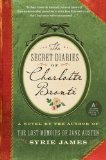
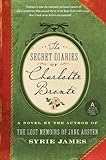
The Secret Diaries of Charlotte Brontë

The Secret Diaries of Charlotte BrontëI have just completed Syrie James’s novel The Secret Diaries of Charlotte Brontë. Depending on your knowledge of the Brontës’ biographies, this review may be a bit spoilery. As an English teacher, I knew a fair amount, but I learned a great deal more than I previously knew about the Brontës from this book.

First and foremost, Syrie James has carefully and lovingly researched the Brontës in order to write this book: a fact which shines from every page. I have often said I wished I could sit and eat dinner with the Brontës just once, just to hear what they might talk about. To be around just a great collection of literary genius all gathered in one household would truly be a delight. While that wish can never come true, reading James’s novel is a close approximation. The conversations that James conjures among Charlotte, Emily, and Anne as they write their novels, discussing the merits (and deficiencies) of each other’s work capture what it must have been like to be a writer in that family. Their closeness and love for each other is beautifully rendered. Knowing the pain that Charlotte would endure as her siblings all passed away within a short span of time, I was more or less prepared for it, but I admit I teared up a little with each loss.

Charlotte’s own life story is equal to any of her novels and those of her sisters as well. It was with pleasure that I read of her happiness with her husband, but with sadness, too, especially for him, as I knew she did not live long after her marriage. If you like the Brontës, Victorian literature, or just books about books, my suggestion would be to read this book without delay. I found it a pleasure from start to finish and can hardly wait to read more of Syrie James’s writing.

Brontë Challenge Bibliophilic Books Challenge

This book is my first selection for both the All About the Brontës Challenge and the Bibliophilic Books Challenge, and if you are participating in either challenge, I can’t recommend the book highly enough.

I have a fun poll for Brontë fans:

What is your favorite Brontë novel?

View Results

Loading ...

Feel free to discuss further in the comments.

Outlander

I first read Diana Gabaldon’s novel Outlander in about 1998 or 1999. I remember loving it. In fact, I liked it so much that my first early forays into creating websites were focused on a Diana Gabaldon fan site. For the uninitiated, the Outlander series is the story of Claire, who takes an early morning walk to the standing stones at Craigh na Dun near Inverness while on her second honeymoon with her husband Frank Randall and finds herself nearly 200 years in the past. She is captured by members of the MacKenzie clan and falls in love with and marries Jamie Fraser, but she knows the second Jacobite rising is coming, and she fears for his future.
On a re-read, Outlander definitely holds up. Diana Gabaldon describes her method of writing as creating scenes and then putting them together like a puzzle. I am not sure I knew that last time I read, but knowing as I read this time, I could see it in action. None of the scenes appears to stop the plot; instead, they serve to add realism and round out the characters. I remarked to my sister that the book is a little more “rapey” than I remembered, and we laughed. What I mean by that is I had forgotten that Claire was so often in imminent danger of being raped. Once again, a horrific scene of torture near the end of the novel struck me as gratuitous and over-the-top, just as it did on my first read. Gabaldon has created a gift of a character in Jamie Fraser. He pops off the page, larger than life.

Gabaldon has a gift for storytelling. I know I certainly keep turning the pages. She also has a gift for humor, and if she doesn’t flinch from describing scenes of violence, she leavens it with one of the best love stories I’ve read. I have not read a time-travel romance yet that tops Jamie and Claire’s, and I’ve read a few. 😳 What? It’s a guilty pleasure. One of the things I like best about her books is that I do learn things. I find the herbalism and history particularly interesting. The herbalism and setting of Gabaldon’s books strongly influenced my own book, A Question of Honor.

I have not read the last three books in Gabaldon’s series, and given the amount of time that has passed since I last read the first four, I thought perhaps a re-read was in order before attempting the last two. I am a little nervous about the time commitment. I have a friend who has read The Fiery Cross (I never finished it) and parts of An Echo in the Bone, and she said they were somewhat boring. I can’t recall if we talked about A Breath of Snow and Ashes. Anyone read them and can verify? I’ll probably try to read them, but I admit to being wary. I felt the early books in the series, even among the first four, were the best.

The Fourth Bear

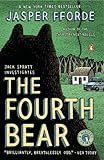
Jasper Fforde’s The Fourth Bear is the second in his Nursery Crime series. Detective Chief Inspector Jack Spratt, head of the Nursery Crime Division, is investigating the disappearance and possible murder of Goldilocks. She was last seen alive by three bears, and things just don’t add up. To top it off, deranged psychopathic murderer the Gingerbreadman has escaped from the mental hospital where he’s been confined since Jack collared him twenty years ago, and he’s on a murderous rampage.

OK, this book is just silly, but you have to expect that with Jasper Fforde and just go with it. Fans of nursery rhymes and fairy tales (as well as other types of fiction) will enjoy Fforde’s sly references, and however silly his stories become, he always manages to make me laugh in a few places and keep turning the pages. I had a friend on Twitter ask me if this book was any good because he’d heard this series was not as clever as Fforde’s Thursday Next series, and I have to say that all things considered, I enjoy the Thursday Next books more. However, if Fforde returns to Nursery Crime, I will read the next book, and I plan to be in line when he makes an appearance at the Buckhead Barnes and Noble on January 15. None of my books are in good enough shape to be signed. I may have to purchase his new one. Oh, drat.

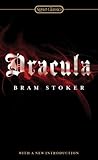
Dracula

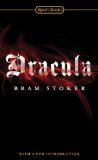
While I didn’t finish Dracula in time to meet the deadline of the R.I.P. Challenge, I did finish it within days of the end of the novel’s action on November 6 of some indeterminate year. One of the things I’ve noticed about reading a book like Dracula, around which a cottage industry of adaptations, homages, and even an entire genre have sprung, is that the story in the actual book becomes altered to the point that the reader had different expectations. For instance, I had the idea that the character of Renfield had a much larger role and was a servant of Dracula’s. I didn’t realize the Count came to England, and I was surprised by Dracula’s small role in the actual novel.

The novel holds up well as a gothic tale. I wonder how it might have fared had Stoker chosen to tell it with a straight narrative rather than as a series of journals. He is constricted by what his characters are able to report. I don’t know enough about vampire tradition to know if Stoker originated some of the aspects we have come to associate with vampire narratives: the fear of garlic and Christian artifacts such as crosses, crucifixes, and the communion host; the inability to rise during the day and activity at night; and superhuman strength that grows more powerful over the ages. On the other hand, I was surprised to discover that sunlight didn’t necessarily seem to be harmful to the vampires in this novel. They avoided it, but when coffins were opened during the day to look on them, they didn’t disintegrate into dust as Anne Rice’s vampires do (and hers are not afraid of crucifixes).

I am glad I read Dracula. It is a great read for anyone interested in how the literary craving for vampires came to be, but you won’t find the seductive and charming Louis de Pointe du Lacs, Lestat de Lioncourts, or even Edward Cullens in this novel. Dracula is just a monster, and there’s nothing attractive or seductive about it.

I read Dracula with the iPhone app Classics. I usually have one book going in DailyLit, one paper book, and one iPhone book. I haven’t decided which book I’ll read next on the iPhone, but I haven’t finished Crime and Punishment on DailyLit, nor have I finished We Have Always Lived in the Castle in print.

A short update on NaNoWriMo: I am a little behind the wordcount. By the end of the day yesterday, I should have reached 11,667 words, and I am currently at 9,304. It might not seem bad to be behind by 2,363 words, especially compared with some folks who are working with larger discrepancies than that, but it also means that in order to be caught up by the end of the day today, I need to write 4,030 words. And that is a lot for one day. I’m not sure it’s going to happen, particularly as I have two grad school assignments due. But we shall see. The writing is not coming as quickly or easily as it did at first, I think because I really did sort of know how to start off. Cross your fingers for me that things pick up. I’d really like to win NaNo this year.