Grendel

John Gardner’s novel Grendel has been on my reading list for years. I have picked it up and read the first chapter or two several times. This time, the confluence of the R.I.P. Challenge and the fact that I am teaching Beowulf provided me with two excellent reasons to finish.

Beowulf is, of course, our earliest epic in English. It tells the story of a mighty Geatish warrior named Beowulf who comes to King Hrothgar’s meadhall in Denmark to help Hrothgar and the Danes with their monster problem: a creature named Grendel has been attacking the meadhall for twelve years. In Beowulf, Grendel represents the essence of evil. His motives are not examined aside from a note that he descends from Cain, which should explain everything. My own students became intrigued by Grendel’s story, and we did discuss his motives. I mentioned I was reading this book. Our library’s copy immediately disappeared, and I think some of my students have been waiting for me to finish reading my copy so that I could loan it out. As it turns out, Grendel’s motives, at least as John Gardner imagines them, are a little more complex than a descent from evil beings or jealousy of mankind.

Gardner tells the story of Grendel’s war against Hrothgar, as he calls it, from Grendel’s point of view. Gardner’s Grendel is on a quest to find meaning and determine his place in the world. The novel begins before events in Beowulf really start. Grendel watches as Hrothgar becomes king and builds his meadhall, and he watches Hrothgar gain power as his kingdom grows. Grendel is mesmerized by the man he calls the Shaper, who spins stories of the greatness of the Danes. Grendel remembers being present when the truth occurred, and yet he, like the Danes, wants to believe the Shaper’s stories. When Beowulf himself arrives toward the end of the novel, Grendel is drawn to him and mesmerized by him, a feeling echoed by Beowulf himself in the epic when he says he believes that he and Grendel have been drawn together in this fight.

Gardner’s creature is not the creature of the epic poem. He’s as vicious, but more thoughtful, and the Danes are not as great a people or as innocent as the epic’s composer would have us believe. Gardner, a professor of English, would of course have been familiar with the epic. Parts of the story in the epic are told again through Grendel’s eyes in this novel. I particularly liked the scene in which Unferth, the thane who challenged Beowulf’s prowess and was quickly shut down, challenges Grendel—interesting comment on heroism. Grendel’s description of the charismatic Beowulf were fun to read, too. We also have an interesting picture of Grendel’s mother. This book ends before her battle with Beowulf, of course, because Grendel dies before that time, but it’s hard to see, based on Grendel’s description of her, how she had the sentience to carry out her attack on Heorot. I enjoyed this novel, and I think we’re going to have to put it in the early British literature curriculum at my school. The novel’s ideas about the nature of good and evil and who frames history will make for interesting discussion.
R.I.P. ChallengeThis is the second book I’ve finished in the R.I.P. Challenge (the first being Coraline). I am still reading Dracula. I will start Joe Hill’s collection of short stories 20th Century Ghosts next. With two of the four books down before September is out, I’m feeling more confident that I’ll finish the challenge. I love taking challenges on, but I have a lot of trouble finishing them. Perhaps this year is my year.
Coraline

Coraline Jones is bored. Her parents are too busy to play, and the weather isn’t cooperating, so she explores. Behind a locked door, she finds the entrance to a completely different world. Neil Gaiman’s novel Coraline is compared to Alice in Wonderland or The Chronicles of Narnia on the book jacket, and while the comparison is fair, Coraline’s world beyond the locked door is different: it’s far creepier and in some ways more believable than Carroll or Lewis’s worlds are. Every child knows that there is a mysterious world beyond the mirror or behind the locked door no one ever seems to open.

Gaiman is a master storyteller. I have thoroughly enjoyed all his books I’ve read, and I love to read his blog and even keep up with him on Twitter. He’s a true dry wit, which comes through in his stories as well as his blogging. The characters and the world he creates in this book, as well as the others, however fantastic, always seems believable and real. If you’ve not read Coraline, you should definitely pick it up. It’s a quick read, and though it’s classified as a children’s or young adult novel, I wouldn’t let that classification stop you any more than it should stop you from reading the Harry Potter series.

R.I.P. ChallengeThis book is the first book I’ve finished in the R.I.P. Challenge. I also plan to read Bram Stoker’s Dracula (currently in progress), John Gardner’s Grendel (my next selection), and Joe Hill’s 20th Century Ghosts. If I actually complete the challenge ahead of schedule, I may continue reading the creepy books, which are a perfect way to usher in the fall weather.

A Tale of Two Cities

Charles Dickens’s popular novel A Tale of Two Cities is the first Dickens novel I chose to read. I knew I wanted to read a Dickens novel, and Maggie helped me select this one. While it was very well written and some characters were particularly well-drawn, I had more difficulty following the plot and caring about some of the characters than I expected. I suppose I like complicated characters, and the line between the “good guys” and the “bad guys” was so clearly drawn, they might as well have been wearing white hats and black hats. They weren’t particularly interesting for that reason. Dickens also used the novel as a platform to moralize about the violence, and when it waxed poetic, it was interesting, but the frequency verged on annoying, even though I agreed with Dickens’s views about the violence.

Unfortunately, though this book was shorter than others I’ve read on DailyLit, I became overwhelmed with work in the middle of reading it and had to suspend my subscription for an extended period. I think perhaps the long gap between when I began this novel and when I finished it may have increased some of my confusion. I can’t say, however, that I didn’t enjoy it or that it was badly written, for it is clear to me that Dickens is a master of characterization, and I definitely plan to read more Dickens.

My next DailyLit read, however, is Dostoyevsky’s Crime and Punishment, a book I initially tried reading in high school (for fun, no less) and discovered was over my head at the time. If you’ve not tried DailyLit, you should check it out. You can keep track of my DailyLit books progress in the sidebar to the immediate right under the DailyLit section (beneath Reading and Recent Books).

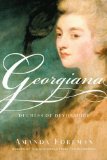
Georgiana, Duchess of Devonshire

I am not generally a big reader of biographies or nonfiction of any stripe, aside from professional reading, but I became interested in Amanda Foreman’s biography of Georgiana Spencer Cavendish, Duchess of Devonshire, after seeing the movie based on this book: The Duchess, starring Keira Knightley and Ralph Fiennes. Georgiana, Duchess of Devonshire is not quite like the movie, but one would expect moviemakers to take certain license with with truth in the interest of narrative. The true Georgiana who emerges from the pages of this biography is at one less sympathetic and also more interesting and genuine than the character played by Keira Knightley.

I admit I really don’t know much about British politics. Much of this biography is devoted to Georgiana’s work on behalf of the Whigs. She had several friends who were prominent in the party and used her influence to help them get elected: Charles James Fox, Richard Brinsley Sheridan, and Charles Grey (1st Earl Grey). In a time when women did not wield much power, Georgiana influenced politics more than many men did. The realm of fashion, she reigned supreme.

More attention is given to Georgiana’s gambling addiction in this biography than in the movie. She borrowed money from many of her friends with promises of repayment that she rarely fulfilled. I have to admit this part of her personality was maddening to read about. The pain it caused her was acute, and it hurt her relations with her husband and friends, but she seemed unable to control it.

Lady Bess Foster, the friend who “steals” the Duke of Devonshire from Georgiana in the movie, comes off considerably less sympathetically and much more conniving in this biography. No doubt Georgiana valued her friendship, but Foreman’s depiction of her character leads the reader to believe Georgiana’s judgment in the matter to be sincerely flawed. In contrast, the Duke of Devonshire is not quite the villain he’s painted in the film.

Foreman includes the Cavendish and Spencer family trees, but I found myself wishing there was a glossary of characters, as so many similar names made it difficult for me to keep up with some of the people mentioned in the book. To Foreman’s credit, she did as much as she could to prevent confusion through repetition and extensive notes. It is clear that this biography was painstakingly researched. Foreman allows the people in the biography to speak for themselves as much as she can through primary source documents quoted extensively throughout the entire book.

If you watched the film The Duchess, you haven’t met the real Georgiana yet. The figure that emerges from the pages of Foreman’s biography is at once more compelling and more intriguing than the film hinted.

The Big Over Easy

Jasper Fforde’s The Big Over Easy, the first in his Nursery Crime series, is a hilarious send-up not only of familiar nursery rhymes but also detective and thriller fiction. I am not sure the book would be to everyone’s taste. Fforde’s sense of humor runs toward the silly and punny, especially in this book. Detective Inspector Jack Spratt and his new partner, Detective Sergeant Mary Mary investigate the death of Humpty Dumpty and quickly find themselves embroiled in the “seedy underbelly of nursery crime.” Just as he did in his Thursday Next series, Fforde shows a thorough knowledge and clever use of literary allusion. I’ve heard Fforde’s books described as beach books for book nerds, and they are.

Fforde’s characterization of the murdered egg leaps from the pages, even though he has passed on by the time we meet him. We also meet other nursery favorites such as Old Mother Hubbard, Solomon Grundy, “Giorgio Porgia” (crime boss!), and Wee Willie Winkie. DI Spratt’s Nursery Crime Division is in trouble, and his boss is putting pressure on him to crack this case. Meanwhile, a former rival, Detective Chief Inspector Friedland Chymes, is trying to horn in on Spratt’s investigation and steal the case. Mary Mary isn’t so sure she wants to work with Spratt and his small, rag-tag staff. By the end of the novel, twist after twist follows as Spratt must use all his detective skills to unravel what really happened.

Fans of the Thursday Next series will recognize Mary Mary as the character that Thursday Next took over as part of the character exchange program. While we don’t go to Caversham Heights, we do hear a little bit from Arnold, Mary’s overenthusiastic admirer. Mary does have a little bit of the ring of Thursday Next about her.

I really enjoyed this book and would recommend it to anyone who like Fforde’s other books or likes a good laugh over a silly joke.

The Woman in White

Wilkie Collins’s novel The Woman in White is one of the first “detective novels” and is still considered one of the finest Victorian “sensation novels.” I decided to read it after reading a student’s praise of it while reading AP applications (we have an application process to take AP English courses at my school). I have heard references to the novel for some time now, one of the most recent in conjunction with the recent spate of Charles Dickens novels such as Drood and The Last Dickens. I decided to download the eBook version on my iPhone. I have been reading it since about April. It might be a little too long to read on the iPhone. I had some trouble with the files, too. Near the end of the book, I found an odd bug that caused me to be unable to turn to the next page. The only way I found around it was to use the slider to scan ahead a few pages and then backtrack. Also, one version of the eBook that I tried did not break the book into chapters in the way it was designed to be broken and instead had one long chapter to cover the whole book. If you’ve not used eBooks on Stanza before, this likely won’t make much sense, but chapters are fairly important to me because they help me keep track.

In reviewing The Woman in White, I should point out that though many might consider the novel to be clichéd, it is in fact the originator of many tropes that became clichés in later fiction: the innocent girl who marries a man who is deceptively charming, but alters into a cruel wastrel only after her money once they marry and the mysterious character who looks uncannily like one of the other characters. However, Collins shows a propensity for developing some interesting characters. It’s rather a shame that Laura Fairlie Glyde, whom I considered so dull and uninteresting, is the one who captures the main narrator Walter Hartright’s love, when by all rights, it should have been her half-sister, Marian Halcombe, who is much more intelligent and interesting a character. Collins’s characterization of the evil Count Fosco and Laura’s uncle Frederick Fairlie are also excellent. Frederick Fairlie’s voice as he narrates his portion of the story is truly funny. The novel is often described as an epistolary novel, but I’m not sure that’s a good description. It is told by multiple narrators, all of whom have different pieces of knowledge about the main plot: Sir Percival Glyde and Count Fosco’s plot against Laura and her fortune. However, it is not precisely told in the form of letters only. The journal of Marian Halcombe and narration of Walter Hartright form the bulk of the novel, and it’s not made clear that any of Walter Hartright’s narration is epistolary. I found the book to be engaging, particularly when the plot picks up steam. I think anyone who likes Victorian fiction might be interested in reading this book for its portrayal of the times in which it was written. I don’t think most book lovers would consider time spent reading The Woman in White to be time wasted.

I have three books ready to read on my iPhone: Jane Austen’s Mansfield Park, William Makepeace Thackeray’s Vanity Fair, and E. M. Forster’s Howards End. I have not decided which to read yet. If you have strong feelings about one of the three, I’d love for you to let me know in the comments. I should note that Mansfield Park remains the only Jane Austen novel I’ve not yet read, and Vanity Fair was cited by a colleague (a well-respected English teacher) as his favorite novel. On the other hand, there are a lot of novels in the Classics app that I haven’t read yet, either: Dracula could also be calling my name. Choices, choices.

The Physick Book of Deliverance Dane

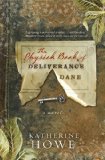
I stayed up until the wee hours of the morning this morning to finish Katherine Howe’s debut novel The Physick Book of Deliverance Dane. This novel intertwines two stories. The first is the story of graduate student Connie Goodwin, who we meet as she is sitting for her oral qualifying exam for the doctoral program in history at Harvard. The qualifying exam is a clever device, which allows for Howe to give readers unfamiliar with the Salem Witch Trials some background without feeling too much like exposition. Before we meet Connie, however, we meet Deliverance Dane, a healer or cunning woman attending to a sick little girl. The stories of these two women intertwine when Connie agrees to prepare her grandmother’s house in Marblehead for sale. In perusing the bookshelves, Connie finds an old Bible with a key inside. She pulls a piece of parchment with the name Deliverance Dane written on it out of the key. Her pursuit of Deliverance Dane and her story, as well as the story of her Physick Book, become Connie’s quest.

As I said in my previous post, I really enjoyed this book for several reasons. The subject matter is a story I’ve always found fascinating. I was also, as a genealogist, able to relate to Connie’s search through generations for the book and the people whose lives it touched. There is a moment in the book when Connie and Sam, a “steeplejack” whom she meets as he’s restoring an old church, wax philosophical about people who have lived in the past:

“It’s weird, isn’t it?” asked Sam, leaning closer to her over the card table and dropping his voice.

“What’s weird?” she said, turning to him.

“That you can have this whole entire life, with all your opinions, your loves, your fears. Eventually, those parts of you disappear. And then the people who could remember those parts of you disappear, and before long all that’s left is your name in some ledger. This Marcy person—she had a favorite food. She had friends and people she disliked. We don’t even know how she died.” Sam smiled sadly. “I guess that’s why I like preservation better than history. In preservation I feel like I can keep some of it from slipping away.” (76)

Connie responds:

“I can see that. But history’s not as different as you might think.” She brushed her fingers over Marcy Lamson’s name scrawled on the page. “Don’t you think Marcy would be surprised if she knew that some random people in 1991 were reading her name and thinking about her? She probably never even imagined 1991. In a way”—Connie hesitated—”it offers her a kind of immortality. At least this way she gets to be remembered. Or thought about. Noticed.” (76)

Those are thoughts that I think cross the minds at some point of almost anyone who studies his/her family history. I have often wondered about the name in my family research in the same way that Sam describes, while also thinking, as Connie does, that they might be surprised to remembered or noticed so long after they’re gone. I don’t know how my great-great-grandmother Stella would feel about my publishing her diary, for instance. She might actually not have been too happy about it!

Howe’s research shines in the period detail she crafts for scenes set in the past, as well as the description of Connie’s grandmother’s home on Milk Street and the environs around Harvard, Salem, and Marblehead. She has also clearly researched witchcraft and divination, and her descriptions of spells ring with authenticity.

Katherine Howe descends from two of the accused witches: Elizabeth Howe, who was executed, and Elizabeth Proctor, whom many may remember as the wife of The Crucible‘s protagonist, John Proctor. I cannot imagine having this sort of family history without being interested in the subject matter.

Howe conducted an interview with Wonders and Marvels that is well worth a listen, and via Twitter, she directed me to A Midwife’s Tale: The Life of Martha Ballard, Based on Her Diary, 1785-1812, which she describes as part of the inspiration for Prudence Ballard’s diary in the novel. I look forward to reading more of her work. I know a book is really good when after I finish it, I have the strange wish that I had written it myself.

Interred with Their Bones

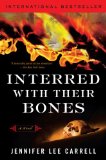
Cover of Interred with Their BonesJennifer Lee Carrell’s novel Interred with Their Bones is the story of Kate Stanley, accompanied by a series of helpful and untrustworthy sidekicks, who is searching for Shakespeare’s lost play Cardenio after being put on the scent of the play by her mentor, Rosalind Howard.

I wanted to like this book, but in the end, I wonder why Matthew Pearl alone of the writers I’ve read seems capable of writing a good literary thriller. Interred with Their Bones is a dizzying and sometimes quite poorly written reworking of The Da Vinci Code with Shakespeare at the center instead of the Holy Grail. It was a tedious read.

Let’s begin with characterization. Carrell suffers from the same problem that Dan Brown does with characterization. She fleshes out a few characters well enough to make them intriguing and somewhat believable, as Brown did with Sir Leigh Teabing, but her main character languishes, unknowable and ultimately impossible to sympathize with. Her characters Sir Henry Lee, the stage actor I imagined to be like a Patrick Stewart or Ian McKellen, both lions of the modern Shakespearean stage, was perhaps the most well-drawn character, with Athenaide Preston, a wealthy Shakespearean enthusiast, coming in a close second. The specter of Rosalind Howard never quite becomes as real or defined as I think Carrell wants her to be, and the remaining characters are somewhat flat caricatures straight out of a romance novel.

I think the premise of the book has merit, but it becomes bogged down in the argument over who Shakespeare really was. It seems clear to me that most people who raise this question have an agenda, and it would spoil too much of the plot (if you should want to read this book, which I don’t recommend), to tell you what Carrell’s agenda appears to be; however, I find the argument about Shakespeare’s supposed secret identity frustrating and tiresome, so perhaps it’s just me.

Another detail that rankles is that Kate is supposed to be a Shakespearean scholar. For someone we are supposed to believe is so knowledgeable about Shakespeare, she is startlingly slow on the uptake. Her opportunities both in scholarship and directing Shakespeare are implausible. Though Carrell explains this issue late in the novel, the answer is unsatisfactory. I think she might have done better to age her heroine a bit to make her success more believable. We are repeatedly told Kate is a prodigy by the characters around her as if they are trying to convince us to ignore all the evidence to the contrary. I believe Carrell wanted to make the book accessible to readers who are not familiar with Shakespeare, but I ultimately felt like I was being talked down to.

If you are looking for a light beach read or a quick mystery, this novel actually suffices better than The Da Vinci Code, but if you are a true fan of Shakespeare and a book lover, look elsewhere. I felt that Anthony Burgess’s novel Nothing Like the Sun was great, for a start.

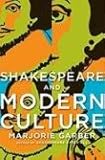
Shakespeare and Modern Culture

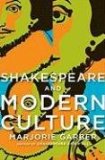
One of my best students gave me Shakespeare and Modern Culture as an end-of-the-year gift, noting that he knew how I liked Shakespeare. Clearly, Marjorie Garber has a throrough understanding of and love for Shakespeare as well.

I found the chapters on Othello and The Merchant of Venice quite interesting—perhaps even fascinating. The other chapters had flashes of interesting information here and there; I liked Garber’s references to Freud and found his interpretations of the plays interesting enough that I might try to track them down. His psychoanalysis of the characters in Macbeth particularly interested me, and as I teach that play, reading Freud’s analysis might come in handy.

However, I never felt like this book gelled for me. I found it odd that Jane Smiley’s Pulitzer Prize-winning adaptation of King Lear received a passing reference (the author isn’t even noted except in the index, and the reference dropped in as though readers are expected to know what she’s talking about; lucky for me, I did, but would everyone who read this book know it?), while pages and pages were devoted to a MacBird, a much less well-known adaptation of Macbeth by Barbara Garson. Also puzzling is the fact that Garber says Rosencrantz and Guildenstern are Dead was published in 1996. Obviously I’m not an expert, so I looked this information up because it just didn’t seem right to me. Sure enough, I found it was published in 1966 (the movie appeared in 1990). Typo? Maybe, but it made me lose some confidence in her research. An Amazon reviewer found other factual errors I missed.

A personal pet peeve: the book has endnotes. I hate endnotes. If you need to footnote something, I prefer it be in the footer of the text. I will not flip back and forth between notes and the section I’m reading, so I wind up not reading the notes, and my guess is that any time a writer takes the time to provide annotations, it’s because they’re important. I just find the flipping back and forth too annoying. Of course, the choice of endnotes over footnotes may not be Garber’s choice, but her publisher’s.

I am not going to say this book was bad. I did learn some interesting things about the plays, but the book was not what I thought it would be. The dust jacket calls it “a magisterial new study whose premise is that Shakespeare makes modern culture and that modern culture makes Shakespeare.” I didn’t find the book delivered on that promise. I would have appreciated a brief summary of the plays. Garber assumes an absolute familiarity with the text, and I confess it’s been too long since I read The Tempest and I’m not sure if I’ve read Coriolanus, particularly after reading this book (I sure don’t remember it), so those two chapters were difficult for me to understand in light of my lack of familiarity with the plays. I suppose it is Garber’s prerogative to assume familarity with the texts she discusses, but I thought brief summaries might make her own text more accessible. I also wish Garber had discussed more of Shakespeare’s comedies. In all, it was satisfactory, but not as good as I was hoping it would be. In fact, by the end, I just wanted to finish it so I could read something else. In general, I found the reviews at Goodreads to be spot on.

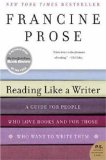
Reading Like a Writer

Francine Prose’s Reading Like a Writer is billed as “a guide for people who love books and for those who want to write them.” I think Prose does have some good advice for writers in the book, but more than that, this book is, as the blurb from USA Today indicates, “A Love letter to the pleasures of reading.” Prose points to excellent examples of dialogue and characterization. She favors a close reading approach to reading and enjoying literature.

Prose insists, rightly, that if you want to write, you need to be a reader, and she notes that it’s astonishingly true that many young writers are not reading. I have to admit I agree with Prose. I don’t understand why someone who wants to write wouldn’t be reading just about everything. Reading is a proper writer’s education. It was reading other books that made me think I could try to write them, and I just can’t imagine writing without reading.

In the interview at the end of the book, Prose notes, “One of the sad things that I think partly accounts for the decline of the audience for reading and books is that people aren’t being encouraged to read for pleasure” (8). Of book clubs, she says that “[T]hey do get people reading and talking about reading. But on the other hand, when you’re reading for a book club, the whole time you’re thinking, I have to have an opinion and I’m going to have to defend it to these people. The whole notion of being swept away by a book pretty much goes out the window” (8). I think she makes some valid points. I have a lot of students who are not readers. I have some students who become readers (and sometimes, you’d be surprised how little encouragement is needed). The key is that students are choosing to read for pleasure. That’s not to say I think we should do away with required reading. I happen to think sometimes, some real good comes from being required to read a book. Many of my students this year told me they were not looking forward to Frankenstein, but after they read it, they really liked it. Would they ever have picked it up on their own? Maybe not. I know I enjoyed some of the reading I was required to do in school (not all of it, surely). We can pull out the old saw about everything that is competing with reading nowadays, but I think that we have always had readers and nonreaders, even when there wasn’t as much to compete with. Prose thinks that the problem with required reading is often that “[T]eachers are teaching books that they themselves find boring to students who are bored by them. And they’re teaching them in a way that bores the students” (8-9). There’s some unfortunate truth to this observation. In some cases, curricula are so set in stone that teachers have no options about which books they teach. One fortunate aspect of my own teaching position is that I can select all the books my students will study. If teachers are allowed to select books they are passionate about, sometimes that passion transfers to the students. I’m not going to say they’ll always like required reading, but students are more apt to like required reading that the teacher so clearly enjoys.

One very interesting chapter in this book, “Learning from Chekhov,” examines the rules and advice writing teachers give students. Prose notes for each time she has told a student not to do something with writing, she finds an example in Chekhov where it works. I thought that chapter was interesting because it essentially says that the most important rule to know about writing is that there are no rules. It’s a somewhat frightening and liberating idea. What we can do (and should do, in Prose’s view) is use the masters as models.

Prose has some eclectic tastes in literature, and she mentioned a great many books I’d not heard of, much less read. She includes a list of recommended books that includes many of the greats of the Western canon in addition to some surprising choices I wouldn’t necessarily have thought would be on such a list. Examples include mainstays like Pride and Prejudice, Wuthering Heights, The Great Gatsby, and Moby Dick, but some interesting choices include Charles Dickens’s Dombey and Son. I had never heard of this novel, and thus it wouldn’t have been the usual choice for a Dickens novel, I should think. Prose is fond of the Russians, a proclivity that shines through almost every page of this book. I do find it helpful that Prose recommends certain translators for literature that isn’t written in English. It can be daunting to select which version to read when a book has been translated multiple times, and a little guidance is helpful.

I think people who truly love books and reading (especially English majors who live for this sort of thing) will enjoy Prose’s book, but I’m not sure it would be of any help to students who are trying to learn about literature or writing. Instead, I would recommend Thomas C. Foster’s How to Read Literature Like a Professor or How to Read Novels Like a Professor.