Review: The Historian, Elizabeth Kostova

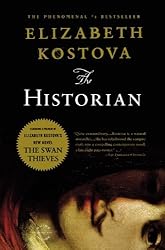
Elizabeth Kostova’s 2005 novel The Historian was my first read of 2016. I actually started it some time in November, but I set it aside and just dipped in and out until this last week, when I read the bulk of the novel.

The Historian is the story of Vlad the Impaler, sometimes known as Dracula, and the historians interested in tracing his existence and locating his final “resting” place. The unnamed narrator of the story becomes embroiled in the search for Dracula through her father, Paul, who disappears mysteriously. She embarks on a quest to find him, and through some epistolary and framing elements, she gradually learns the story of her own parents’ quest for Dracula, taken up when her father tried to find his missing mentor and dissertation advisor, Bartholomew Rossi.

The novel has been compared somewhat unfairly to The Da Vinci Code because it has elements of scholarship and elements of a literary thriller, but I’m not sure it’s a fair comparison. It is better written, and the characters are somewhat more developed than Dan Brown’s characters; however, there is still the sense that most of the characters are almost sort of like action figures the author is moving around instead of really well-drawn characters. Intriguingly, it is the minor characters, such as Rossi, Helen’s mother and aunt, and the Professor in Instanbul, Turgut Bora, who emerge as more interesting and fully formed than any of the protagonists. I question whether the framing device was really necessary. I don’t think the structure of the plot needed to be quite so complicated because it didn’t really do a whole lot to further the plot. All of the stories within stories were not confusing or hard to follow so much as they seemed unnecessary. Still, even with these criticisms, I would say I enjoyed the book and found it to be a sufficiently creepy vampire story, and not just a vampire story, but also a story of the Cold War and the complicated issues scholars might have dealt with in trying to conduct research behind the Iron Curtain. I have read criticism that the climax in this book is not really a good payoff, and I would agree with that criticism. On top of that, I think the reader leaves the book a bit confused (or perhaps that’s just me), especially as to why the author chose to end the book in the way she did.

I’m a little confused about how to rate this book because while I enjoyed it, it’s not without some serious flaws, and some people might not enjoy the book at all because of those flaws, but ultimately, for what it is and what it does do, I went with four stars. Your mileage may vary.

Rating: ★★★★☆

Set mostly during the 1950’s and 1970’s in many locations in Europe. Some exploration of medieval Romania and Turkey in the characters’ research.

Related posts:

Review: Revolution, Jennifer Donnelly, narrated by Emily Janice Card and Emma Bering

I believe I’ve just finished reading my last book of 2015, and it was a re-read of one of my favorites, Jennifer Donnelly’s novel Revolution. This time, I listened to the audio book. I have this book in hardcover, Kindle, and audio book, but I hadn’t listened to it until this week. It was even better on a re-read than it was the first time I read it.

Since I reviewed the book last time I read it, this time, I really want to mention a couple of things that struck me. First, this book is tightly written. It all works. I picked up on so many things I missed on a first reading. The sections of Dante’s poetry correspond well to Andi’s descent into darkness and her literal descent into hell in the catacombs, where she is, naturally, accompanied by Virgil. I was so swept away with the plot the first time I read that I missed some of the artistry of the writing. Equally impressive is Donnelly’s research. She fictionalizes some details. Andi’s thesis focus, the composer Amadé Mahlerbeau, is fictional, as are her Nobel-prize winning father and his historian friend G. However, they all have their basis in historical or contemporary figures who do similar work. Another thing I noticed about Donnelly’s writing is that she allows the reader to be creative and connect the dots. She doesn’t knock you over the head with the connections. She wants you to do the work. She wants you to do some digging and find out what she has learned.

I also noticed how well Donnelly pulls off the twinning. Maximilien Robespierre and the schizophrenic Maximilien R. Peters, who is responsible for the death of Andi’s brother Truman, work very well in a pair and serve as an interesting symbol of the brutality and stupidity of the world and the cyclical nature of history’s desperate individuals. It’s almost not too hard to believe that Alex might reach across history, 200 years in the future, to save Andi and let her know that just because the world goes on, stupid and brutal, it doesn’t mean that she has to—she can be a positive force for good in the world. She can make people happy. The world can be a scary, crazy place. Particularly today, we see a lot of stories in the news that make us despair and make us want to give up. Perhaps in the end, all we have left to do is to do the good that we can. We don’t have to participate in the world’s brutality and stupidity.

Donnelly said in an interview that “a good story with a compelling character that’s well written should appeal to anybody.” I think that’s why this book is so good. Andi may be a teenager, but the fact that she is a young protagonist doesn’t make her story any less applicable or interesting. This book really makes me want to write, and that’s always the sign of a really good book to me—the ones that make me want to write.

Emily Janice Card narrated most of the book, while Emma Bering narrated Alex’s diary entries. Both narrators were brilliant. Card especially does a brilliant job bringing Andi’s sarcastic and hard edge to life. You can hear the chip on her shoulder. Card happens to be the daughter of Orson Scott Card. I read that she was named for two of my favorite writers (and Orson Scott Card’s, apparently): Emily Dickinson and Emily Brontë. I really didn’t want to stop listening to this book. I have to be doing something mindless while I listen to audio books or else I get distracted from the story. When I didn’t have anything mindless to occupy me while listening to this book, I pulled my hardcover off the shelf and read along with the narrators. I need to go back and re-read a few favorite passages.

Last time I read this book, I was craving more books just like it, but I’m afraid there probably aren’t any. It’s brilliant.

Keep scrolling for the book’s playlist. You don’t want to miss it.

Rating: ★★★★★
Audio Rating: ★★★★★

The playlist for this particular book is massive and varied, as Andi is one of those folks who loves music. All kinds. I suspect it needs a bit of revision because there are musical references on just about every page of the book. That’s another thing I love about it. The music.

Related posts:

Review: Where She Went, Gayle Forman

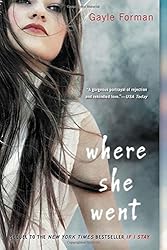
Where She Went is the sequel to Gayle Forman’s novel If I Stay. It picks up the story of Mia and Adam about three years after the events of the previous book. In the intervening time, Mia and Adam broke up and lived very separate lives. Mia went to Juilliard and pursued her dream of being a renowned cellist. Meanwhile, Adam channeled all his hurt and pain over Mia’s rejection into writing songs, and almost before he knew it, his band Shooting Star had a hit record, and he was a rock star, complete with an actress girlfriend and a jet set lifestyle. Inside, he feels hollow, and even music no longer means much to him. On his last night in New York before heading to London for a tour with his band, Adam is alone. He’s just flipped out in the middle of an interview, and his manager gives him the evening off to pull himself together. Wandering around New York, he finds himself at Carnegie Hall, and he is stunned to discover Mia is playing there, that night. He purchases a rush ticket and watches her concert. At the end, an usher approaches him and says that “Ms. Hall would like you to come backstage.” Mia takes Adam on a tour of her New York, and over the course of the evening, they say all the things they left unsaid when they parted.

Some reviewers claim that they like this book even better than the first, which is unusual, as sequels often don’t measure up to the promise of the first book in a series. In my own review of If I Stay, I mentioned that it would have been a book I’d have adored as a teenager—and I do mean it would have been one my absolute favorite books of all time if I had encountered it in high school. Adam would have been exactly the kind of boyfriend I’d have wanted in high school. By my mid-twenties, I had soured big time on that kind of guy because of the kind of person Adam became after his band made it big. The problem with so many of those types is that they never really mature out of their own selfishness. They’re terribly cool people, and they are interesting and artistic. But they are horrible to be in love with. The interesting thing about this book is that it exposes that side of rock musicians and also that it allows Adam a chance to grow out of it. This book is told from Adam’s point of view rather than Mia’s, and I found her to be very interesting in his head. As someone who has read the first book, I also have Mia’s own point of view, but Adam doesn’t have it. He is filled with insecurity and anxiety, but mostly he’s just numb and sort of sleepwalking through his life. I think I actually liked this book better, too. What happens to Mia in the first book is terrible—almost too terrible—but the horrible mundanity of a devastating breakup is something we can all relate to, and Forman captures the feeling so well. Mia and Adam are grown up now, too, and though they are young, they have lost that naivete and innocence they had in the first book. Well, they must. They’ve experienced a great deal of pain and growth. One has the sense at the end of Where She Went that they will be okay and will be able to handle whatever happens next, whether that means they will be together or not.

Rating: ★★★★★

Here’s the playlist, with one substitution unavailable in Spotify (Le Tigre’s “My My Metrocard” for “Deceptacon,” a track from the same album).

Related posts:

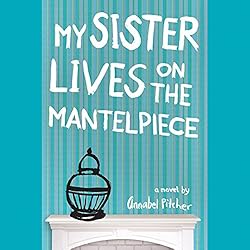
Review: My Sister Lives on the Mantelpiece, Annabel Pitcher, narrated by David Tennant

I’m not going to lie. I downloaded this audio book because David Tennant is the narrator. I had been looking for a quick audio book, and started searching some of my favorite actors and actresses to see which ones they might have read, and that is how I found this book. Once I read a few reviews, I decided to give it a shot. So very glad I did.

My Sister Lives on the Mantelpiece is the story of Jamie Matthews. Jamie lives in London with his shattered family because, as the title says, his sister Rose’s ashes are in an urn on the mantelpiece. Well, most of them. After her death in a terrorist attack similar to the 7/7 bombings, Rose’s parents couldn’t agree about what to do with her remains. Five years later when Jamie is ten, Jamie’s mother leaves his father for a man in her grief support group. Jamie’s father moves Jamie and Rose’s twin sister Jas up to the Lake Country for a fresh start. As he starts drinking heavily and neglecting the children, Jamie begins to make friends with Sunya, a girl at school. The only problem is that she’s Muslim, and as Jamie’s father always says, Muslims killed his sister.

This book is absolutely charming, even though Jamie has such a hard time of it, mainly because of the humor with which Annabel Pitcher imbues Jamie. As maddening as almost all of the adults are, and as sad as Jamie’s experiences are, in Pitcher’s hands, the story is never maudlin or pathetic because Jamie isn’t. He copes with his absentee parents and struggles with his feelings about his father’s prejudice against Muslims with a sense of humor that sparkles. For example:

“I stared up at the sky and raised my middle finger, just in case God was watching. I don’t like being spied on.”

The characters, especially the children (but sadly, also the horrible adults) leap off the page with a delightful realism that might remind some of J. K. Rowling. I think the novel is a middle grade novel, as Jamie is ten, but truthfully, anyone of any age might enjoy it. Touching on grief, family strife, bullying, friendship, and racism, in less skilled hands it would be too much, or at the very least, it wouldn’t work. But Pitcher handles it beautifully. Moreover, the message about racism and prejudice is particularly important in the current political climate. I wish I knew more kids I could recommend the book to, but recommending it to you will have to do. Annabel Pitcher will make Jamie Matthews your new hero.

It probably goes without saying that David Tennant was an excellent narrator. I can always tell I am enjoying an audio book when I actually volunteer to do the dishes more than my fair share because I want to listen. His reading only underscores the book’s charm and humor.

It’s one of the best ones of the year for me.

Rating: ★★★★★
Audio Rating: ★★★★★

Jamie and his family move from London to Ambleside in Cumbria in the Lake District, so I’ll count it as a book set in Cumbria.

Review: If I Stay, Gayle Forman

Gayle Forman’s novel If I Stay is the story of Mia, an accomplished cellist and senior in high school. Mia lives in Oregon, and when the schools close for a snow day (“I think the county overreacted,” Mia says), the family decides to make a day of it and visit friends, family, and the bookstore. In a split second, Mia’s entire life is shattered when her family’s car is hit by a pickup truck. Mia finds herself outside her body, watching as the ambulance arrives, watching as she is taken to Portland by medivac, and watching as she lies in a coma in the ICU. Mia realizes that she must make the decision: “I realize now that dying is easy. Living is hard” (175).

I’m a little late with If I Stay. I think a lot of folks have read it already, so it might not be new to you. In fact, it’s been on my TBR list for years. This is exactly the kind of book I’d have been in love with as a teenager. I must have re-read Judy Blume’s Tiger Eyes countless times. In many ways, Mia reminds me a bit of Davey in Blume’s book, though the tragedy she must cope with is much larger in scope and also involves her own personal fight for recovery. I think if this book had existed when I was in high school, I’d have re-read it as much as I re-read Tiger Eyes, and I can’t praise it much more highly than that. Adam is definitely the kind of boyfriend I’d have wanted in high school. Like Mia, I was a musician in high school with some starry-eyed dreams of actually being good enough to go to Juilliard. Unlike Mia, I knew I didn’t have the talent it would take to do it. The cello is, in fact, one of my favorite instruments, and my daughter played it in school. I think I would really have connected to this story if I’d read it in high school.

So what about adult me? Well, at this stage of my life, I recognize Adam is NOT the kind of guy I’d want to be with (nice enough, but the rock musician types are more cool on paper). I consider music important, but it doesn’t consume me as much as it did when I was in high school, and perhaps that is my loss. I have really wanted to get back into playing either the flute or the guitar (or both) again. I’m in a different place, which is as it should be, and it makes me a little sad this book wasn’t around when I was in high school (but I think Gayle Forman was probably in high school right then as well). It’s a great book. I enjoyed it a lot. It’s the first time in a long time that I’ve considered how much more I might have liked a book if I’d read it at a different time. As it is, it was well-written, but some of the cracks showed a bit more to adult me. They wouldn’t have bothered teenager me at all. In fact, I might not have seen them as cracks at all.

Still, I really enjoyed the book, and as for grabbing and keeping my attention, it absolutely did. I definitely want to read the sequel.

Rating: ★★★★½

I found this blog post on hosting the ultimate book group party for this book (very cool ideas). I also found an interesting Bustle post about the fictional band in the movie soundtrack. Speaking of the movie, some liberties were taken with the story, but f you have Amazon Prime, it’s free to watch with your membership. It wasn’t bad.

I made a Spotify playlist based on the music mentioned in the book, on Gayle Forman’s website, and the movie. Caveat: I couldn’t bring myself to include Bette Midler’s song “The Wind Beneath My Wings” (though it’s mentioned in the book), and I cut Alice Cooper’s “School’s Out” as well. I don’t hate that song, but it doesn’t fit well with the rest of the punk/indie and classical tracks in the playlist. I guess Frank Sinatra doesn’t either, but he stayed in.

Related posts:

Review: Dubliners, James Joyce

One of the biggest gaps in my reading has been James Joyce. I tried to read Ulysses some years ago, but I didn’t get past the first chapter—not because of difficulty but because of interest. I picked up Dubliners mainly because I’m teaching AP Literature for the first time, and the short story that closes this collection, “The Dead,” is a perennial AP text.

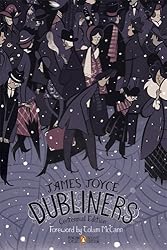
I spent about two weeks studying that final short story and decided to go back to the beginning and read the whole thing. Dubliners is a collection of stories, or more accurately, a portrait of Dublin. It reminds me almost of a really large painting with several scenes. If you zero in on one scene, here is a story about what you are looking at. Perhaps this idea of mine is influenced by Roman Muradov’s cover design, which includes a pastiche of scenes from the stories. Here is a link to Muradov’s website, where you can see the artwork. I’m really in love with his design for the cover, which is why I bought this particular edition, but the unexpected (and truly valuable) bonus is that this edition has really excellent endnotes, and if you are new to Joyce, I can’t recommend this edition more highly. The notes explain everything from historical references to slang to geographical details. They really are superb.

In the collection, my favorite story by far is “The Dead.” There are so many layers to that story that I feel that I could read it over and over and find new things in it all the time. What a phenomenally gorgeous and perfect short story. Of the others, I also enjoyed “Clay,” “Counterparts” (which had a sad ending), and interestingly enough (because not much happens) “Ivy Day in the Committee Room.” I loved the way Joyce captures the speech of his characters. He is particularly adept at dialogue, but the entire collection shines with brilliant writing. I’m trying not to be depressed by how young Joyce was when he wrote it.

I didn’t enjoy every story in the collection, but I can say the same for every short story collection I’ve ever read. The whole collection hangs together much better than other short story collections I’ve read. For the fact of inclusion of “The Dead” and the coherence of the collection alone, five full stars.

Joyce said, “For myself, I always write about Dublin, because if I can get to the heart of Dublin I can get to the heart of all the cities of the world. In the particular is contained the universal.”

At least as far as this collection goes, very true words.

Rating: ★★★★★

Related posts:

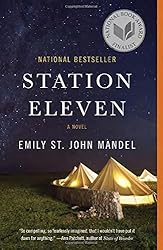
Review: Station Eleven, Emily St. John Mandel

Emily St. John Mandel’s fourth novel Station Eleven is probably not a book I’d have picked up if it hadn’t been recommended to me, and what I would have missed!

Station Eleven is a layered novel about the world twenty years after the apocalypse. A virulent new strain of the flu almost completely obliterates the population of the earth. Kirsten was about eight years old when the flu struck. She had been acting in a production of King Lear on the night when the flu landed in Toronto, where the novel begins. The lead actor is suddenly stricken with a heart attack and dies onstage. Twenty years later, Kirsten is traveling with a symphony/Shakespearean acting troupe that has a circuit in the Great Lakes area, bringing art and entertainment to the small communities created in the wake of the Georgian flu because “survival is insufficient.” The novel connects the stories of Kirsten, the lead actor Arthur, the man who tries to save Arthur’s life, and Arthur’s friends and family.

Wow. This book was amazing. I didn’t want to put it down, and I almost stayed up really late last night to finish it, but I made myself stop reading so I wouldn’t be dragging today at work. It would be easy for some readers to say they’re tired of dystopian fiction or to say they don’t like science fiction and dismiss this book, but the book is not like the typical dystopian or sci-fi novel I’ve read. In fact, I understand that Mandel doesn’t really classify the novel in those genres herself. The balancing act Mandel must do by weaving the various threads together and by linking the themes is fascinating to watch in terms of the writing craft. She pulls it off. Most dystopian novels deal with the immediate aftermath of an apocalypse or dwell only in the darkest parts of the world left behind. Mandel sees a bit more hope for humanity than that. Even in the darkest times and places, people have created art so that they can feel human. I was reminded of the ghetto and concentration camp at Terezin when I read this book. Even the way in which Mandel weaves the various threads together doesn’t feel too contrived or coincidental (especially given how few people are left after the Georgian flu). It just works, and it works beautifully.

At the end of the world, what survive? And how? Would we even have any time for such frivolities as art and music? I’ll let Lear himself answer that question:

O, reason not the need! Our basest beggars
Are in the poorest thing superfluous.
Allow not nature more than nature needs,
Man’s life is cheap as beast’s. (2.4.304-307)

One of the best books I’ve read this year.

Rating: ★★★★★

Review: Citizen, Claudia Rankine

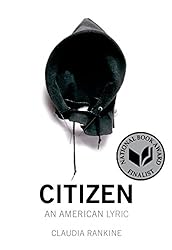
If you haven’t yet read Claudia Rankine’s multigenre blend of prose, poetry, art, and protest lyric Citizen: An American Lyric, do yourself a favor and pick it up. Particularly, perhaps especially, if you are white. Because you don’t understand, and even though reading a book is not the same as living the experience, it will open your eyes. Some of what you will read in this book you think you know, but the bone-deep weariness of living in America and being black permeates every single page of this beautifully written book.

Rankine writes about topics from the #blacklivesmatter movement to Hurricane Katrina to Venus and Serena Williams to Trayvon Martin to microaggressions. I think my favorite part was perhaps the extended section on Serena Williams. Many years ago, I used to follow tennis, but I haven’t really done so for about 25 years. So, I didn’t realize what Serena Williams had been through in her career, and it was educational to be sure. I also found section VI on Katrina, Trayvon Martin, James Craig Anderson, the Jena Six, and New York’s stop and frisk policy especially powerful. Each was described as a script of a situation video.

Rankine experiments with boundaries. At times, it’s hard to classify what, exactly the form is—poetry? essay? The resulting book resembles an assignment I have given my students in the past: the multigenre research project. In this assignment, students research a topic, but rather than write a research paper to show what they learned, they write poems, stories, and essays (any genre you can think of, just about) and use photographs and art to tell the story of what they have learned. They are immensely creative, incredibly interesting and inventive, and highly expressive. Citizen could probably best be classified as a multigenre book on the black experience in America. It includes criticism, prose, poetry, art, and photography. In fact, the chilling omission of a key detail on p. 91 somehow rendered the photograph (which is a famous photograph of a lynching) even more stunning and frightening, and I’m not sure how, but you really have to see it. Even the cover is a fascinating work of art. At first glance, I thought it was a black mask, but I realized it is actually a hood like you might find on a hoodie sweatshirt.

I read Citizen in one gulp, and I probably should have slowed down to take it in because it deserves a thoughtful reading, but I couldn’t put it down. It’s one of those books I think I will be pressing into the hands of just about everyone I know. Powerful. Wow.

Rating: ★★★★★

Related posts:

Sunday Post #37: Complete

Sunday PostI didn’t post last Sunday because I was returning for my favorite conference, the National Council of Teachers of English annual convention. It was great. I picked up some excellent free and cheap books and enough book recommendations to keep me busy for a long time.

NaNoWriMo is going well, word-count wise. I think I’ll finish. I’m not excited about the book as I’m nearing the end. I’m not sure if it’s because it’s a fanfic or if it’s because I’ve run out of steam. I was delighting myself writing it at the beginning, but I haven’t even wanted to read what I’ve written lately to my husband. Still, I’m making myself plug away and finish it. Even if I’m not enjoying it as much as I was, the story is still coming remarkably fast. One thing I think I’ve learned this month is that I have a lot of stamina and speed when I give myself permission to write a crappy first draft and turn off my internal editor.

I have completed my goal of reading 52 books for the year. In fact, I just finished the 53rd. In the last week, I’ve finished five books and reviewed four:

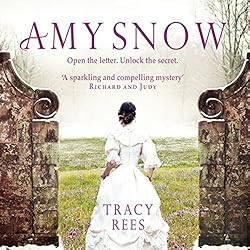
Today, I finished listening to an audio book of Amy Snow by Tracy Rees. I was torn over this one for a long time. It was okay, not great. It’s actually a bit over-the-top campy at times, and I think somewhere near the beginning, I realized that Rees was writing a send-up of those overwrought Victorian novels (or I hope she was; otherwise, oh dear). Mrs. Vennaway should remind just about every Brontë fan of Aunt Reed—horrible to a child for just about no reason. In fact, Amy Snow does owe a bit of a debt to those other books. The main character’s self-deprecation is grating, though, and she never becomes as strong or interesting as Jane Eyre. If you read it with an eye toward thinking of it as an homage, then it’s fine. I finished it, more to discover the ending to the novel’s puzzle than anything else, but I found the ending unsatisfying, even if fairly complete. Still, if it’s an homage, it’s a fairly clever one. For a light read, it was well-researched, at least. The setting managed to intrigue even when the characters didn’t.

Rating: ★★★☆☆

I’m counting Amy Snow as my Surrey book, since that’s where the Hatville estate where Amy comes from is located.

The Sunday Post is a weekly meme hosted by Caffeinated Book Reviewer. It’s a chance to share news, recap the past week on your blog, and showcase books and things we have received. See rules here: Sunday Post Meme. Image adapted from Patrick on Flickr.

Related posts:

A Double Review: Camus and Kamel

I somehow never got around to reading The Stranger until yesterday. I finished it today and immediately picked up Kamel Daoud’s companion novel The Meursault Investigation. If you, like me, waited to read The Stranger, the crux of the plot is that a disaffected French Algerian man buries his mother; he is unable to grieve, or indeed, to feel much of anything. He strikes up an affair with a woman he works with, becomes involved in an argument between his neighbor Raymond and Raymond’s mistress, whom Raymond believes is cheating on him. While Raymond and the narrator Meursault are out, they see the “brother” of Raymond’s mistress, and, believing the brother is spoiling for revenge over his sister’s treatment, they start a fight. Though the fight ends, Meursault heads back out to the beach and finds the mistress’s brother, known only as “the Arab” and kills him. The rest of the book details Meursault’s contemplations behind bars, including his trial, which turns into an absurdist farce when the prosecutor, jury, and judge are more upset by Meursault’s lack of grief over his mother’s death than the fact that he has killed an Arab.

It is upon this point that The Meursault Investigation turns. The narrator of The Meursault Investigation is Harun, the brother of the Arab Meursault killed—and he had a name: Musa. Harun is haunted by his brother’s death and by the murderer who wrote about it and neglected even to name his brother, stripping him of an identity, of personhood, of meaning. Both Harun and his mother piece together the details of Musa’s murder, but neither is able to find peace in the wake of his loss, and even revenge doesn’t bring Harun the solace he seeks.

I’m really glad I waited so long to read The Stranger so that I could read The Meursault Investigation right after. In the future, I imagine that these two books will be read together, companion pieces. The interesting thing that Daoud does with the story (which is something I think Camus misses) is make it about colonialism. Camus doesn’t name the Arab because it’s not important to his story. The murder is just what lands Meursault in prison. No one much cares about it. The problem with this attitude is that the Arab’s life did matter. Daoud gives the man a name and a family—identity, personhood, meaning. The Meursault Investigation explores the effects of colonialism on Algeria and makes Meursault, like so many of his countrymen, complicit in the “murder” of the country’s identity.

Of the two, I definitely enjoyed The Meursault Investigation more. I understand I’m supposed to find Meursault profound, but mainly I just found him very frightening and extremely difficult to relate to. Someone who is so unable to feel anything is truly in a horrible place. Harun, by contrast, not only tries to understand and make meaning of his brother’s death, but he even tries to understand his brother’s murderer as well as those readers who have found meaning in The Stranger. And unlike Meursault, he has been able to understand love and longing and a life truly given up for the sake another. I want to thank Carol Jago, English teacher extraordinaire and reading muse, for recommending this one.

The Stranger Rating: ★★★☆☆
The Meursault Investigation Rating: ★★★★☆

P. S. These last two books make 52 books for the year for me, which was the reading goal I set. WHOOP!

Related posts: