Tots Online

Share

The AP reports:

Before they can even read, almost one in four children in nursery school is learning a skill that even some adults have yet to master: using the Internet. Some 23 percent of children in nursery school — kids age 3, 4 or 5 — have gone online, according to the Education Department. By kindergarten, 32 percent have used the Internet, typically under adult supervision.

Can you believe that? What are kids that age looking at on the Internet? I have taken Maggie to look at things on Nick Jr., but I didn’t really think there was much out there for the under-5 set. Maybe I’ve been shortsighted, though. I don’t see why I couldn’t let Maggie dictate e-mails to relatives. They’d love it, and I’ll bet she’d like the replies.

I didn’t go online until my twenties, because there basically wasn’t any “online” to go to until then, but my own children won’t remember life without the Internet. In some ways, I find, as a teacher, that students don’t really know how to use print sources and become quickly frustrated if they don’t find what they’re looking for. In some cases, it doesn’t occur to them to consult a book! I worry that this trend could continue. The more dependent we seem to become on technology, the more enslaved we become to it. Think about this: your ancestors 150 years ago got by just fine without electricity and running water. I think this kind of technological progress is interesting, and I think it is good, but I hope it doesn’t prevent students from being able to use books.
Related posts:


Share

The Birth of Venus

Share

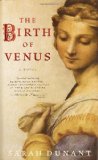
The Birth of VenusI’ve just finished Sarah Dunant’s The Birth of Venus. Renaissance Italy is such fascinating subject matter that I wonder I’ve not read much about it before. I absolutely devour any history programs about the Medici and the Borgias. One of my colleagues teaches a class entitled “Dante and the Medieval World.” Yes, in a high school — isn’t that cool? Anyway, I thought of her often as I read, because Dante is frequently alluded to in this novel.

The novel begins in 1490s Florence, just as Lorenzo de’ Medici dies and the city comes under the control of Savonarola. To Alessandra Cecchi, the main character, it is a frightening time, as the rebirth and flowering of the Renaissance seems perilously close to being snuffed out forever. Alessandra is strong-willed. She has a fine mind and the latent talent of an artist, but she is often discouraged in using both. Alas, she is a free-spirited woman in a harshly patriarchal society.

Alessandra is married off to politically astute and sensitive Cristoforo. The marriage allows Alessandra to have certain freedoms that she craves, but it also stifles her — Cristoforo is homosexual, and he cannot feel passion for Alessandra. Instead, Alessandra is captivated by the young painter employed to create frescoes for her family’s chapel.

The book was well-written, and I definitely felt as if characters were rendered honestly, with special attention given to the times in which they lived. Amazon recommended this book to me because I bought books by Tracy Chevalier and Susan Vreeland, whom they considered similar. If you reduce Dunant’s book to simply being a novel about art, then yes, they are similar. However, while Vreeland and Chevalier write about well-known artists and/or works of art and their backstories, Dunant has created a fictional art world. None of her characters are famous, and we cannot be sure that anything they created is today the admired creation of an unknown artist, but they do live in fascinating times, and I was easily swept into their story.

Related posts:


Share

Male Teachers

Share

The Boston Globe reports that only 20% of teachers in public schools are male; in elementary schools, the number is a mere 9%. Think fast — did you have any male teachers in your elementary school? We had one. Mr. Veach. My sister was in his class in 5th grade. The numbers seemed to gradually increase until college, when the teachers were predominantly male.

Some people believe that teaching is “woman’s work.” It’s too nurturing, too maternal. However, men who teach young children have another issue with which to contend: accusations of child molestation.

According to Bryan Nelson, founder of the Minneapolis-based MenTeach:

[S]ome men who might want to teach fear false molestation accusations, and … society looks at men with suspicion. That view of men has been worsened, he said, by recent attention to priest abuse scandals and even the trial faced by Michael Jackson.

“Society has a narrow view of men,” Nelson said. “We think men are dangerous.”

One might argue that lately, it seems like female middle school teachers are looking kind of dangerous in that regard. My daughter had a male kindergarten teacher for a couple of months. He had an accident and was unable to continue teaching that year, but I will admit I thought it was kind of odd — I asked myself why a man would want to teach kindergarten. I have to come clean with gender biases of my own. I don’t think men are any better or worse than women at teaching. But I will admit that I did scratch my head over a man teaching kindergarten. And why should that be? Sarah has had male music and P.E. teachers since then, but not a full-time classroom instructor; however, I can say unequivocally that her male music teacher is one of the best teachers of elementary school children I’ve come across. In addition, he is also very caring with Sarah, and I can tell he has made a significant impression upon her.

One of the most caring teachers I ever had was Mr. Velando, my homeroom, math and reading teacher in 6th grade. He bought me an autograph book when I placed first on our team/second in 6th grade/4th in the school in the spelling bee. He, along with Mrs. Van, my Language Arts and Social Studies teacher, took me to my favorite restaurant, Crystal’s Pizza (sadly defunct) with another student to celebrate our awards as Students of the Month (I was, I think, January, and the other student was December). He was a truly great teacher.

I found this story interesting, too, because I will be the only female teacher in the English Department next year; however, the Science Department will be totally female. I don’t think I’ve ever been in the position of being the only female in my department. I’m not worried about it, but I am wondering how it will be different.

Related posts:


Share

New Tunes… Again

Share

After another couple of months passed, I finally got around to updating my radio blog (get your own). This selection group should be titled, “What the Hell?” Instead it’s just stuff I like, and it’s a testament to my, shall we say “eclectic” tastes.

Playlist:

  1. The Cure, “Just Like Heaven”
  2. REM, “So. Central Rain”
  3. Motley Crue, “Home Sweet Home”
  4. Maroon 5, “Sunday Morning”
  5. k.d. lang, “Trail of Broken Hearts”
  6. Crowded House, “Weather With You”
  7. The Cranberries, “When You’re Gone”
  8. Blondie, “The Tide is High”
  9. Alison Krauss, “Down in the River to Pray”
  10. ABBA, “Dancing Queen”

Bonus points to anyone who can connect “The Tide is High” to “Dancing Queen.”

Related posts:


Share

Summer Reading

Share

I recently discussed required reading in schools. You may recall my school has required summer reading in addition to reading done through the year. My daughter, who will start middle school in August, has a suggested summer reading list.

What about you? Do you read more during the summer? Do you set yourself a reading list?

I will admit that I don’t usually think about it that much. I just read. However, I decided to plan a little bit more this summer. This summer will include at least the following books for me:

Currently reading:

Reading list:

And no, I cannot imagine that I will finish them all. If you are interested, you can always keep track of my reading on my bookshelf.

Related posts:


Share

Imagine

Share

It has been a while since I fully explored my school’s website; therefore, I didn’t realize my esteemed colleague, Barbara Rosenblit, had her speech in response to her presentation of the prestigious Covenant Award in November 2004 posted.

She’s a remarkable woman and a master teacher. In the short time I’ve worked with her, I have already learned a great deal. The best thing about Barbara is that she sees herself as inexpert — constantly learning. She once told me she likes to be, in her words, “the dumbest person” in the room, because she feels that is when she learns the most. In truth, she is the kind of person who learns from everyone, and she does not place her learning above that of others. She candidly told me, for example, that she took an idea from a new teacher and totally altered the way she teaches double-period classes. Many teachers in her position might take the stance that there is nothing they can learn from new teachers.

If you are an educator and like to “imagine” how great our educational system could be if people like Barbara were in charge of making policy, you can read her speech.

Related posts:


Share

80 Years

Share

Perhaps you’ve heard this story already, as it seems to be making its way around the globe. Percy and Florence Arrowsmith, 105 and 100 years of age respectively, entered the record books yesterday after celebrating their 80th wedding anniversary. They have lived in the same home for most of their long marriage. They apparently enjoyed musicals, as they were founding members of their local Gilbert and Sullivan society. Mrs. Arrowsmith said the secret to a long marriage was “never to go to bed as enemies,” while Mr. Arrowsmith said it could be summarized in two words: “Yes dear.”

Before my great-grandfather died, my great-grandparents had been married for 74 years. My ex-husband’s grandparents had also been married longer than 70 years when they died.

Related posts:


Share

The Queen’s Fool

Share

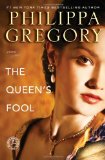
The Queen's FoolI don’t have a book-rating system, like 1-5 stars, or even something cutesy like apples, because I’m a teacher. If I had one, I’d give Philippa Gregory’s The Queen’s Fool three stars (or apples). Frankly, the author’s odd choice of writing almost completely in comma splices really put me off. I found it hard to concentrate on the story when this major usage error kept popping out at me over and over. I only wish I was exaggerating.

Aside from that, the story moves along, and I was intrigued by the characters. Frankly, I thought the best part of the story was the portion the protagonist, Hannah Green, spent in Calais. I was much more interested in her story as a Jew in the Renaissance than all the palace intrigues.

I did not understand Hannah’s divided loyalties. She seemed to serve several masters and equally love them all, which didn’t make sense to me. Also, no reasons were really shown why she should love these people, who really hadn’t done all that much to earn it, frankly.

The writer seemed to me to choose very obvious aspects of Judaism to demonstrate her characters’ religion, although perhaps this was on purpose, too. One would not necessarily want to confuse Gentile readers who didn’t know much about Judaism. Gregory also has the excuse that her characters are actively hiding their religion and do not remember all their customs, nor keep them out of fear of being discovered as Jews. Still, I found the depiction of this side of Hannah’s life rather basic.

Another complaint I have about Gregory’s writing is that her dialogue is not period, which is something I noted while reading The Other Boleyn Girl. It is a little off-putting to find so much non-period dialogue in a piece of historical fiction. Particularly annoying was the repetitive use of “D’you” for “Did you.”

After I have said all that, you might wonder why it merited the “three stars.” Like I said, it was readable. I did become interested in the characters. I don’t think I could have finished it, considering all its flaws, if it didn’t have these good qualities. I found it odd and intriguing to see Mary portrayed so sympathetically. However, to paraphrase Will Somers, the Fool, history did not remember Mary’s good qualities, just as they did not remember her father’s. As he is remembered as a lecherous wife-killer, she is remembered for her burning of “heretics,” mostly Protestants, which rightly earned her the appellation Bloody Mary.

Related posts:


Share

Deep Throat Revealed

Share

The Washington Post confirmed that former number-two official at the FBI, W. Mark Felt, was “Deep Throat,” the secret source who helped Woodward and Bernstein topple a president.

I had always known, of course, that “Deep Throat” would be revealed sooner rather than later — all the major players in the Nixon administration period are rapidly aging. Still, this is exciting. I’ve wondered for a long time — ever since seeing All the President’s Men — who this man could have been.

Now that speculation is at and end, I will reveal that my pet theory was that it was Henry Kissinger. Now wouldn’t that have been something?

Related posts:


Share

The Curious Incident of the Dog in the Night-Time

Share

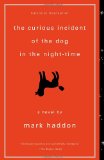
The Curious Incident of the Dog in the Night-TimeFifteen-year-old Christopher Boone discovers his neighbor’s dog impaled on a “garden fork” and decides to do some detective work in order to discover the dog’s murderer. Like his predecessor, Sherlock Holmes, he has, “in a very remarkable degree, the power of detaching his mind at will.” That is because Christopher has a form of autism called Asperger’s Syndrome. People with Asperger’s often display astounding intellectual capability, while suffering from diminished social functioning. Mark Haddon brilliantly and poignantly captures the thinking process of a boy with Asperger’s Syndrome in his debut novel, The Curious Incident of the Dog in the Night-Time.

I can’t imagine how difficult this novel was to write, as Amazon Canada reviewer Jack Illingworth notes, “This is the sort of book that could turn condescending, or exploitative, or overly sentimental, or grossly tasteless very easily, but Haddon navigates those dangers with a sureness of touch that is extremely rare among first-time novelists.”

I once had a student with Asperger’s, and it was interesting to watch him walk down the hall, tracing his fingertips against the wall, clinging to the wall almost, to keep from touching others. He looked only in front of himself, never to the sides, almost not seeming to see the others. Before I taught him, when he was in middle school, he had been known to bang his head on the desk when he answered incorrectly in one of those quiz bowl competitions. Because they knew I’d be interested, my parents sent me a paper clipping of an article about him in their local paper in Macon. It was hard not to think of him as I read this book, though my student is certainly more socially aware than Christopher, who went to a special needs school and only seemed to exhibit high facility in math and science, whereas my student seemed equally gifted in many areas, including my class.

I found the book difficult to put down. It brought my grand total books I’ve read in one sitting up to five. The others are:

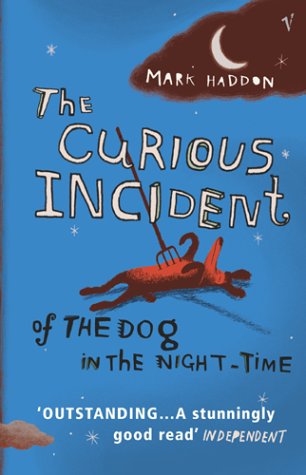
What all these books have in common are strong characters that drive the novel to such an extent that I absolutely must see what happens to them. I discovered after I read the book that it had been a Today Show reading selection, which explains why I kept running into references to the book. I must thank my friend, Roger Darlington, for sending it to me in exchange for The Poisonwood Bible, which I sent to him. It was indeed, as you hoped, Roger, a fair exchange. It was nice to have the British version for a couple of reasons: a) the language differences were intact, which made it easier to see the setting as Britain, b) the cover is much better:

UK Cover

Related posts:


Share