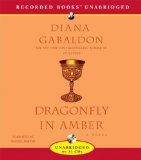
Dragonfly in Amber (audio), Diana Gabaldon

Dragonfly in Amber (Outlander)In my quest to read (or reread, as in this case) the entire Outlander series this year, I joined the Outlander Series Reading Challenge and have already completed the first book in the series, [amazon_link id=”0440423201″ target=”_blank” ]Outlander[/amazon_link]. I thought I might enjoy listening to the books this time, and Davina Porter, the narrator, does indeed do a fabulous job reading the books. She has different voices for the different characters, and she is expressive and interesting to listen to.

[amazon_link id=”0385335970″ target=”_blank” ]Dragonfly in Amber[/amazon_link] is the second book in the seven-book (as of today’s date) series. It begins in 1968, when Claire Randall and her daughter Brianna visit Scotland. Claire enlists the help of Roger Wakefield, adopted son of her late husband Frank’s friend Reverend Wakefield, to find out what happened to the men under the command of Jamie Fraser at the Battle of Culloden. Claire inexplicably disappeared through a cleft in the stone circle known as Craigh na Dun during a second honeymoon with her husband Frank in 1946 and wound up 200 years in the past. Before slipping back through the stones on the eve of the Battle of Culloden, Claire built a life for herself in the past as Jamie Fraser’s wife. Knowing the Highland clans will be destroyed after Culloden, Claire and Jamie work as double agents, trying to prevent the disaster. They find themselves caught up in intrigues at the French court of Louis XV before returning to Scotland.

I find this second book to be interesting for its development of Claire and Jamie’s relationship. They endure the horrible loss of their daughter Faith, an event which nearly destroys their marriage, as well as danger and privation as they find themselves swept up in Bonnie Prince Charlie’s rebellion. I join those readers who don’t enjoy the part of this novel in which Jamie and Claire live in France as much as the rest, but I found that during this reread, I actually enjoyed the frame part of the story that takes place in 1968, which I didn’t like much the first time I read the novel. I think the idea that Claire would ever return to Frank and leave Jamie just bothered me too much at the time. I found I liked the older Claire: she aged well. She’s still sexy in her 40’s, and she also became a medical doctor at a time when that profession did not include many women. I also found I liked Brianna better this time. I didn’t like her much the first time I read her, and I wonder if Davina Porter’s characterization of her contributed to my change of heart. Diana Gabaldon has said before that she had a hard time creating Brianna. I was not a huge fan of Roger Wakefield’s the first time, either, but I liked him better this time.

I noticed on this rereading, as I did with Outlander, that Gabaldon includes a lot of subplot and detail that develops characters, but doesn’t necessarily move the plot forward. Considering the length of the books, I think she could cut some of this detail without harming the character development, and I find the further I read into the series, the less patience I have for it. I may not mind so much once I start reading the books that I have never read before, but as I have reread the first two books, I’ve been annoyed by the extra details.

Still, Diana Gabaldon has a gift for creating characters and setting, and the end of the book, even on a reread, was unputdownable.

Rating: ★★★★☆

Harry Potter and the Philosopher's Stone

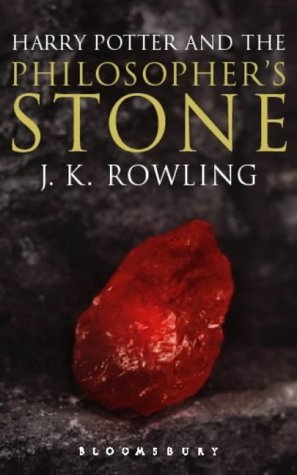
Harry Potter and the Philosopher’s Stone, J. K. Rowling

Harry Potter and the Philosopher's StoneA friend of mine gave me the wonderful gift of all of the Harry Potter books in e-book format. I just reread the first on my Kindle, and I must say that visiting Harry Potter’s wizarding world feels as comfortable as curling up under a warm blanket, snug against the cold. I realized on this reading that I have much of the book memorized at this point, but this was the first time I read the British version, Harry Potter and the Philosopher’s Stone. My friend managed to get the British versions of the books for me, and after reading just this one, I much prefer the British versions. I have always thought the American title for this book was foolish dumbing-down for Americans, as though Americans couldn’t be expected to be familiar with the Philosopher’s Stone. I remember being confused when I first read it, thinking that the Sorcerer’s Stone sounded a lot like the Philosopher’s Stone, and wondering why Rowling didn’t use that term, only to find out she did, but that her American editors changed it. Grrr.

Aside from the fact that the British version is better, it’s a joy to return to this world that Rowling crafts  so fully and so beautifully again and look around. Her books are always just as good as I remembered them. Harry, Ron, and Hermione are always as wonderful and winsome as they were the first time. I think Rowling has something of Dickens’s gift for crafting characters. The first time I read the books, I was struck by Rowling’s wordplay, too, and I still enjoy it when I reread.

There are not many books that I reread frequently, but the Harry Potter books certainly are, and I find something new to enjoy and marvel at each time. This time, for instance, I read Harry Potter and the Philosopher’s Stone after having experienced that book on Pottermore. I had the extra information about wandlore, Quirrell’s house at Hogwarts, and McGonagall’s history in mind as I read. I won’t share that information, as it is spoilery, and if you didn’t manage to get into the Beta version of Pottermore, you might wish to explore it on your own and discover the information as you navigate the site. Besides, if you want the spoilers, you can find them elsewhere online. Reading the book made me want to hop on Pottermore and reread some of those sections on the site. I remember how unexpectedly moved I felt when I got my wand, and how happy I was to be sorted in Ravenclaw (I always knew I was a Ravenclaw).

I thoroughly enjoyed the experience of reading this book on my Kindle, too. I often highlight and annotate more in my Kindle books, as I don’t necessarily share them with other family members (and we certainly share Harry Potter books), and I also don’t feel like I’m defacing books. I have a peculiar aversion to writing in books. It does not bother me to write in textbooks or professional reading; in fact, I mark those books up quite a lot. I don’t like annotating fiction, though. What I should say is I don’t like annotating print fiction. I annotate e-books quite a lot. Reading this book on my Kindle gave me license to highlight all my favorite parts and take notes on connections I made. I enjoyed reading the book in this way. Perhaps if I didn’t have a hangup about writing in my print books, reading e-books wouldn’t feel that different to me, but I am finding that I actually prefer e-books lately because I feel I can write in them.

Of course, I finish this book as the book world is buzzing about J. K. Rowling’s new book, The Casual Vacancy, set for release in September. The readers will, of course, just be outraged that it’s not Harry Potter, but I think Rowling is right to go for something completely different. It will be expensive: nearly $35 for hardback and $20 for the e-book (Amazon has it for pre-order in hardback at $21.00). I’ve never paid so much for an e-book, and I can’t see myself rushing out to buy the book at those prices.

The Guardian also recently ran a lovely piece on rereading: “The Pleasures of Rereading” by Tom Lamont.

Rating: ★★★★★

The American Heiress, Daisy Goodwin

[amazon_image id=”0312658664″ link=”true” target=”_blank” size=”medium” class=”alignleft”]The American Heiress: A Novel[/amazon_image]With Downton Abbey on hiatus, I’ve been going through withdrawal, and Daisy Goodwin’s novel [amazon_link id=”0312658664″ target=”_blank” ]The American Heiress[/amazon_link] was like methadone. The American Heiress is the story of Cora Cash, daughter of a wealthy American flour company magnate. Cora is spoiled and rich; in the beginning of the novel, she compares herself to Emma Woodhouse. She is used to having her way. Her mother, ambitious and conniving, wants to see her daughter land a titled husband. Fate throws Cora quite literally in the path of Ivo Maltravers, Duke of Wareham. After a whirlwind courtship, Cora becomes the Duchess of Wareham, but she learns that accepting this title will mean she might have to give up more than she realized and live in a strange country with a man she barely knows.

The similarities between this novel and Downton Abbey are a little uncanny. Cora, like the character Cora on Downton Abbey, is a rich American heiress who marries a titled aristocrat from an old family in the UK. This novel takes place during the Gilded Age and is therefore set slightly before the events of Downton Abbey begin. I enjoyed Cora’s mother-in-law, the Double Duchess—so-called because she married the Duke of Buckingham after the death of her husband, the former Duke of Wareham. It may be that Goodwin was thinking of Louisa Cavendish, Duchess of Devonshire, who was also known as the Double Duchess because she married both the Duke of Manchester and the Duke of Devonshire and lived during the right period (though she may have been a bit older than Goodwin’s Double Duchess). Cora’s own story calls to mind the real story of Consuelo Vanderbilt, who married the Duke of Marlborough. Consuelo Vanderbilt was, of course, a rich American heiress like Cora. Consuelo’s real mother-in-law was none other than the Double Duchess, Louisa Cavendish, herself. If you are a fan of this period in history and like costume drama, you would probably like this novel. It was an engaging, quick read. I did not find Cora particularly likable because she was quite spoiled and melodramatic. It was hard to feel sorry for her for too long. However, despite a lack of sympathetic characters, I found the plot of the story held my interest. If I had cared about the characters a little more, I might have been somewhat disappointed in the ending, but I found that the ending was realistic, and I’m not sure I would have liked a different ending.

Some time ago, I asked readers if they wanted me to cast books, and this book is the first book I’ve had a chance to cast.

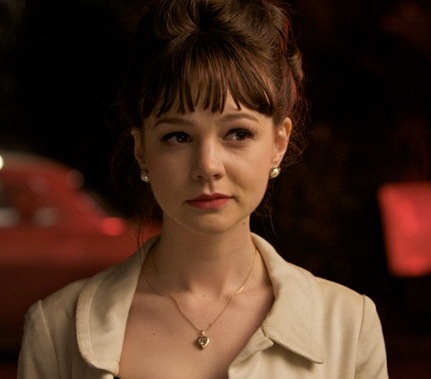
Carey Mulligan

I could see Carey Mulligan as Cora Cash. She has the chestnut hair color and a certain naivete that could carry the part.

Kerry Washington

I like Kerry Washington as Bertha, Cora’s maid.

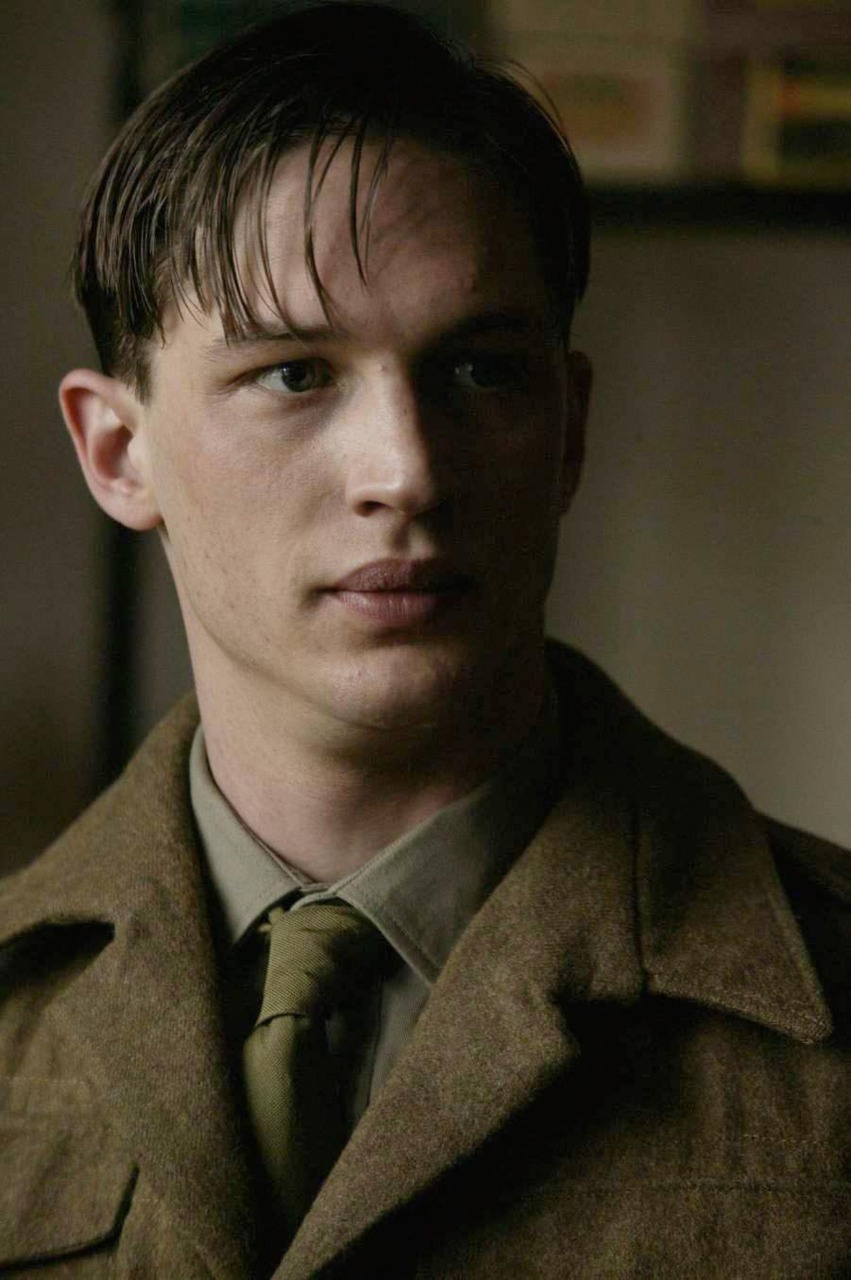
Tom Hardy

Tom Hardy should play Ivo Maltravers, Duke of Wareham. The book refers often to Ivo’s straight Roman nose and dark “gypsy” looks.

Robert Sean Leonard

Robert Sean Leonard (slightly younger version) as Teddy Van Der Leyden, Cora’s childhood sweetheart. I don’t know why other than he looks like a Teddy Van Der Leyden.

Christina Cole

Christina Cole has the sort of slithery, catlike quality that Charlotte Beauchamp needs. Charlotte is a snake in the grass, y’all. And this gal would be perfect in the role.

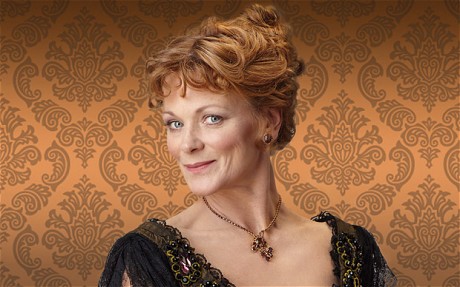
Samantha Bond

Samantha Bond was the only person I really cast in my head as I was reading. She is exactly how I imagined the Double Duchess. She would be so perfect!

Interesting side note (if you are still reading): The American Heiress is called My Last Duchess in UK. This title is, of course, an allusion to the Robert Browning poem. I like it, but after reading the novel, I’m not sure it’s very descriptive of events in the book. I’m sure the title was changed because 1) the publisher thought Americans wouldn’t get the reference and/or 2) the publisher thought Americans would like “American” in the title. Whatever.

Rating: ★★★★☆


Outlander (audio), Diana Gabaldon

OutlanderI took advantage of the time I had during a recent car trip to finish Diana Gabaldon’s novel [amazon_link id=”1419381016″ target=”_blank” ]Outlander[/amazon_link] for the third time (but for the first time as an audio book). I have reviewed the book previously. I am a big fan of Gabaldon’s, and the first time I read the series, which at that time only included four books, I couldn’t wait for the fifth book. When it did finally come out, I didn’t get through much of it before I set it aside, so I’m hoping participating in the Outlander Challenge will help me finish the series.

For those not in the know, Outlander is the story of Claire, a nurse during World War II, who travels to the Scottish Highlands for a second honeymoon with her husband Frank and finds herself mysteriously transported about 200 years in the past, where she is almost immediately confronted by her husband’s ancestor, Jonathan “Black Jack” Randall, an English officer garrisoned in Scotland. She is rescued from the clutches of Black Jack by members of the Clan MacKenzie, who take her to their stronghold, Castle Leoch. Claire finds herself drawn to Jamie, a young man in the MacKenzie party. She establishes herself as a healer in the castle and though she never stops trying to figure out how to return to Frank, she begins to build a life for herself in the past. Later, she is forced to marry Jamie in order to protect herself from Black Jack and the English army, and it is after that event that her adventures truly begin.

One of the things I noticed for the first time on this reading is the long scenes that in another book might simply have been cut. Gabaldon tends to write scenes and stitch them together later rather than write in a linear fashion. I know this because I have heard her speak about her writing process. It has benefits and drawbacks. One of the benefits is that readers feel they have intimate connections to the characters through vignettes that develop the characters into fully fleshed people. Gabaldon is gifted with description. No reader should have any trouble picturing her scenes. However, one of the drawbacks, and it’s something I really only noticed on this read, is that some scenes feel superfluous and don’t really develop the plot so much as the characters. I am huge fan of characters and will enjoy a book with good character development over a book with weaker characters and a fast, tight plot, but on this read, I really noticed the fact that much of the writing was unnecessary. Given the length of the book, that is kind of a problem. And the books only progressively get longer. I may not mind as much with the rest of the series because I have only read the next three books once, and I have never read the final three. I might find I enjoy the ride a little more when the plot is not quite as familiar, and truthfully, I don’t think most readers would have a problem with the superfluous scenes given how engaging a writer Gabaldon is.

Davina Porter is a superb reader, and listening to the books will give readers a whole new appreciation for Gabaldon’s Scots.

Rating: ★★★★☆

I’m counting this book as my romance novel for the Mixing it Up Challenge.

The Flight of Gemma Hardy, Margot Livesey

[amazon_image id=”0062064223″ link=”true” target=”_blank” size=”medium” class=”alignleft”]The Flight of Gemma Hardy: A Novel[/amazon_image]Margot Livesey’s novel [amazon_link id=”0062064223″ target=”_blank” ]The Flight of Gemma Hardy[/amazon_link] is a retelling of Charlotte Brontë’s [amazon_link id=”B004CFA9Y6″ target=”_blank” ]Jane Eyre[/amazon_link]. Like Jane, Gemma is taken in by her uncle and his family after the deaths of her parents, and once her uncle also passes away, she is abused and neglected by her aunt, who ships her off to a boarding school as a “working girl,” where she pays for her tuition and board through menial labor for the school and is treated like a second-class citizen. When the school closes, Gemma must shift for herself, so she answers an ad for an au pair position in the Orkneys. She moves into Blackbird Hall and quickly subdues her wild charge, Nell. Hugh Sinclair, Nell’s uncle and guardian, returns to Blackbird Hall and soon finds himself entranced by Gemma.

While the story closely follows the plot of Jane Eyre, Livesey has added details that make the story Gemma’s own. Gemma, born in Scotland to a Scottish mother and Icelandic father, wonders about her Icelandic family and yearns to travel to Iceland to see if she can uncover her past. The story is set mostly in Scotland in the 1950’s and 1960’s. Gemma has opportunities that Jane couldn’t have imagined; for instance, Gemma is able to sit for exams and go to college.

The danger in writing updated versions of classic novels is that they will seem too derivative to be their own story, but I didn’t find this to be the case with The Flight of Gemma Hardy. Because I had read Jane Eyre, I could guess the general directions in which various plot points would turn, but Livesey threw in enough unique details and changes that I felt the novel was much more of an homage to Jane Eyre than an imitation. Another challenge Livesey successfully navigates is making the story of Jane’s sad childhood and subsequent removal to Thornfield Hall believable in the twentieth century. Not only does Livesey answer this challenge, but in my opinion, she tempers a bit of the horrific improbability present in Jane Eyre. I know, I know—Charlotte experienced some of the horrible events she describes in Jane Eyre at the Clergy Daughters’ School. Tragedy ran rampant through the Brontë family, and I don’t mean to make light of it. However, it reminds me that sometimes true stories sound over the top when rendered in fiction. Young Jane’s early experiences, the goodness of Helen Burns, the evil of Aunt Reed and Mr. Brocklehurst—all these rang slightly too awful to believe when I read them, which isn’t to say I didn’t love Jane Eyre. Gemma’s experiences, while uniquely horrible in their way, read as more realistic, and Helen’s counterpart Miriam is a more believable and less “Mary Sue” type of character (and yes, I know that Charlotte based Helen on her sister Maria, and that Charlotte claims Maria really was that good).

I liked Gemma. She is smart and spunky, particularly as a child. The supporting cast are all enjoyable, too, particularly Gemma’s charges Nell and Robin. I loved the Rivers sisters’ counterparts Hannah and Pauline. St. John Rivers’s counterpart Archie was more likable than St. John himself. The relocation to Scotland and Iceland made for an intriguing setting that rendered events in the story more believable, I think, than they might have been had Livesey set her novel in England. I do think fans of Jane Eyre will enjoy this book, but I think it stands on its own as a fine novel without its connection to its literary ancestor.

Rating: ★★★★½

You can find Margot Livesey online at her website, her Facebook page, and her Twitter account.

I read this novel for the TLC Book Tour. You can visit the other stops below on the dates listed to read other reviews of this novel.

*Also reading Jane Eyre

A Northern Light, Jennifer Donnelly

[amazon_image id=”B0006BD9BK” link=”true” target=”_blank” size=”medium” class=”alignleft”]A Northern Light[/amazon_image]Jennifer Donnelly’s YA novel [amazon_link id=”B0006BD9BK” target=”_blank” ]A Northern Light[/amazon_link] is based, in part, on the same crime that inspired Theodore Dreiser to write [amazon_link id=”0451531558″ target=”_blank” ]An American Tragedy[/amazon_link]: Chester Gillette’s murder of Grace Brown in the Adirondacks in 1906. The novel’s protagonist, Mattie Gokey, is the teenage daughter of a poor farmer in the North Woods. Mattie’s mother died not too long before the events in the book start. Before she dies, Mattie’s mother extracts a promise from Mattie that she will stay to help take care of her siblings. Mattie’s older brother Lawton left home after a fight with their father, and Mattie is responsible for her three younger sisters. Mattie, however, dreams of going to college. Her teacher, Miss Wilcox, encourages Mattie, who she believes has a gift for writing. Mattie’s friend Weaver Smith has dreams of attending Columbia University, and Miss Wilcox encourages both of them. They both take jobs at the Glenmore Inn, where Grace Brown and Chester Gillette come to stay. Before Grace is murdered, she entrusts Mattie with her letters and asks Mattie to burn them. After Grace’s body is found and Mattie finds herself unable to dispose of the letters as Grace asked, she reads them instead, and she uncovers a motive for Gillette’s murder of Grace as well as motivation to follow her own dreams.

Jennifer Donnelly’s books are all good. This particular novel’s narrative flashes backward and forward in time, but the plot is not difficult to follow, and in the end, Donnelly’s reasons for telling the story in this less linear fashion are clear. Mattie is an engaging heroine, representative of so many girls of her age who were expected to marry, often without love, and raise a family. Weaver is an interesting character too. His father was killed in a racial hate crime, but rather than making Weaver fearful of whites, it instead empowered him to stand up for himself when he encounters racism. Like Mattie, the reader can have no doubt that Weaver will go to Columbia and become a fine lawyer despite the odds. Donnelly’s setting is vividly painted for the reader, both in time and place—which is a particular gift of Donnelly’s and something I have enjoyed about all of her books.

I would recommend this book even to readers who aren’t necessarily fans of YA, mainly because I think readers will enjoy learning about this time and place and will like Mattie and her friends and family (except, of course, for those we aren’t supposed to like). Grace Brown’s murder is more or less incidental to the plot, as the main story is Mattie’s coming of age.

Rating: ★★★★½

I thought about counting this book as a crime/mystery book as part of the Mixing it Up Challenge, but I ultimately decided not to because the crime is not the center of the novel.

Full disclosure: I obtained this book via PaperBackSwap.

Delirium, Lauren Oliver

[amazon_image id=”0061726834″ link=”true” target=”_blank” size=”medium” class=”alignleft”]Delirium[/amazon_image]Lauren Oliver’s dystopian YA novel [amazon_link id=”0061726834″ target=”_blank” ]Delirium[/amazon_link] takes place in an alternate present in which love has been found to be the root of all humanity’s problems and has subsequently been treated as a disease. When citizens turn eighteen, they undergo a procedure that removes their capacity for love, and, in the view of most members of the society, renders everyone happier. Lena is weeks away from her procedure when she meets Alex. She falls in love with Alex, or as her society would call it, contracts amor deliria nervosa. Alex leads her to question everything she has ever believed about her society.

One of Oliver’s nice touches is an epigraph at the beginning of each chapter. The epigraph comes from literature or handbooks published by the government, and it is a quick way for Oliver to give her reader a glimpse of the world in which the novel is set. The reader doesn’t learn too much about what is going on outside of the U.S., and that is by design, because Lena doesn’t know, and the oppressive government is not forthcoming. Perhaps because Lena either does not know or is not interested (or because Oliver is saving it for later in the trilogy), the reader doesn’t learn how society arrived at the conclusion that love is a disease that should be eradicated. I did get the sense that the U.S. had decided love was dangerous quite a long time ago. I had a little bit of trouble believing the U.S. had come to the conclusion that love was so dangerous when it was mentioned that not every country in the world agreed, and I had to wonder what happened in the U.S. We are a group of people who enjoys their freedom, and for us to agree to such a totalitarian regime, something big must have happened. I didn’t get my answer, but perhaps it will be revealed in the future books of the trilogy.

While I can appreciate the way in which Oliver designed this alternate present, and parts of the book were gripping, the book as a whole didn’t grab me by the jugular the way it seems to have done for many other readers. I think I couldn’t get past the idea that a society would ever decide love was a problem that needed to be eradicated. I think I might try to read the sequels because I am interested enough to know what happened. I struggled with how to rate this book, and I ultimately decided on four stars because I did think it was probably better than just OK, but I also had no trouble putting it down, and sometimes I wasn’t over eager to pick it back up again.

The sequel to Delirium, [amazon_link id=”006197806X” target=”_blank” ]Pandemonium[/amazon_link], will be released on February 28.

Rating: ★★★★☆

Other reviews for Delirium:

Divergent, Veronica Roth

[amazon_image id=”0062024027″ link=”true” target=”_blank” size=”medium” class=”alignleft”]Divergent[/amazon_image]Veronica Roth’s novel [amazon_link id=”0062024027″ target=”_blank” ]Divergent[/amazon_link] is the story of Beatrice Prior, who lives in a future dystopic Chicago. After a cataclysmic war that Beatrice, the first-person narrator of the story, doesn’t know much about, Chicago divided into five factions: Abnegation, who believe that the cause of war is selfishness and seek to be as selfless as possible; Dauntless, who believe the cause of war is cowardice and seek to be as brave as possible; Erudite, who believe the cause of war is ignorance and seek knowledge; Candor, who believe the cause of war is deception and seek to be as honest as possible; and Amity, who believe the cause of war is unkindness and seek to be as kind as possible. At the age of sixteen, each member of this society takes an aptitude test that partly determines which faction they will join. Some people are best suited for the faction into which they are born, but those who are not leave their families behind because in this society, faction comes before family. Beatrice has always felt out of place in Abnegation. She doesn’t feel selfless enough. When she takes her aptitude test, the results are inconclusive, and her test administrator explains that she is something called “Divergent,” which is a very dangerous thing to be, though Beatrice doesn’t know why. All she knows is that she must keep her test results quiet. The day after the aptitude test, Beatrice must choose which faction she will join, and she shocks everyone by choosing Dauntless.

After joining Dauntless, Tris, as she is known, undergoes a tough initiation that hardens her mentally and physically and prepares her for her role in the faction that protects the society. Even in this competitive environment, she manages to make friends and develops an attraction to Four, her instructor. As she becomes more deeply involved in her initiation, she discovers something is not right about her society, which is perhaps not as invested in peace as she has grown up believing.

Fans of Suzanne Collins’s [amazon_link id=”0545265355″ target=”_blank” ]Hunger Games[/amazon_link] series will find much to like in Divergent, the first book of a planned trilogy. Tris is a tough-as-nails heroine not too different from Katniss, though with perhaps a little less confidence. Four is an interesting counterpart and love interest, too (more interesting than Peeta or Gale, in my opinion). The craziness of the Dauntless initiation will remind some of the Hunger Games, and certainly the dystopic future set in a world where people divided based on some arbitrary factor will look familiar, but the factions are more interesting than the districts of Panem. Your station in life in Panem depends so much on which district you are born into, and it seems fairly difficult to change your stars in Collins’s series, but choices determine everything about who you are in Roth’s dystopic Chicago, which I liked because it puts more responsibility into the hands of everyone. Rather than a ruthless Capitol victimizing everyone, Roth writes about a society in which everyone is responsible, to some degree, for the way things are, and are also ignorant of some facets of the society. I haven’t seen a lot of people compare this novel to [amazon_link id=”0547424779″ target=”_blank” ]The Giver[/amazon_link], but I thought of that book often as I read. In Lois Lowry’s novel, the society seems perfect, but Jonas discovers that they systematically execute those who are weak or ill or old. Feelings are suppressed. No one can see color. The weight of discovering what his society is drives him to escape, an event which might destroy his society, given that he has been chosen to the the society’s Receiver. I suspect something similar will happen with Tris. I can’t help but feel she’ll upend the whole society. Unlike Katniss, who knows her society is corrupt and unfair, both Jonas and Tris discover the darkness in their society when they both come of age and choose their role or have it chosen for them.

Divergent is a gripping, edge-of-your-seat read. I read it on the bus, which was a mistake because it nearly caused me to miss my stop several times and actually did cause me to miss my stop once. I can’t wait to read the next book in the series, [amazon_link id=”0062024043″ target=”_blank” ]Insurgent[/amazon_link], which is due out in May. The book leaves open several questions that I hope I learn the answers to before the end of the trilogy:

  • How did the society get like this? Lake Michigan is nothing more than a marsh. I want to know how that happened.
  • What is going on outside of Chicago? Are they the only people in the world, or just cut off from everywhere else?
  • If there are other people, do they have factions too, or is that just Chicago? If it’s just Chicago, what the heck is going on there?

I have other questions, but they’re a little spoilery.

I love dystopian novels. So much fun to read, and with the success of The Hunger Games, it looks like we’ve been seeing a lot of them lately.

I was glad I recently visited Chicago as it helped me visualize the scene much better than if I hadn’t, but I suspect Google Images and a good map would be nearly as helpful.

Oh, and I’m totally jealous of Veronica Roth, who wrote this debut novel when she was only 22 and studying creative writing at Northwestern.

Rating: ★★★★★

Other reviews of Divergent:

This one’s been on my TBR pile for a little while and qualifies as the children’s/YA choice for the Mixing it Up Challenge. Actually, it qualifies for sci-fi/fantasy, but I can’t double-dip.


Moloka’i, Alan Brennert

[amazon_image id=”0312304358″ link=”true” target=”_blank” size=”medium” class=”alignleft”]Moloka’i[/amazon_image]Alan Brennert’s historical novel [amazon_link id=”0312304358″ target=”_blank” ]Moloka’i[/amazon_link] tells the story of the leper colony on the Hawaiian island of Moloka’i through the life of one remarkable woman named Rachel, who is sent to live at the colony at the age of seven when she contracts Hansen’s Disease and is exiled to Moloka’i, forced to leave her family and live as a virtual prisoner.

Once on the island, she has a difficult adjustment, but she also finds a second family, friends, love and causes for joy that she never expected. She builds a life for herself on the island, and she endures her share of tragedy, but ultimately, the book is not sad, and I would even say I felt it ended on a triumphant note. I liked this passage at the beginning and thought I’d share it:

Papa tied up at the Esplanade, his children putting on a brave face as they escorted him back to the SS Mariposa, all of them quietly determined not to cry.

But almost as though someone were taking their secret thoughts, their hidden grief, and vocalizing it, there came—from the pier immediately ahead—a terrible, anguished wail. It was not one voice but many, a chorus falling like the wind. It was, Henry and Dorothy both knew, not merely a wail, but a word: Auwē, Auwwayy! (Alas! Alas!)

It sounded exactly like the cries of grief and loss that Rachel had heard the day the king had come home. “Mama,” she said, fearfully, “is the Queen dead, too?”

“No, child, no,” Dorothy said.

Moored off Pier 10 was a small, decrepit interisland steamer, the Mokoli’i. A distraught crowd huddled behind a wooden barricade, sighing their mournful dirge as a procession of others—young and old, men and women, predominantly Hawaiians and Chinese—were herded by police onto the old cattle boat. Now and then one of the people behind the barricade would reach out to touch someone boarding the ship: a man grasping for a woman, a child reaching for his mother, a friend clasping another’s hand for the last time.

“Ma’i pākē,” Kimo said softly.

“What?” Rached asked.

“They’re lepers, you ninny,” Sarah admonished. “Going to Moloka’i.”

“What’s a leper?”

Someone in the crowd threw a flower lei onto the water, but contrary to legend, it was not likely to ever bring any of these travelers back to Honolulu.

“They’re sick, baby. Very sick,” Mama explained. Rachel didn’t understand. The people didn’t look sick; they didn’t look much different than anyone on the other side of the barricade.

“If they’re sick,” Rachel asked, “why isn’t someone taking care of them?”

No one answered her; and as that word, leper, hung in the still humid air, Dorothy dug her fingers into Rachel’s shoulders and turned her away from the Mokoli’i. (16-17)

This passage sets up the events in the novel beautifully and creates a thread, with the cry of Auwē, Alas! that is woven throughout the book. I liked Rachel a great deal as a character. The characters as a whole are well developed, and I think this book tells the important and little known story about Moloka’i respectfully and beautifully in a way that exposes the pain that the colony’s residents surely felt while still acknowledging that even in circumstances of pain and loss, it’s possible to find great joy and happiness. Rachel’s incredible life is a monument to the real residents of the colony at Kalaupapa, Moloka’i. I am very glad I was introduced to their story.

I will admit that for part of this book, it wasn’t coasting on a full five stars, mainly because Brennert does make some choices as a writer in terms of style that detracted from my enjoyment of the novel, but the characters and plot swiftly drew me beyond caring anymore, and by the end, I was in love with the book. If you have a mind to learn about Hansen’s Disease or late nineteenth and early twentieth century Hawaii, or if you just like a good historical novel, I highly recommend this book.

Rating: ★★★★★

Full disclosure: I obtained this book from PaperBackSwap.

Historical Fiction Challenge 2012

Mount TBR Reading Challenge 2012

Catalyst, Laurie Halse Anderson

[amazon_image id=”0142400017″ link=”true” target=”_blank” size=”medium” class=”alignleft”]Catalyst[/amazon_image]Laurie Halse Anderson’s novel [amazon_link id=”0142400017″ target=”_blank” ]Catalyst[/amazon_link] is the story of Kate Malone, perfect student, driven athlete, minister’s daughter, and so dead-set on going to MIT that she hasn’t applied anywhere else. Since her mother’s death, Kate has held everything together through tightly-controlled organization. She makes she her brother has his asthma medication and that her family’s clothes are cleaned and pressed. With all this pressure, something has to give. Kate’s life starts spinning out of control when her neighbors, the Litches, lose their home to a fire and move in with her family while they rebuild their home, which means Teri Litch—the angry bully who used to pick on Kate—is now sharing her room.

Kate was not as likeable a heroine as some other characters Laurie Halse Anderson has written. Sometimes people need to be shown that their priorities are out of whack in a really harsh way, and to Kate’s credit, she gets it by the end of the book. She’s fairly typical of a lot of overachievers—driven, way too focused, wound so tight it’s a question of when not if they’re going to pop. I didn’t enjoy this book as much as Anderson’s other books, but Melinda Sordino of [amazon_link id=”0312674392″ target=”_blank” ]Speak[/amazon_link] has a cameo appearance; this novel takes place in the same school and community as Speak. The characters were interesting: they were layered and more complex than you usually see in YA (but typical of Laurie Halse Anderson, who is a brilliant writer). I just didn’t like them very much, and it was hard to root for them. Still, I would probably read anything that Laurie Halse Anderson wrote.

Rating: ★★★½☆

Full disclosure: I checked this book out of my school library.