Review: Into the Wild, Jon Krakauer

Into the Wild

“I went to the woods because I wished to live deliberately, to front only the essential facts of life, and see if I could not learn what it had to teach, and not, when I came to die, discover that I had not lived.”

Henry David Thoreau

My sister gave me a copy of Jon Krakauer’s book Into the Wild for Christmas so many years ago now that I can’t remember, and I’m a little embarrassed that it has taken me so long to finally read it. I think what finally convinced me to read it at last was the recent publication of Carine McCandless’s own memoir, The Wild Truth. I had previously read Jon Krakauer’s article, “How Chris McCandless Died” in The New Yorker.

I am a funny reader. I don’t highlight or underline much in paper books, unless they are professional reading or books I’m teaching in my English classes. I didn’t make any marks in my paper copy of Into the Wild until I was more than a third, perhaps even close to halfway through the book, and I realized I needed to mark it up. I went back and found passages I liked in the parts I read before I had picked up my pencil.

For those (like me) who may not have read the book yet, it is the story of Christopher McCandless, who graduated from Emory University and disappeared on a quest to find himself in the wild. A devotee of Jack London, John Muir, and Henry David Thoreau, McCandless was drawn eventually to Alaska, where, it was supposed, he died of starvation. Jon Krakauer was asked to write about the tragedy for Outside magazine. However, Krakauer appears to have been unable to leave the story alone after the article, and this book is the result. In fact, as evidenced by the fact that Krakauer wrote the foreword to Carine McCandless’s book and is still contributing to discussion of Chris McCandless’s death, it seems plausible that he is still unable to let the story go. Once I started reading it, I also had a hard time putting the story down.

I was speaking with colleagues about the importance of narrative non-fiction. One important thing I have come to believe this year is that all of us, each and every one of us, has a story. In fact, many important stories. McCandless didn’t live to tell his story, in a sense, but in another sense, he actually did live to tell his story. Or perhaps, more accurately, he lived his story and Krakauer told it. Who was Chris McCandless, really? Just an arrogant, woefully unprepared, thoughtless slacker, as some people believe? The second coming of Thoreau? On the one hand, I understand those who are frustrated by the veneration of someone they see as foolhardy, and McCandless devotees have caused some real problems when they’ve tried to retrace his steps and find for themselves the old Fairbanks City Transit bus where he died. On the other hand, what I love about this book is that Krakauer elevated McCandless, a man who might otherwise have been forgotten by all but his family and friends, simply by telling his story, and by telling it so well.

I was particularly moved by McCandless’s friendship with and impact on a man Krakauer calls Ron Franz. I almost hesitate to share a quote here because part of me wants anyone reading this review to discover the book as I did, without having read a single line from it anywhere. On the other hand, anyone reading this review is likely not too worried about exposure, or they wouldn’t read a review (I know I avoid reviews of books I haven’t read unless I don’t mind some spoilers). So all that being said, this is the first part of the book that moved me:

“When Alex [McCandless’s pseudonym] left for Alaska,” Franz remembers, “I prayed. I asked God to keep his finger on the shoulder of that one; I told him that boy was special. But he let Alex die. So on December 26, when I learned what happened, I renounced the Lord. I withdrew my church membership and became an atheist. I decided I couldn’t believe in a God who would let something that terrible happen to a boy like Alex.” (60)

Some criticism I’ve read of the book faults Krakauer for inserting himself a bit too much into the narrative, but I actually liked it that he became close to the story. I think sometimes in telling a story about someone else, you need to identify how it’s also about you, and it is clear that Krakauer saw himself in McCandless and even indicates all that really separates the two of them is luck.

Even Ralph Waldo Emerson, in many ways the father of Transcendentalism in America, criticized his friend Thoreau, whom he felt frittered away his life: “I cannot help counting it a fault in him that he had no ambition… Instead of engineering for all America, he was the captain of a huckleberry party.”

Of course Thoreau was more than the captain of a huckleberry party. In fact, I’d argue he actually did engineer for all America. Emerson just didn’t realize it because so much of the change in thinking that Thoreau put in motion didn’t bear fruit until a century and more after Thoreau’s death.

I can easily see how one might criticize McCandless for making the mistakes he did, but as Krakauer points out,

McCandless wasn’t some feckless slacker, adrift and confused, racked by existential despair. To the contrary: His life hummed with meaning and purpose. But the meaning he wrested from existence lay beyond the comfortable path: McCandless distrusted the value of things that came easily. He demanded much of himself—more, in the end, than he could deliver. (184)

Am I arguing that Chris McCandless may one day have the impact that Thoreau has had? Maybe. I don’t know. But I do know his story is not only gripping and beautiful, in its way, but it is also important because he was one of us, and that alone makes it worthy to be told.

No man ever followed his genius till it misled him. Though the result were bodily weakness, yet perhaps no one can say that the consequences were to be regretted, for these were a life in conformity to higher principles. If the day and night are such that you greet them with joy, and life emits a fragrance like flowers and sweet-scented herbs, it is more elastic, more starry, more immortal—that is your success. All nature is your congratulation, and you have cause momentarily to bless yourself. The greatest gains and values are farthest from being appreciated. We easily come to doubt if they exist. We soon forget them. They are the highest reality… The true harvest of my daily life is somewhat as in intangible and indescribable as the tints of morning or evening. It is a little star-dust caught, a segment of the rainbow which I have clutched.

Henry David Thoreau

Rating: ★★★★★

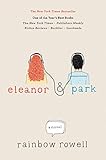
Review: Eleanor & Park, Rainbow Rowell

I just spent a weekend at an English teachers’ conference, and it made me remember how much I love reading YA fiction (which I haven’t done for a while), and also that Eleanor & Park was on my Kindle, and I hadn’t read it yet.

I feel a little inadequate to the task of describing this book because there is a lot that a summary can’t capture. Eleanor & Park is the story of two tenth graders who meet on the school bus on Eleanor’s first day at North High School in Omaha, NE. Slowly, the two start to realize they have some things in common, and by Christmas, they’ve fallen hard for each other. Eleanor has a difficult home life, but she tells no one, not even Park. Her stepfather is an abusive alcoholic, and her father has almost no involvement in her life. Her mother is trapped. When Park asks Eleanor “Why doesn’t she leave?”, Eleanor can only reply “I don’t think she can… I don’t there’s enough of her left” (196). Eleanor had been kicked out of her mother and stepfather’s home for a year previously, and she knows her position in the house is precarious. Honestly, Eleanor will break your heart.

I knew I was going to connect to this book when I opened it and saw it began in August, 1986. I suppose that means this book is historical fiction, but to be honest, I can’t look at it that way, even if its intended audience includes people who were born more than a decade after 1986. August, 1986 was the year I started high school myself—coincidentally at a school named North High School (actually, Parkway North, to be more precise). I had just moved, and I was really nervous about school. I can recall the bus politics of worrying over where to sit quite well. I actually wonder if this book isn’t more appropriate for someone like me than for a teenager. I gulped it down in one evening, only putting it down to make up the dough for our Thanksgiving rolls. It’s a little hard not to fall in love with both Eleanor and Park.

One of the best things about the book is the music references. Rainbow Rowell made playlists, which you can find on her blog. Eleanor and Park connect over comic books and the music mix tapes Park shares with Eleanor. Remember mix tapes? They were magical. They took a long time to make, and there was hardly anything more you that you could give someone than a mix tape. I used to have quite a talent for making them, too. Spotify is awesome in many ways, one of which is that it takes the mix tape to the next level. It’s actually my favorite thing about Spotify. I feel like I make tons of “mix tapes.” But there is something about the dedication it used to take to sit down in front of the stereo, select the songs, and try to get them to fit without too much blank space on either side of the tape.

Actually, I pretty much loved everything about this book, and I can’t really do better than what YA author John Green had to say about the book: “Eleanor & Park reminded me not just what it’s like to be young and in love with a girl, but also what it’s like to be young and in love with a book.”

Updated to add that Forever Young Adult made an excellent mix tape for the book:

Rating: ★★★★★

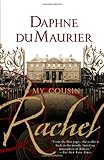
Review: My Cousin Rachel, Daphne du Maurier

My Cousin RachelNear the end of Daphne du Maurier’s My Cousin Rachel, the protagonist, Philip Ashley, reflects:

“My tutor at Harrow, when teaching in Fifth Form, told us once that truth was something intangible, unseen, which sometimes we stumbled upon and did not recognise, but was found, and held, and understood only by old people near their death, or sometimes by the very pure, the very young.” (316)

Philip was raised by his cousin, Ambrose, who travels to Italy for his health and meets a mysterious woman named Rachel. Ambrose, a confirmed bachelor, surprises everyone by marrying Rachel. Before Ambrose is able to return to Cornwall with his bride, he falls sick and dies. At first Philip is sure that his new cousin Rachel bears responsibility, but when Rachel appears at his door in Cornwall, he quickly becomes entranced by her. But is she guilty of Ambrose’s death?

I picked up this book because I love, love, love Rebecca. This book is not quite as good as Rebecca, but once again, du Maurier’s gift for rendering the Cornish coast setting and for creating interesting, troubled characters is on display in My Cousin Rachel. Rachel reminded me in many ways of Rebecca, the titular character of du Maurier’s more famous work. Even upon finishing the book, I’m still not sure what to think, and I admire the way du Maurier deftly tied the beginning to the end and brought the story around full circle. I very much enjoyed the minor characters in this book, as well. Seecombe, the butler, was particularly enjoyable. I didn’t have the sense of reading a book so gripping I couldn’t put it down, which did happen with Rebecca, but I certainly found My Cousin Rachel enjoyable. I picked it up to read for the R. I. P. Challenge, but I didn’t finish it in time. I do think that readers who enjoyed Rebecca will like this book, too, but as I said, it’s no Rebecca. Truthfully, though, few books are. I’ve been looking for a gothic read of Rebecca‘s caliber for some time now with no luck.

Rating: ★★★★☆

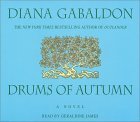
Review: Drums of Autumn, Diana Gabaldon, narrated by Davina Porter

Drums of AutumnAs I make soap, I’ve been listening to audio books, and I just finished a really long one—Drums of Autumn, the fourth book in Diana Gabaldon’s Outlander series. Like the other books in this series, Drums of Autumn is narrated by Davina Porter.

This book picks up the story of Jamie and Claire as they settle in North Carolina on Fraser’s Ridge. Their daughter, Brianna, who lives about 200 years in the future in the late 1960’s, discovers disturbing news about her parents and decides to go through the stones at Craigh na Dun and help Jamie and Claire. Roger Wakefield, sometimes known by his birth name of Roger MacKenzie, discovers what Brianna has done and follows her through the stones.

I have read this book once before. I will just lay this on the table: I am not a fan of Brianna’s. I don’t like her personality much, and I can’t put my finger on why. Claire, to me, is interesting because she’s so knowledgeable about medicine, and I found her understanding of herbal healing particularly fascinating. I’m not into herbalism per se, but as a soap maker, I do find it interesting. Claire is no-nonsense, passionate, intelligent, and above everything else, interesting.

Because this book focuses so much on Brianna’s trials and tribulations, I find I don’t like it as much as the other books. I like the parts that dwell on Claire, Jamie, and even Young Ian, however. I didn’t realize until I read it again this time, but I also don’t care much for Roger. I don’t know if it’s because the pair of them seem indecisive and dispassionate compared to Claire and Jamie. I do feel that Gabaldon tries to impart some passion in their relationship, but I don’t buy it as a reader. It doesn’t feel the same. I wonder if it has something to do with this interesting comment Gabaldon made in her book The Outlandish Companion:

These [hard nuts] are the most difficult characters for me to animate; the characters whose function in the story is structural—they’re important not because of personality or action, but because of the role they play.

One example of a hard nut is Brianna, Jamie and Claire’s daughter. She existed in the first place only because I had to have a child. The fact of her conception provides the motive for one of the major dramatic scenes in Dragonfly, but it didn’t matter at all at that point who this kid was or what she would be like…

But who the heck was this character? And having created her purely for plot purposes, how was I to give her a personality? (130-131)

Perhaps it’s just my opinion, and others might disagree, but I would argue that Gabaldon doesn’t succeed fully in making either Brianna or Roger as real or as interesting as Jamie and Claire, or even as real and interesting as other minor characters who pop off the page.

Davina Porter is a heck of a good narrator, especially deft with handling all the voices of the characters. I would definitely seek out other books she has narrated just to hear her read.

In case you are wondering at this point, I have been enjoying the new Outlander series on Starz quite a bit. It is very true to the book, and the casting is excellent. I haven’t missed an episode yet. Even my husband is watching with me, insisting, “I don’t get how this is considered a woman’s story. I mean, I guess the books are romances…” Not exactly. Sort of difficult to classify. At any rate, the series is beautifully shot with great music and some fine acting. Check it out, if you haven’t.

Book Rating: ★★★½☆
Audio Rating: ★★★★★

Summer Reading: Greek and Roman Myth

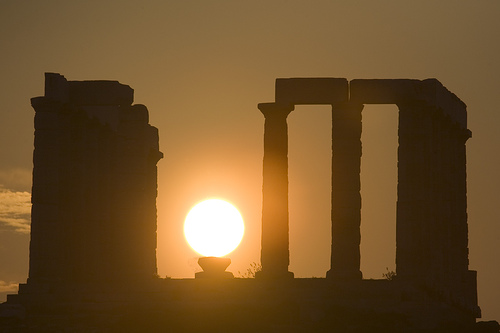
ancient greece photo

I have been taking an online course in Greek and Roman Mythology offered by Penn State through Coursera. I have just two weeks left, and most of my reading this summer has been for this course. I have fallen a bit behind in documenting my reading as well, which is something I hope to fix. I thought, however, that I would share the texts we have read, along with my brief reviews.

First, we read Fagles’ translation of [amazon_link id=”0140268863″ target=”_blank” ]The Odyssey[/amazon_link]. As I had so recently listened to Ian McKellen read Fagles’ translation, I opted not to re-read it, and I seemed to do just fine with the coursework.

The next text was Hesiod’s [amazon_link id=”019953831X” target=”_blank” ]Theogony[/amazon_link]. I had never read the Theogony before, and I admit I found parts of it quite interesting, at least in terms of origins for some of the popular myths with which I was familiar, including the displacement of Cronus by Zeus. This particular translation renders Uranus and Gaia as Heaven and Earth, respectively, and I admit because of unfamiliarity with the myths, I had to look that up. I think I would have liked it had their names not been translated. I found it interesting to learn, through the lectures, that the translation of “Chaos,” rendered in this translation “Chasm,” is not disorder so much as a void, which seems much more in line with the concept of the Big Bang and a move increasing toward entropy rather than away from it. In all, however, Theogony reads a little more like the “begats” in the Bible, and is not nearly as interesting as the other texts we read, though I can see why we read it.

Next we read two [amazon_link id=”0872207250″ target=”_blank” ]Homeric Hymns[/amazon_link]: the Hymn to Demeter and the Hymn to Apollo. The Hymn to Demeter recounts the story of Hades and Persephone, and the Hymn to Apollo recounts both Apollo’s birth and establishment of his Oracle at Delphi. For some reason, I didn’t get the requested translation, and I think the translations I used were a bit flowery and probably not as good. I don’t remember finding them to be all that gripping. To be honest, I can’t remember what I read much at all, which is probably not a good sign.

Afterward, we moved into Greek tragedy and read Aeschylus’s [amazon_link id=”0226307905″ target=”_blank” ]Agamemnon[/amazon_link] and [amazon_link id=”0226307913″ target=”_blank” ]Eumenides[/amazon_link]. When I was in high school, I got my hands on a list—I think I found it in a book—of texts all high school students should read in order to prepare for college. I knew my high school reading was sorely lacking, partly because I had moved so much that I went to three different high schools, and partly because we just didn’t read much. I read a lot of the books you probably remember reading in high school on my own. At any rate, Agamemnon was on that list, and I tried to read it back then and gave up. Reading it now, I think I can see why. For a play in which some interesting stuff happens, we sure don’t get to see any of it. It’s mostly some back-and-forth between Clytemnestra and the Chorus. I liked Eumenides better, mainly because it was an interesting look at jurisprudence, which was also how the course’s professor approached the play in his lectures. Talk about being damned if you do and damned if you don’t! Orestes must avenge his father’s murder, but in so doing, he must kill his mother, invoking the wrath of the Furies.

After this point in the course, I fell behind. I was supposed to read [amazon_link id=”0226307905″ target=”_blank” ]Oedipus Rex[/amazon_link] (which I have actually already read and taught before) and [amazon_link id=”0226307913″ target=”_blank” ]The Bacchae[/amazon_link], but I haven’t finished either one yet. Reviews to come once I do. I has been a long time since I read Oedipus Rex, but I am enjoying it great deal more than I liked either of the Aeschylus plays. However, I have had to put these readings aside in order to try, as much as possible, to catch up because this week, I was supposed to have read Books 1-5 of [amazon_link id=”0679729526″ target=”_blank” ]The Aeneid[/amazon_link] translated by Robert Fitzgerald, and I have to read Book 6 for next week as well as Books 3, 12, and 13 of Ovid’s [amazon_link id=”014044789X” target=”_blank” ]Metamorphoses[/amazon_link].

I think the texts were well chosen in terms of a good introduction to Greek and Roman myth, and I have to say I have learned a great deal from the lectures. I do happen to think that the pace of the course is too fast and the demands are too high for a Coursera course. I think a lot of people take Coursera courses to dip in a learn a little bit, and honestly, this one is as demanding as a normal college course in terms of time. However, it is a great course, and no one is twisting your arm making you take the quizzes or write the essays—you only do that if you want a certificate. But you know me. I have to be Hermione Granger about it. As a result, I don’t think I’ve had a chance to really savor what I’m learning. In fact, I can’t keep up.

Photo by uzi yachin

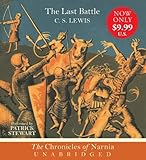
Review: The Last Battle, C. S. Lewis, narrated by Patrick Stewart

The Last Battle is the final book in C. S. Lewis’s Chronicles of Narnia series. It begins with an evil ape named Shift, who bosses around a donkey named Puzzle under the pretense of being the donkey’s friend. The two find a lion skin, and Shift gets the bright idea of having Puzzle wear it so they can fool everyone into thinking Puzzle is Aslan. A bunch of people believe it. There is a bit with some dwarfs. There is a centaur and a unicorn. The Pevensies, minus Susan, and Eustace, Jill, Digory, and Polly, are all pulled back to Narnia after a mysterious bit with a train. A bunch of people worship the evil god Tash and want him to come but aren’t very happy when he shows up.

I don’t know what heck I read.

Listen, I have no problem with Christian allegory. Despite what J. R. R. Tolkien thinks, a good case can be made for The Lord of the Rings as Christian allegory, especially if you put it with The Silmarillion. I also happen to be a Christian. However, in this novel, Lewis sacrificed the plot in favor of ham-handed allegory. And it’s not even good.

I was already prepared for the “problem of Susan,” as I had run into commentary on the subject prior to reading the book, but it bears mentioning that leaving Susan completely bereft of family because she’s a normal teenager is truly heinous. What, girls should not grow up and become women? That’s not pure enough?

But what really bothers me is that it’s supposed to be Christian allegory, and everyone’s killing people right and left. What the heck? I mean, I gather it’s more Revelations than Book of John, but still…

My advice to anyone who, like me, didn’t read these as a child and decides to read them as an adult is to read The Magician’s Nephew, The Lion, the Witch and the Wardrobe, Prince Caspian, and The Voyage of the Dawn Treader and leave it at that. Maybe The Horse and His Boy if you want to learn more about those characters, who only get a few mentions in the last couple of books and otherwise don’t figure much into the grand narrative. Stay far, far away from the final two books.

Racist, sexist, sloppily written, muddled, pile of crap. I don’t understand why a writer would desecrate his own writing like that. Patrick Stewart couldn’t save it, though his narration was brilliant. WORST. ENDING. EVER.

I so hate C. S. Lewis.

Book Rating: ½☆☆☆☆
Audio Rating: ★★★★★

Review: The Widow’s War, Sally Gunning

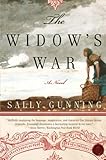
The Widow’s War: A NovelSally Gunning’s novel The Widow’s War is the story of Lyddie Berry who lives with her husband Edward in 1761 Satucket (Brewster), Massachusetts on Cape Cod. When Edward dies in a whaling accident, Lyddie finds herself not only bereft of his companionship but also of the life they shared: as a widow, most of her property—including her house, cow, and furniture—is now owned by her son-in-law, Nathan Clarke, who also happens to be a jerk and a pig. As the novel unfolds, Lyddie, determined to maintain her independence and continue living the life she led before Edward’s death, challenges Nathan and attempts to hold on to her freedom.

This novel is an enlightening peek into what women’s lives in the eighteenth century might have been like. Gunning’s research is meticulous, and her characters leap off the page in full relief. All the historical details ring true. One thing I think Gunning gets right in her historical novels is she is able to produce strong heroines who live within but also challenge the strictures of their time periods in ways that are believable. Lyddie’s struggle for independence was heartbreaking, realistic, and intriguing. I know that some reviewers have challenged whether or not the book realistically depicts Lyddie’s relationship with her Native American neighbor Sam Cowett, but I didn’t find it difficult to believe. I also liked that the author did not choose to have Lyddie be “rescued” through a second marriage or a sudden change of heart on her son-in-law’s part. I could have put a spoiler alert before that last sentence I suppose, but I liked the ending enough (and for a stretch of the book didn’t think it was going to happen that way) that I went ahead and spoiled it anyway. Lyddie is a likable character. She could be called stubborn, but no one would say she was stubborn if she were a man. She is independent in a time when it’s just about criminal or at least unheard of for a woman to be so, and I found myself rooting for her to be successful. She’s made of some pretty strong stuff.

The Widow’s War is the first in what she calls her Satucket trilogy. I previously read the third book, The Rebellion of Jane Clarke.

Rating: ★★★★½

I read this novel as part of the Historical Fiction Reading Challenge.

Review: The Silver Chair, C. S. Lewis, narrated by Jeremy Northam

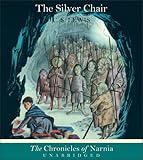
The Silver Chair (The Chronicles of Narnia)The penultimate book in C. S. Lewis’s Chronicles of Narnia is The Silver Chair. This book features the Pevensie siblings’ cousin Eustace Scrubb, who first appeared in The Voyage of the Dawn Treader, and Jill Pole, a classmate of Eustace’s at a boarding school called Experiment House. Eustace and Jill are being chased by bullies when they are magically whisked to Narnia and become embroiled in a quest to find the missing Prince Rilian, the son of King Caspian X, who is now an old man.

*Sigh*. Where to start with this hot mess. I didn’t like it from the start because it’s quite clear that Lewis is attempting to skewer progressive education in his characterization of Experiment House, but rather than create a good satire, he winds up sounding like an old fart who doesn’t know what he’s talking about (“Back in my day, we took switches to kids and prayed in school!”). Eustace and Jill are not nearly as likable as the Pevensies. Puddleglum is fun, but then I think I liked him mainly because of Jeremy Northam’s voice characterization—he had the best West Country accent. The male superiority is maddening. Jill actually says, “Where I come from, they don’t think much of men who are bossed about by their wives.” Um… What? I can’t imagine Lucy Pevensie saying such a thing. Yes, I know all about Susan being interested in lipstick and stockings in the next book. Which I will read to say I’ve read the whole series.

It’s clear Lewis was thinking of Sir Gawain and the Green Knight by having the Lady of the Green Kirtle kidnap and enchant Prince Rilian, but the stories diverge quite a bit aside from a passing similarity, which is a bit of a pity, because the rest of the plot is unremarkable. For a children’s book, the pace bogs down rather unforgivably once the characters go underground, and the plot is predictable from the start to the finish. Jeremy Northam’s narration, however, is superb. I just wish he had better material to work with. One thing I figured out after reading this book—I would love to visit Hogwarts and Middle Earth, but I have zero desire to go to Narnia.

Book Rating: ★★☆☆☆
Audio Rating: ★★★★★

Review: Will in the World: How Shakespeare Became Shakespeare, Stephen Greenblatt

Will in the World: How Shakespeare Became ShakespeareShakespeare’s life has been the subject of much speculation, particularly because when compared with some writers, there is much we don’t know about it (we actually know more about him than people think, and more than we know about most of his contemporaries). Stephen Greenblatt’s book Will in the World: How Shakespeare Became Shakespeare takes a bit of a different route. Rather than focus only on biographical details, Greenblatt puts Shakespeare in the context of the events that surround him. What did he think of the Earl of Essex’s downfall? How did he feel about King James’s preoccupation with witches and witchcraft? What did he make of fellow writer Robert Greene’s dig (that he had a “Tiger’s heart wrapped in a Player’s hide”)? How did he feel about his wife and daughters? We can’t know the full answers to these questions, but Greenblatt examines the plays for evidence, and a picture of who Shakespeare was and how his world shaped him unfolds in the pages of this book.

I especially liked Greenblatt’s commentary on the ways in which Robert Greene may have influenced Shakespeare’s characterization of one of his most memorable characters: Sir John Falstaff. Greenblatt makes a compelling case for Greene as the model of the dissolute knight. Also interesting was some of the speculation about the possibility that Shakespeare’s family were recusants (secret Catholics). Greenblatt’s discussion of the ghost of Hamlet’s father connects to this line of speculation but with a troubling twist that helps explain Hamlet’s inaction much more clearly:

What does it mean that a ghost from purgatory erupts into the world of Hamlet pleading to be remembered? Even setting aside for a moment that purgatory, according to the Protestant church, did not exist, the allusions to it here are an enigma, for spirits in God’s great penitentiary could not by definition ask anyone to commit a crime. After all, they are being purged of their sins in order to ascend to heaven. Yet this ghost is not asking for Masses and alms; he is preempting God’s monopoly on revenge by demanding that his son kill the man who murdered him, seized his crown, and married his widow … Hamlet worries about it, and his paralyzing doubts and anxieties displace revenge as the center of the play’s interest. (320)

Shakespeare’s source material for this play recounts Prince Hamlet’s story quite differently: too young to avenge the death of his father, he feigns madness in order to convince his murderous uncle that he is no threat. Then he waits. When the time is right, he kills his uncle and his uncle’s entire retinue in the best spirit of the adage that “revenge is a dish best served cold.” Shakespeare rightly realizes that carrying out such a story would be impossible on stage, and he makes the conflict more about Hamlet’s inner feelings. The passage above really gave me a new understanding of what is really going on in Hamlet’s mind.

Equally interesting to me were the origins of the witches in Macbeth, in particular, the possibility (strong, given allusions written in the play) that Shakespeare read Reginald Scot’s The Discovery of Witchcraft, a book that challenges Jacobean notions of witchcraft, possibly leading to King James’s decision to have all copies of the book burned.

If I have one major quibble with the book, it is that it becomes bogged down with the language of speculation. Phrases such as “let us imagine,” “perhaps,” “could possibly,” “presumably,” and the like almost start to become distracting, making the book sound like so much speculation. I realize that Greenblatt is merely being careful with language, but his speculation is based on solid historical research, and I wonder if he might not have found a way to express that more clearly.

In all, I believe that James Shapiro’s books A Year in the Life of Shakespeare: 1599 and Contested Will: Who Wrote Shakespeare? were more engaging and focused. In some ways, I think Shakespeare’s story is too big to confine to a single volume, and Shapiro manages to focus on two aspects: one important year in Shakespeare’s life and the authorship controversy. Still, I am glad I read Will in the World, and I have some good information to share with students next time I teach Hamlet or Macbeth.

Rating: ★★★★☆

Review: The Voyage of the Dawn Treader, C. S. Lewis, narrated by Derek Jacobi

C. S. Lewis’s fifth novel in The Chronicles of Narnia is The Voyage of the Dawn Treader. Lucy and Edmund Pevensie are visiting their terrible cousin Eustace Scrubb (who “almost” deserves the name) and are drawn back into Narnia through a picture of a ship hanging in a guest bedroom at their aunt and uncle’s house. They find themselves on King Caspian X’s ship the Dawn Treader, which is headed on a course to the Lone Islands to find the seven lords Caspian’s usurping uncle Miraz banished. Accompanying the king on his voyage are the ship’s captain, Lord Drinian, and the irrepressible mouse knight Reepicheep.

One of the things I liked about this book is that each of the characters, excepting Edmund, is tempted and tested. There aren’t any real enemies at the focus, as in first four books of the series. Of course, they encounter bad people, such as the slave traders, who must be vanquished before they can move on, but there is not one great enemy they must defeat, aside from themselves. Reepicheep is probably one of Lewis’s best characters. He’s fearless and adorable at the same time. He deserves his own series. I suppose he might be why we have Brian Jacques’s [amazon_link id=”0142302376″ target=”_blank” ]Redwall[/amazon_link] and Kate DiCamillo’s [amazon_link id=”0763625299″ target=”_blank” ]The Tale of Despereaux[/amazon_link].

I was reminded several times of the Camelot knights’ quest for the Holy Grail as I read. For instance, the scene in which the children encounter the three hairy sleeping men at the banquet table and the resulting quest to go to the uttermost East and leave one of their company behind there reminds me of [amazon_link id=”0140445218″ target=”_blank” ]Sir Percival’s story in the Grail quest[/amazon_link]. If you haven’t read it, Percival goes to the Grail castle and encounters the Fisher King, but ultimately fails in his quest to retrieve the Grail, while Galahad succeeds. Galahad is taken up into heaven. Reepicheep, then, is Sir Galahad. I also thought of The Odyssey many times, especially when the ship encountered the Dark Island, where dreams come true—the description of the unseen terror that lay in wait put me to mind of Scylla and Charybdis. Actually, a bit later on, the book itself referenced the part of The Odyssey when Odysseus covers his ears with beeswax and has himself lashed to the mast so he can listen to the sirens.

I’ve already said my peace about Aslan, so I won’t rehash it here, but suffice it to say I don’t feel any differently after this book. The device of the painting drawing the children into Narnia doesn’t make as much sense to me as the wardrobe or Susan’s horn.

Derek Jacobi, as you might expect, is an outstanding narrator. His characterization of Reepicheep is particularly praiseworthy, but really, I could listen to him all day on potentially any subject (except the Earl of Oxford, but I digress). He has done a substantial number of audio books besides this one. I would highly recommend listening to his narration of this book.

When I first tried to read this series many years ago, my memory was that I stalled out somewhere in the middle of The Voyage of the Dawn Treader. I have no memory at all of the stories after The Lion, the Witch and the Wardrobe from that time, so it’s possible I started this book, but I’m rather wondering if I didn’t stall out in the middle of Prince Caspian now. Not sure, and I probably never will be, but this one was highly enjoyable. I have to say, the entire series has been exceptionally narrated, with the lamentable exception of The Lion, the Witch and the Wardrobe. I’m looking forward to Jeremy Northam’s reading [amazon_link id=”0062314610″ target=”_blank” ]The Silver Chair[/amazon_link] and Patrick Stewart’s reading [amazon_link id=”0062326988″ target=”_blank” ]The Last Battle[/amazon_link]. After I finish this series, I think I’ll return to Diana Gabaldon’s series on audio.

Book Rating: ★★★★½
Audio Rating: ★★★★★