Sunday Salon: Where I’ve Been

Share

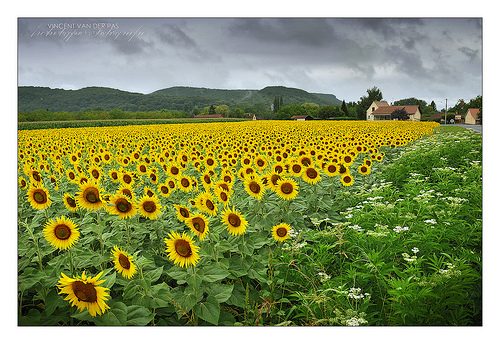
France, Sunflowers Missing the Sun at BeynacI haven’t been posting much lately. I haven’t been able to read as much as I’d like. I know only a few people who read this blog also read my education blog, so you might not be aware I’m currently engaged in a job search. It’s taking up quite a bit of my time, not just physically, but mentally (meaning, that’s where my mind is focused). The search is going well so far, but it’s not without its stress. A colleague likened searching for a job in the education field (and perhaps this is true of any field) to Victorian courtship. Neither party wants to appear too eager, lest the other party not feel the same way, so there is this delicate dance we do in which we try to convey interest but not desperation (on both sides, I think!). It’s maddening, truth be told, and I can’t wait until it’s over.

Meanwhile, I already have Downton Abbey withdrawal, and I can’t believe I have to wait until next January to find out if Matthew and Lady Mary are really going to get married this time, or if Bates is going to go free. I’m going to have to pick up something similar to Downton to read. Diana Gabaldon has a methadone list for fans to read while they’re waiting for the next book in the [amazon_link id=”0440423201″ target=”_blank” ]Outlander[/amazon_link] series. I love her sense of humor, but I wish Julian Fellowes had a methadone list, too! Actually, I’ve encountered a few of these lists, but you know. Speaking of which, does anyone know of any good Titanic books? I have already read [amazon_link id=”B006ML50SS” target=”_blank” ]A Night to Remember[/amazon_link]. I’m thinking more of fiction set on the Titanic. It seems appropriate now that we’re facing the 100th anniversary of the ship’s virgin voyage and sinking. I’ve been fascinated by that ship ever since they found her on the ocean floor in 1985. It’s been a dream of mine to cross the Atlantic in a cruise ship for about ten years.

Two last things, gentle readers: 1)what is the etiquette, fellow book reviewers, of bowing out of a review gracefully if you aren’t sure you can finish the book? and 2) Forever Young Adult regularly casts book characters in their reviews. I admit it’s a feature I like. I kept picturing Laura Carmichael (Lady Edith Crawley from Downton Abbey) as Gemma in [amazon_link id=”0062064223″ target=”_blank” ]The Flight of Gemma Hardy[/amazon_link].

Would you enjoy seeing casting for my book reviews?

  • Yes (86%, 6 Votes)
  • No (14%, 1 Votes)

Total Voters: 7

Loading ... Loading ...

The Sunday Salon

photo credit: Vincent van der Pas
Related posts:


Share

The Flight of Gemma Hardy, Margot Livesey

Share

[amazon_image id=”0062064223″ link=”true” target=”_blank” size=”medium” class=”alignleft”]The Flight of Gemma Hardy: A Novel[/amazon_image]Margot Livesey’s novel [amazon_link id=”0062064223″ target=”_blank” ]The Flight of Gemma Hardy[/amazon_link] is a retelling of Charlotte Brontë’s [amazon_link id=”B004CFA9Y6″ target=”_blank” ]Jane Eyre[/amazon_link]. Like Jane, Gemma is taken in by her uncle and his family after the deaths of her parents, and once her uncle also passes away, she is abused and neglected by her aunt, who ships her off to a boarding school as a “working girl,” where she pays for her tuition and board through menial labor for the school and is treated like a second-class citizen. When the school closes, Gemma must shift for herself, so she answers an ad for an au pair position in the Orkneys. She moves into Blackbird Hall and quickly subdues her wild charge, Nell. Hugh Sinclair, Nell’s uncle and guardian, returns to Blackbird Hall and soon finds himself entranced by Gemma.

While the story closely follows the plot of Jane Eyre, Livesey has added details that make the story Gemma’s own. Gemma, born in Scotland to a Scottish mother and Icelandic father, wonders about her Icelandic family and yearns to travel to Iceland to see if she can uncover her past. The story is set mostly in Scotland in the 1950’s and 1960’s. Gemma has opportunities that Jane couldn’t have imagined; for instance, Gemma is able to sit for exams and go to college.

The danger in writing updated versions of classic novels is that they will seem too derivative to be their own story, but I didn’t find this to be the case with The Flight of Gemma Hardy. Because I had read Jane Eyre, I could guess the general directions in which various plot points would turn, but Livesey threw in enough unique details and changes that I felt the novel was much more of an homage to Jane Eyre than an imitation. Another challenge Livesey successfully navigates is making the story of Jane’s sad childhood and subsequent removal to Thornfield Hall believable in the twentieth century. Not only does Livesey answer this challenge, but in my opinion, she tempers a bit of the horrific improbability present in Jane Eyre. I know, I know—Charlotte experienced some of the horrible events she describes in Jane Eyre at the Clergy Daughters’ School. Tragedy ran rampant through the Brontë family, and I don’t mean to make light of it. However, it reminds me that sometimes true stories sound over the top when rendered in fiction. Young Jane’s early experiences, the goodness of Helen Burns, the evil of Aunt Reed and Mr. Brocklehurst—all these rang slightly too awful to believe when I read them, which isn’t to say I didn’t love Jane Eyre. Gemma’s experiences, while uniquely horrible in their way, read as more realistic, and Helen’s counterpart Miriam is a more believable and less “Mary Sue” type of character (and yes, I know that Charlotte based Helen on her sister Maria, and that Charlotte claims Maria really was that good).

I liked Gemma. She is smart and spunky, particularly as a child. The supporting cast are all enjoyable, too, particularly Gemma’s charges Nell and Robin. I loved the Rivers sisters’ counterparts Hannah and Pauline. St. John Rivers’s counterpart Archie was more likable than St. John himself. The relocation to Scotland and Iceland made for an intriguing setting that rendered events in the story more believable, I think, than they might have been had Livesey set her novel in England. I do think fans of Jane Eyre will enjoy this book, but I think it stands on its own as a fine novel without its connection to its literary ancestor.

Rating: ★★★★½

You can find Margot Livesey online at her website, her Facebook page, and her Twitter account.

I read this novel for the TLC Book Tour. You can visit the other stops below on the dates listed to read other reviews of this novel.

*Also reading Jane Eyre

Related posts:


Share
Teaser Tuesdays

Teaser Tuesdays: The Flight of Gemma Hardy

Share

Teaser TuesdaysTeaser Tuesdays is a weekly bookish meme, hosted by MizB of Should Be Reading. Anyone can play along! Just do the following:

  • Grab your current read
  • Open to a random page
  • Share two (2) “teaser” sentences from somewhere on that page
  • BE CAREFUL NOT TO INCLUDE SPOILERS! (make sure that what you share doesn’t give too much away! You don’t want to ruin the book for others!)
  • Share the title & author, too, so that other TT participants can add the book to their TBR Lists if they like your teasers!

My teaser:

[amazon_image id=”0062064223″ link=”true” target=”_blank” size=”medium” class=”alignleft”]The Flight of Gemma Hardy: A Novel[/amazon_image]“In the shelves, among the linens, something moved. A figure stood there, tall and gaunt. It stepped toward me.”

[amazon_link id=”0062064223″ target=”_blank” ]The Flight of Gemma Hardy[/amazon_link], Margot Livesey, p. 14

Sorry. That was three sentences.


Share
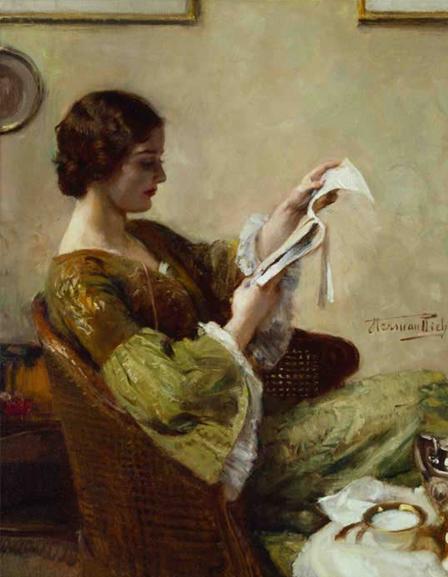
Young Woman Reading by Hermann Jean Joseph Richir

Saturday Reads: February 4, 2012

Share

Young Woman Reading by Hermann Jean Joseph RichirI am a true converted fan of Ree Drummond’s [amazon_link id=”0061658197″ target=”_blank” ]Pioneer Woman[/amazon_link] cookbooks (the [amazon_link id=”0061997188″ target=”_blank” ]new one[/amazon_link] is due out soon) and cooking blog. Part of the artistry of her blog is her ability to take excellent photographs of her cooking. I have been pinning so many of her recipes to my Recipes board on Pinterest. I just love Pinterest.

The New York Times has more Downton Abbey reads (yet another reference to the new book about [amazon_link id=”0770435629″ target=”_blank” ]Lady Almina[/amazon_link]).

Paulo Coelho is encouraging folks to pirate his books, arguing he actually sells more books when they do.

William Boyd’s article on Vienna at the turn of the 20th century was fascinating reading.

Julian Barnes wrote a short story “The Defence of the Book,” and The Guardian offers a taste.

Sam Jordison argues that if you’re going to read [amazon_link id=”1843548534″ target=”_blank” ]Bleak House[/amazon_link], need to go about it in the right way.

James Lasdun has a good review of Nathan Englander’s new short story collection [amazon_link id=”0307958701″ target=”_blank” ]What We Talk About When We Talk About Anne Frank[/amazon_link].

Flavorwire has a list of 10 Great Science Fiction Books for Girls (driven, of course, by the 50th anniversary of [amazon_link id=”0374386161″ target=”_blank” ]A Wrinkle in Time[/amazon_link]). My favorite on the list is [amazon_link id=”038549081X” target=”_blank” ]The Handmaid’s Tale[/amazon_link], but I have to admit the list skews older than I thought it would when I followed the link. I think girls might like André Norton’s [amazon_link id=”0216901693″ target=”_blank” ]Outside[/amazon_link] (out of print, but easy to find second hand), or Lois Lowry’s [amazon_link id=”0547424779″ target=”_blank” ]The Giver[/amazon_link] (though it has a male protagonist).

[amazon_link id=”0670030589″ target=”_blank” ]One Flew Over the Cuckoo’s Nest[/amazon_link] is 50, too. Flavorwire has a gallery of book covers. My favorite is either the Penguin classics cartoon cover or the one with all the pills.

Feast your eyes on these gorgeous bookstores.

I loved this post in Better Living Through Beowulf about turning to Austen when you’ve been jilted by your fiancé.

Related posts:


Share
Top Ten Tuesday

Top Ten Book Club Books

Share

Top Ten Tuesday

This week’s Top Ten Tuesday topic is the top ten books that would make great book club picks. Some of these books I have actually read with a book club; others I haven’t, but I think they might make for good discussion.

  1. [amazon_link id=”0385341008″ target=”_blank” ]The Guernsey Literary and Potato Peel Pie Society[/amazon_link], Annie Barrows and Mary Ann Shaffer: It’s a book about book clubs! What could be better to read with a book club?
  2. [amazon_link id=”0312304358″ target=”_blank” ]Moloka’i[/amazon_link], Alan Brennert: This might be because I just chose it for my book club, but I think it would be great for discussion, especially because it’s a good story, but it has some flaws.
  3. [amazon_link id=”0345521307″ target=”_blank” ]The Paris Wife[/amazon_link], Paula McLain: I think this one would be great for literary book clubs who want to learn more about Hemingway and his circle.
  4. [amazon_link id=”1451648502″ target=”_blank” ]The Kitchen Daughter[/amazon_link], Jael McHenry: It might be fun to bring the dishes described in the book to the meeting. I also think discussing adult Asperger’s would make for an interesting evening.
  5. [amazon_link id=”1594484465″ target=”_blank” ]The Little Stranger[/amazon_link], Sarah Waters: I picked this mostly because I would like to talk about the ending and see what everyone else thinks happened at the end.
  6. [amazon_link id=”0399157913″ target=”_blank” ]The Help[/amazon_link], Kathryn Stockett: I liked this one a lot and see it being a good book to talk about when you’re done with it. I could even see a good discussion about whether it’s another in the long line of “white people solve racism” books/movies.
  7. [amazon_link id=”1613821395″ target=”_blank” ]The Woman in White[/amazon_link], Wilkie Collins: Marian and Count Fosco are great characters. So was Frederick Fairlie. He’s hysterical, in fact. I think it might be interesting to talk about how Collins popularized some of those tropes we consider clichés.
  8. [amazon_link id=”0142001805″ target=”_blank” ]The Eyre Affair[/amazon_link], Jasper Fforde: There is so much bookish fun in this one. I think book nerds would really like reading and talking about it.
  9. [amazon_link id=”B005K5XQRY” target=”_blank” ]The Lace Reader[/amazon_link], Brunonia Barry: I am not sure it would appeal to everyone in the group, but it has a classic unreliable narrator, and those always make for juicy discussion. Plus you could try to brew up some “Difficul-tea” and try out lace reading (if you can figure it out).
  10. [amazon_link id=”0385338015″ target=”_blank” ]Madame Bovary’s Ovaries[/amazon_link], David P. Barash and Nanelle R. Barash: The premise of this book is that you can explain the behavior of some characters in great literature through evolutionary psychology. It’s an interesting read. It’s sure to generate some discussion; I can’t imagine you’d get a whole group to agree on whether or not the authors are right. It serves the dual purpose of making you interested in the literature they discuss, too. The Goodreads reviews on it are all over the place.

Honorable mentions: [amazon_link id=”0812979303″ target=”_blank” ]Reading Lolita in Tehran[/amazon_link], Azar Nafisi; [amazon_link id=”0679751521″ target=”_blank” ]Midnight in the Garden of Good and Evil[/amazon_link], John Berendt (only left out of top ten because everyone’s surely read it by now); and [amazon_link id=”014029628X” target=”_blank” ]Girl in Hyacinth Blue[/amazon_link], Susan Vreeland.

Related posts:


Share
Young Woman Reading by Hermann Jean Joseph Richir

Saturday Reads: January 28, 2012

Share

Young Woman Reading by Hermann Jean Joseph RichirThe Guardian has an interesting blog post on “The Future of Books, Today.” Neil Gaiman, interviewed for the piece, says he thinks “traditional publishing” has five or “maybe 10 years … But that isn’t going to mean fewer books. There’ll be a lot more books—people will just find them differently.”

Also, London’s City University is now offering an MA in crime writing.

Pamela Paul weighs in on the 50th anniversary of [amazon_link id=”0374386161″ target=”_blank” ]A Wrinkle in Time[/amazon_link] in the New York Times.

Flavorwire has a list of the ten most dangerous novels of all time. I know Stephen King has expressed regret over writing Rage, but I did not realize he had asked his publisher to take it out of print. I also liked their list of the “10 Most Iconic Accessories of Famous Writers” and their list of “10 Legendary Bad Girls of Literature.”

This is so funny. The last Top Ten Tuesday was open topic, and Mandy of Adventures in Borkdom had the same idea (here is my post). We appear to have some overlap.


Related posts:


Share

A Northern Light, Jennifer Donnelly

Share

[amazon_image id=”B0006BD9BK” link=”true” target=”_blank” size=”medium” class=”alignleft”]A Northern Light[/amazon_image]Jennifer Donnelly’s YA novel [amazon_link id=”B0006BD9BK” target=”_blank” ]A Northern Light[/amazon_link] is based, in part, on the same crime that inspired Theodore Dreiser to write [amazon_link id=”0451531558″ target=”_blank” ]An American Tragedy[/amazon_link]: Chester Gillette’s murder of Grace Brown in the Adirondacks in 1906. The novel’s protagonist, Mattie Gokey, is the teenage daughter of a poor farmer in the North Woods. Mattie’s mother died not too long before the events in the book start. Before she dies, Mattie’s mother extracts a promise from Mattie that she will stay to help take care of her siblings. Mattie’s older brother Lawton left home after a fight with their father, and Mattie is responsible for her three younger sisters. Mattie, however, dreams of going to college. Her teacher, Miss Wilcox, encourages Mattie, who she believes has a gift for writing. Mattie’s friend Weaver Smith has dreams of attending Columbia University, and Miss Wilcox encourages both of them. They both take jobs at the Glenmore Inn, where Grace Brown and Chester Gillette come to stay. Before Grace is murdered, she entrusts Mattie with her letters and asks Mattie to burn them. After Grace’s body is found and Mattie finds herself unable to dispose of the letters as Grace asked, she reads them instead, and she uncovers a motive for Gillette’s murder of Grace as well as motivation to follow her own dreams.

Jennifer Donnelly’s books are all good. This particular novel’s narrative flashes backward and forward in time, but the plot is not difficult to follow, and in the end, Donnelly’s reasons for telling the story in this less linear fashion are clear. Mattie is an engaging heroine, representative of so many girls of her age who were expected to marry, often without love, and raise a family. Weaver is an interesting character too. His father was killed in a racial hate crime, but rather than making Weaver fearful of whites, it instead empowered him to stand up for himself when he encounters racism. Like Mattie, the reader can have no doubt that Weaver will go to Columbia and become a fine lawyer despite the odds. Donnelly’s setting is vividly painted for the reader, both in time and place—which is a particular gift of Donnelly’s and something I have enjoyed about all of her books.

I would recommend this book even to readers who aren’t necessarily fans of YA, mainly because I think readers will enjoy learning about this time and place and will like Mattie and her friends and family (except, of course, for those we aren’t supposed to like). Grace Brown’s murder is more or less incidental to the plot, as the main story is Mattie’s coming of age.

Rating: ★★★★½

I thought about counting this book as a crime/mystery book as part of the Mixing it Up Challenge, but I ultimately decided not to because the crime is not the center of the novel.

Full disclosure: I obtained this book via PaperBackSwap.


Share

Ten Fictional Crushes

Share

cap on yellow

Some time back, I discussed some historical crushes, and I have previously discussed my ten fictional best friends. Why not share my ten fictional crushes? Since this weeks’ Top Ten Tuesday is a “pick your own” topic, this weeks seems like the perfect time. Don’t necessarily view these in a particular order.

  1. James Alexander Malcolm MacKenzie Fraser. If you have read the [amazon_link id=”0440423201″ target=”_blank” ]Outlander[/amazon_link] series, I don’t need to say any more. You know exactly what I’m talking about. My husband is a redhead, and let’s just say my crush on Jamie may have contributed to my interest in red-headed men.
  2. Severus Snape. OK, I admit this one is weird. He’s mean. He’s given to pettiness. That comment he makes about Hermione’s teeth in [amazon_link id=”0439139600″ target=”_blank” ]Harry Potter and the Goblet of Fire[/amazon_link] is pretty much unforgivable. I just really love his characterization. When I discovered in [amazon_link id=”0545139708″ target=”_blank” ]Harry Potter and the Deathly Hallows[/amazon_link] that he had carried a torch for Lily Evans Potter for most of his life, I was sold. In fact, my favorite chapter in the whole book series is “The Prince’s Tale” in [amazon_link id=”0545139708″ target=”_blank” ]Harry Potter and the Deathly Hallows[/amazon_link]. Plus, Alan Rickman.
  3. Faramir. Yeah, Aragorn was never my cup of tea, but Faramir is a really cool guy, and I was glad when Eowyn woke up to that fact and ditched her awkward crush on Aragorn for true love with Faramir. He’s noble and brave. Pippin thought so highly of him that he named his son after him, you know.
  4. Father Ralph de Briccasart. Just like Meggie. Sigh. Richard Chamberlain in that miniseries probably contributes as much to my Father Ralph crush as Alan Rickman’s portrayal does to my Snape crush.
  5. Rhett Butler. So bad. So smooth. And yet so in love with Scarlett (for whatever reason!). Honestly, Margaret Mitchell had to have been thinking about Clark Gable when she wrote the novel because he’s just perfect for the part. I remember when I read the book the first time, even though I hadn’t seen the movie, I knew Clark Gable played the role in it, and I thought even then that she had to have been thinking about Gable. I have to say, that first time, I pictured Scarlett as a redhead, even though she’s described as having dark hair, but now Vivian Leigh just is Scarlett.
  6. Captain Frederick Wentworth. Come on. You’ve read that letter, haven’t you? If you have, you need no further explanation. Plus, he’s a keeper. Even though he was rejected, he was still in love with Anne, and he gave her a second chance. I can’t imagine they were anything but perfectly happy together.
  7. Louis de Pointe du Lac. Lestat was a bit stuck on himself for my taste, and favorite book in the Vampire Chronicles has always been [amazon_link id=”0345409647″ target=”_blank” ]Interview with the Vampire[/amazon_link].
  8. Speaking of which, Edward Cullen. Yeah, I know. This one is really wrong. I don’t like this about myself, but there it is.
  9. Fitzwilliam Darcy. Naturally. I actually have a mug at work labeled Mrs. Darcy. I had a travel mug with the same label, but it broke, and a friend bought me a new Mrs. Darcy mug for Christmas. That is a good friend.
  10. This last is a bit of a cheat, but Nate from the book I’m currently writing, which is as yet untitled. I see him as a sort of amalgamation of Jeff Buckley and Jack White. He’s kind of dreamy. He is based on the Irish hero Naoise from the Legend of Deirdre.

photo credit: Darwin Bell

Related posts:


Share
Musing Mondays

Musing Mondays: Young Adult

Share

Musing MondaysWhy do you think that the Young Adult genre is so popular with even the adult readers? Do you read YA books, yourself?

I think YA is popular for several reasons. First of all, it’s in the midst of some kind of renaissance, perhaps ushered in by writers like Lois Lowry and Laurie Halse Anderson. There is simply a lot of really good YA fiction out there right now. I think one of the reasons it is popular with adult readers is that we were all young adults once, and I think good fiction, whether the protagonist is a little girl like Scout Finch or an elderly man like Jacob Jankowski, is always appealing. Therefore, I don’t see why a teen protagonist shouldn’t appeal to an adult. I also think the [amazon_link id=”0545162076″ target=”_blank” ]Harry Potter[/amazon_link] series, the [amazon_link id=”031613290X” target=”_blank” ]Twilight[/amazon_link] series, and the [amazon_link id=”0545265355″ target=”_blank” ]Hunger Games[/amazon_link] series had massive appeal for fans of all ages. Perhaps one reason for the popularity of YA is that these books prompted readers to pick up other YA fiction.

I do read YA. As a matter of fact, I am on my third YA book this month. I don’t read it exclusively or even a lot when compared with my normal reading habits, but I have never felt any shame in reading it, and I have enjoyed reading it since I was a young adult myself.

Related posts:


Share

Sunday Salon: Rereading Outlander

Share

joshua radin:today

It’s been a rainy weekend, but that’s perfect weather for reading.

Because I joined the Outlander Series Reading Challenge, and because I haven’t read the last several books in the series, I have been rereading the first book, [amazon_link id=”1419381016″ target=”_blank” ]Outlander[/amazon_link]. Actually, I’ve been listening to it. I used my Audible credits to go ahead and pick up the entire series in audio format because I had heard that the narrator, Davina Porter, was particularly good. She is.

It’s strange what you pick up on when you reread books. I have read Outlander twice before. The first time I read it was in 1999. At that time, I read the first four books in the series, which were the only ones published then. I have never finished any of the books published after [amazon_link id=”044022425X” target=”_blank” ]Drums of Autumn[/amazon_link], but I did start [amazon_link id=”0440221668″ target=”_blank” ]The Fiery Cross[/amazon_link]. One of the things I think Gabaldon is very good at is character development and description. She can really bring a scene to life. However, for the first time, and perhaps I noticed it because I was listening, sometimes she includes scenes that don’t necessarily move the plot forward. They do develop the characters more, but I wonder if that could be done more efficiently with scenes that push the plot forward. I wonder if it is a side effect of her writing process. I know she is a “scene stitcher.” She has described composing individual scenes and then sewing them together. Obviously, not all of her scenes work like that. Some of them are critical plot points.

Of course, in the case of Outlander, I don’t complain about these scenes, but every single book in the series is a chunkster, and I do wonder if it will become a problem as the series wears on, particularly on a reread. I happen to love the first book, and I remember loving the second, but it did seem to me that each successive book wasn’t quite as good. I know for a fact that I prefer Jamie and Claire in Scotland to just about every other setting, but I know that they must stay in America after The Fiery Cross.

One of the reasons I am particularly enjoying listening to the audio book instead of reading is that I can hear all the wonderful accents. Davina Porter gives a slightly different voice to each character, and listening to the book is quite enjoyable as a result.

The Sunday Salon

photo credit: visualpanic

Related posts:


Share